

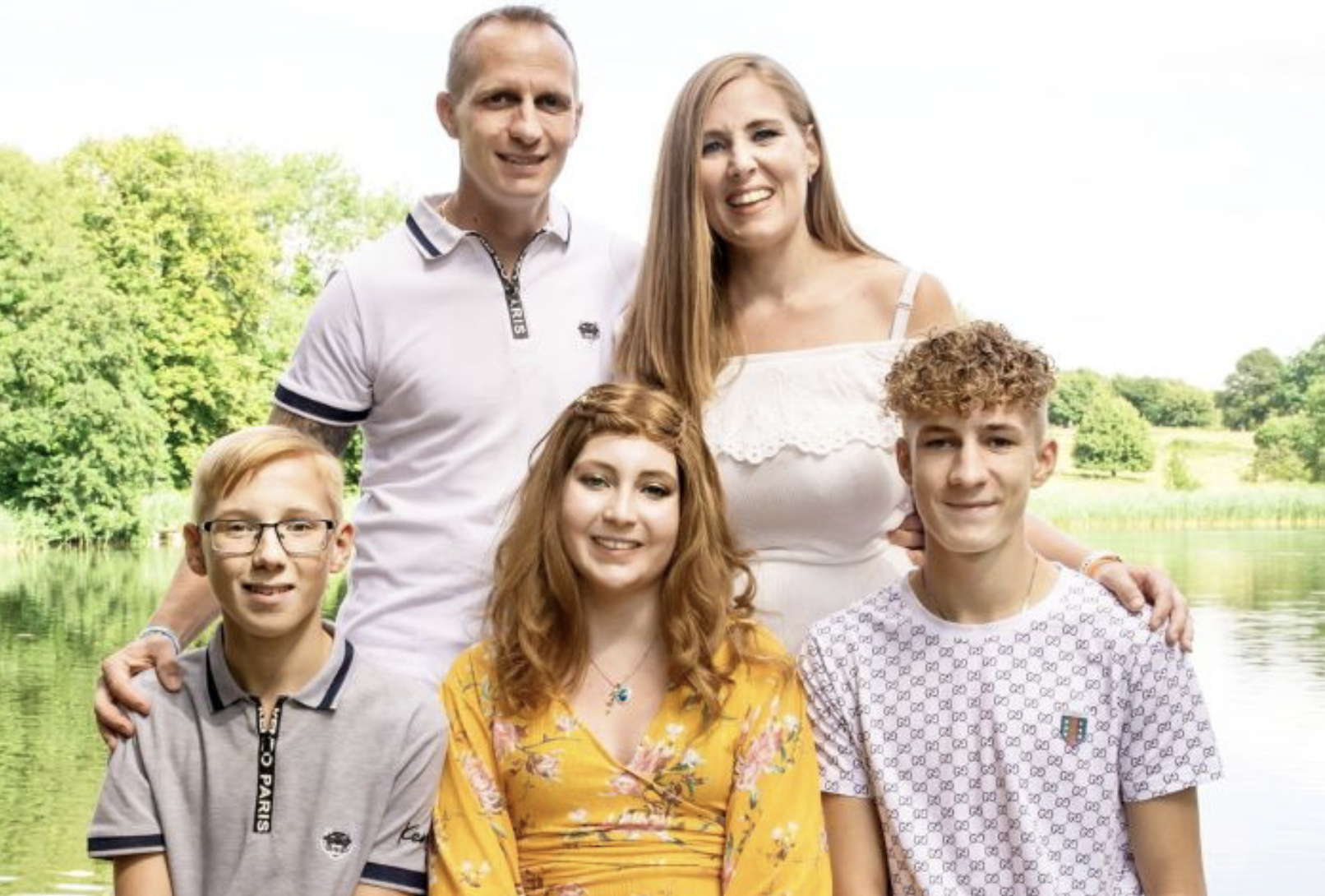
A teenage girl died from cancer after her mother says doctors repeatedly dismissed months of unbearable pain as a urinary tract infection and sent her home with antibiotics and painkillers.
Chloe Venton, from Swindon, England, was just 15 when she began suffering alarming symptoms in late 2017. She constantly needed to use the bathroom, woke up drenched in sweat and would scream in agony during the night.
Her mother, Joanne Venton, said doctors initially believed Chloe was suffering from recurring urinary tract infections because she had experienced them as a child.
“She had UTIs as a child, so the doctors just brushed it off as that and gave her antibiotics,” Joanne told Southwest News Service.
But the medication did nothing to ease Chloe’s suffering.
“Over the next seven months, I lost count of how many times we went back to the doctors as the antibiotics weren’t working,” Joanne said.
By May 2018, Chloe’s condition had grown far more frightening. She told her mother that the pain in her lower back was spreading into her hips. Parts of her lower body were going numb, and she had begun losing control of her bladder.
Joanne, then 42, took her daughter back to their general practitioner, but she said doctors continued to blame the symptoms on a UTI.
“At such a young age, these were not normal, and I knew something else was wrong, so I refused to leave the GP’s office,” Joanne recalled. “The GP then sent us to the hospital just to shut me up.”
At the hospital, Chloe underwent blood tests, MRI scans and CT scans. The tests finally uncovered the devastating truth: she had a tumor.
Joanne and Chloe’s father, Gary, then 43, became increasingly worried as their daughter remained hospitalized while doctors worked to determine exactly what was wrong.
Soon afterward, Chloe was diagnosed with an aggressive form of Ewing sarcoma, a rare cancer that develops in the bones or the soft tissue surrounding them.
Joanne said she would never forget the moment she and Gary were given the diagnosis.
“I’ll never forget the next morning,” she said. “Gary and I were taken to a small, cold white room and told she had cancer. It was a whirlwind from there.”
The diagnosis was almost impossible for her to process.
“In my head, I thought she can’t have cancer,” Joanne said. “Cancer is for people that abuse their bodies or have a genetic condition. I couldn’t believe in my head that my teenage daughter had it.”
Chloe immediately began an exhausting treatment regimen that included 10 rounds of chemotherapy, proton therapy and another five rounds of chemotherapy.
But her health continued to deteriorate.
During treatment, Chloe developed a rash that doctors reportedly dismissed as a side effect of her cancer therapy. Joanne once again believed something more serious was being missed.
“Again, I had to fight the doctors that something wasn’t right,” she said.
The rash was eventually diagnosed as leukemia cutis, a condition in which leukemia cells enter the skin. Chloe was then diagnosed with acute myeloid leukemia, an aggressive cancer of the blood and bone marrow that can progress rapidly and requires immediate treatment.
Despite everything she endured, Joanne said Chloe remained remarkably strong throughout her cancer battle.
She described her daughter as having the “biggest heart” and said Chloe rarely complained or cried, even as her condition became increasingly dire.
Chloe died in July 2020 at just 17 years old.
Joanne said the family’s ordeal had become a “complete nightmare,” but some of the most painful moments came during Chloe’s final days, when the teenager spoke about the future she knew she would never have.
“In her final days, she said to me, ‘I’ll never see my brothers grow up and get married, and I’ll never get to be the auntie I want to be,’ which just broke me,” Joanne recalled.
Years later, Chloe’s mother is sharing her daughter’s story in hopes of warning other families not to accept an explanation when they know something is wrong.
Joanne believes the delays in diagnosing both Chloe’s Ewing sarcoma and her leukemia may have cost her daughter precious time.
“It breaks my heart to think Chloe may still be here if they hadn’t misdiagnosed her at first and then missed the leukemia,” she said.
She now wants other patients and parents to feel empowered to demand more testing, ask difficult questions and keep pushing when symptoms are dismissed.
“I want to talk about it so other people don’t get missed in the system and end up losing their daughter like that,” Joanne said.
Discover more from Next Gen News
Subscribe to get the latest posts sent to your email.