

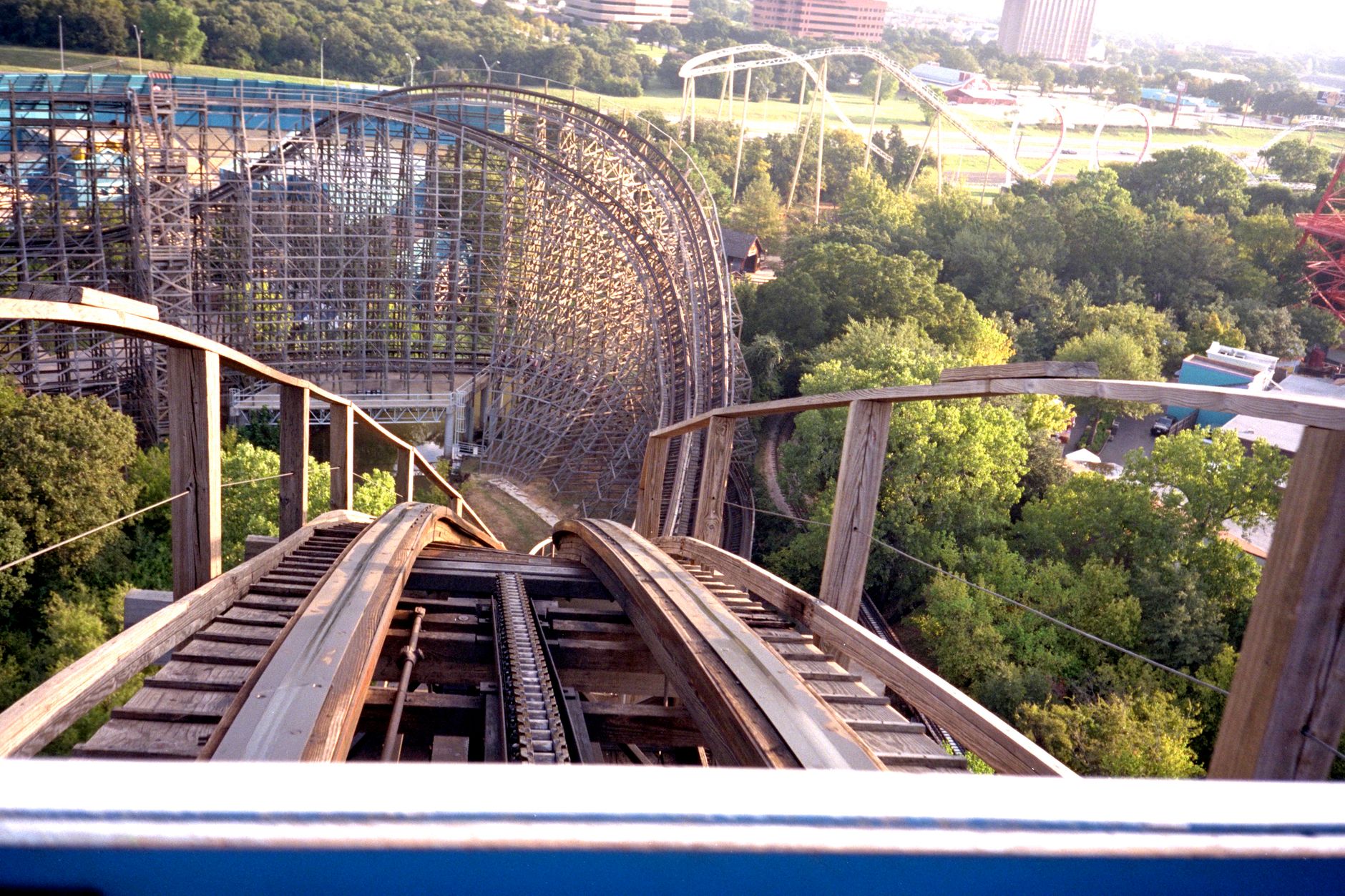
One of Six Flags Magic Mountain’s most infamous thrill rides is officially gone for good after a wave of lawsuits accused the roller coaster of leaving riders with catastrophic brain injuries.
Six Flags Magic Mountain announced Tuesday that it is permanently retiring X2, the extreme roller coaster known for plunging riders more than 200 feet while their seats rotate independently around them.
The decision comes after X2 had already been sitting idle since July 12 and amid growing legal scrutiny over a series of serious injuries allegedly connected to the ride.
“After almost 20 years, we have decided to permanently retire X2,” Six Flags Magic Mountain President Brian Oerding announced.
Oerding said the coaster had consistently passed safety testing but acknowledged that concerns surrounding the ride had begun affecting public confidence.
“Ride safety is a cornerstone of our business, and when we see guest confidence affected, we take it seriously,” he said.
The permanent shutdown represents a dramatic ending for a coaster that became one of Magic Mountain’s signature attractions.
X2 originally debuted as X in 2002 and was billed as a revolutionary “fourth-dimension” coaster. It was extensively overhauled and reopened as X2 in 2008 with new trains, special effects and rotating seats.
The coaster featured a 215-foot drop and could reach speeds of roughly 76 mph. Its seats extended outward from the track and could rotate 360 degrees independently as the train raced through drops and inversions.
But in recent years, the ride has also become the focus of mounting allegations from former riders.
Three new lawsuits filed in California allege that riders suffered severe brain injuries after riding X2. Attorneys representing the plaintiffs have said more than 100 additional people contacted their firm reporting brain-related injuries they believe were connected to the coaster.
Those claims remain allegations, and the lawsuits have not established that X2 caused the injuries.
Among the plaintiffs is Pamela Guillen, who visited Magic Mountain with her family in July 2026 while celebrating her daughter’s 16th birthday.
Guillen said X2 was the family’s final ride of the day.
After getting off the coaster, she allegedly became confused and disoriented before collapsing. She later said her next clear memory was waking up in a hospital approximately two weeks later.
According to Guillen and her attorneys, doctors discovered a severe brain injury that required emergency surgery.
Guillen said she was intubated, placed in a coma and remained hospitalized for nearly a month.
Another plaintiff, attorney Michael Wick, allegedly underwent two brain surgeries after riding X2. His attorneys say the resulting injuries have left him unable to continue practicing law.
A third case involves Naomi Greer-Wilkinson, who was 25 when she rode X2 just days after Guillen’s incident.
Her attorneys said Greer-Wilkinson lost consciousness after riding the coaster and required emergency brain surgery. Her family has said she remained unable to breathe independently following the medical emergency.
Attorney Gary Dordick, whose firm represents several of the riders, sharply criticized Six Flags following Tuesday’s closure.
“Today Six Flags Magic Mountain finally did what it should have done long ago,” Dordick said, adding that his firm plans to continue pursuing claims on behalf of injured riders.
The legal battle surrounding X2 did not begin with the incidents from this summer.
Another lawsuit involving Sheila Katerelos alleges she suffered a traumatic brain injury after riding X2 in February 2020.
That case has a trial scheduled for August 2027 against ride-related defendants after years of litigation.
Six Flags previously argued in court filings connected to the case that X2’s forces were not sufficient to cause the alleged brain injury and that there were no known component failures that would have caused such an injury.
The park also pointed to posted health warnings and maintained that the rider had been properly restrained.
Those arguments illustrate a key issue likely to surface repeatedly as the newer lawsuits move forward: whether X2 itself caused the injuries alleged by riders and, if so, whether there was a defect or danger that Six Flags or the ride’s designers should have identified.
The coaster was also at the center of a wrongful-death lawsuit involving 22-year-old Christopher Hawley.
Hawley visited Magic Mountain with family members in June 2022. His family alleged that after riding X2, he appeared unwell, complained of head pain and later collapsed.
He died the following day.
Los Angeles County medical examiner records cited in reporting on the case listed blunt head trauma as his cause of death.
His family sued Six Flags and companies associated with the coaster, alleging the ride caused his fatal injuries. That lawsuit was later settled.
A settlement does not necessarily constitute an admission of wrongdoing.
Despite the mounting lawsuits, Six Flags has continued to say X2 successfully passed safety inspections.
That distinction is important because the park’s decision to close the coaster permanently does not, by itself, establish that the ride was defective or caused the injuries alleged in the lawsuits.
Still, the company’s acknowledgment that rider confidence had been affected marks a significant change from its previous public posture.
Until recently, Six Flags largely declined to address the newest cases publicly, citing pending litigation.
X2 had been closed since July 12, one day after Greer-Wilkinson reportedly rode the attraction.
It will now never reopen.
For longtime Magic Mountain visitors, the closure ends more than two decades of one of the park’s most recognizable and extreme attractions.
For the families now suing Six Flags, however, the focus has shifted from whether X2 will operate again to what happened aboard the coaster — and whether anyone should be held legally responsible.
Discover more from Next Gen News
Subscribe to get the latest posts sent to your email.