

Former “American Idol” contestant and former pastor Caleb Flynn has been found guilty of murdering his wife after Ohio prosecutors argued he shot her as she slept, staged a fake home invasion and then tried to convince police that an intruder was responsible.
A Miami County jury returned the verdict Tuesday, Sept. 29, after deliberating for roughly two and a half hours.
Flynn, 40, was convicted of aggravated murder, three counts of murder, two counts of felonious assault and three counts of tampering with evidence in the February killing of his 37-year-old wife, Ashley Flynn.
He had pleaded not guilty.
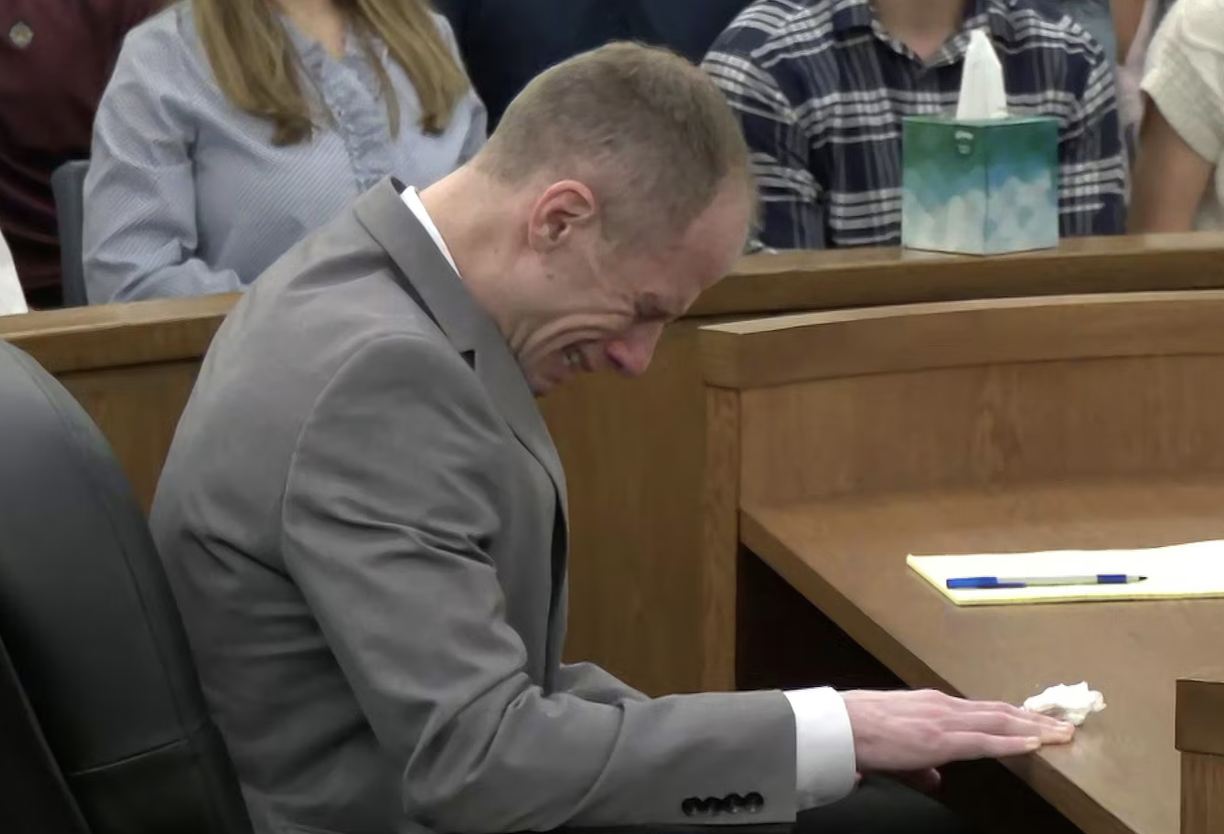
Flynn appeared emotional as the verdicts were read inside Miami County Common Pleas Court in Troy, Ohio, at times crying and briefly sobbing in his chair.
Judge Jeannine Pratt revoked his bond and ordered him taken into custody. Sentencing is scheduled for Oct. 5, when members of Ashley’s family will also be allowed to deliver victim-impact statements.
Flynn faces the possibility of life in prison without parole.
His defense team has already indicated an appeal is expected.
The verdict brought an end to a closely watched trial that centered on a question investigators began asking almost immediately after Ashley was found dead inside the family’s Tipp City home: Was there ever really an intruder?
Caleb Flynn called 911 during the early morning hours of Feb. 16 and reported that someone had broken into the house and shot his wife.
Their two young daughters were also inside the home.
Ashley, a teacher and volleyball coach, had been shot twice in the head. A forensic pathologist testified during the trial that the wounds were inflicted at close range.
Flynn told investigators he had been sleeping in another room and woke after hearing gunshots.
But prosecutors argued that story began falling apart as detectives examined the house, Flynn’s electronic devices and months of messages between Flynn and a woman with whom he was having an affair.
Three days after Ashley was killed, Flynn was arrested.
Prosecutors told jurors there was no mysterious burglar. Instead, they argued Flynn killed his wife and then manipulated the crime scene to make it appear someone had forced their way into the house.
One major focus was a side garage door that Flynn claimed had been used by the intruder.
Investigators testified that damage to the door did not appear consistent with someone forcing their way inside. An FBI agent also told jurors she saw no pry, kick or ram marks on the outside of the door that she would typically expect to see following a forced entry.
Prosecutors also pointed to Flynn’s digital activity.
At a time when Flynn claimed he had been asleep, investigators said electronic records suggested he was awake and moving around.
The murder weapon itself has never been recovered.
Prosecutors said Flynn previously kept a 9mm handgun in the console of his truck, which was parked inside the garage. After the killing, investigators found the console open and the weapon missing.
Ashley was killed with 9mm ammunition.
The defense repeatedly stressed that authorities could not produce the gun and argued there was no eyewitness or direct physical evidence proving Flynn pulled the trigger.
Defense attorney Patrick Mulligan told jurors the state had proven Flynn was an unfaithful husband but had not proven that he was a murderer.
Flynn also voluntarily sat for multiple police interviews, allowed investigators to search his home and phone, and provided fingerprints, the defense noted.
But prosecutors argued the physical evidence was only one piece of a much larger picture.
Some of the most dramatic testimony came from Alleigha Botner, Flynn’s former mistress.
Botner testified over two days about their lengthy affair and the enormous volume of messages the two exchanged. Prosecutors said investigators reviewed more than 100,000 messages between them.
Many contained Flynn complaining about Ashley or discussing his desire to leave the marriage.
Others were far darker.
In one message presented to jurors from 2025, Flynn wrote that he had been thinking about ways Ashley could be killed without him going to jail.
In another message, he said he would kill her “in a heartbeat” if he could do so without going to hell.
Botner testified that their affair lasted roughly 18 months. She had originally met Flynn while working as an intern at his church.
Prosecutors said the tone of Flynn’s messages became increasingly significant as the night of Ashley’s killing approached.
Just hours before she died, Flynn sent Botner messages saying he was choosing her and that “actions will come tomorrow.”
Another message described the following day as one he would never forget.
Botner testified that she believed Flynn was referring to finally leaving his marriage.
Prosecutors saw the messages differently.
They argued the texts, when combined with the crime-scene evidence and Flynn’s digital activity, showed planning rather than an unexpected home invasion.
Prosecutors also told jurors Flynn had removed security cameras from the home about 20 days before Ashley was killed, including a camera that could have recorded anyone entering through the garage.
They said evidence also showed Flynn deleting apps from his phone and attempting to remove messages around the time of the killing.
After Ashley’s death, prosecutors said Flynn whispered during a conversation with Botner that things had not happened the way they expected.
Miami County Prosecuting Attorney Paul Watkins told jurors during closing arguments that the case did not begin with the gunshots that killed Ashley. He argued that the evidence stretched back months through Flynn’s messages, affair and increasingly hostile statements about his wife.
The defense countered that those messages were ugly but did not prove murder.
Mulligan described the prosecution’s case as circumstantial and argued that investigators were trying to connect unrelated pieces of evidence after deciding Flynn was responsible.
The defense did not call any witnesses after prosecutors rested following seven days of testimony. Flynn did not take the stand.
Two misdemeanor counts accusing Flynn of intimidating an attorney, victim or witness were dismissed before the case went to the jury.
Flynn had previously denied killing Ashley during recorded police interviews that were played for jurors.
His defense continues to maintain there are grounds to challenge the conviction, particularly the prosecution’s allegation that the killing involved prior calculation and design.
Flynn briefly gained national exposure more than a decade before the murder case.
He appeared during Season 12 of “American Idol” in 2013 and received a golden ticket that advanced him to Hollywood before he was eliminated early in the competition.
At the time, Flynn publicly praised Ashley and credited her with encouraging his musical ambitions.
Thirteen years later, jurors were instead hearing prosecutors accuse him of plotting her death.
After the verdict, Watkins urged the public to shift its attention away from Flynn and toward the woman whose life was lost.
Ashley’s family said in a statement that they did not want the circumstances of her death to define her story.
They remembered her as a deeply religious woman devoted to her family and described motherhood as one of the most important parts of her life.
“She loved being a mom,” the family said, remembering the way Ashley prayed for her daughters and tried to teach them kindness, faith and grace.
Flynn is due back in court Oct. 5 for sentencing.
Discover more from Next Gen News
Subscribe to get the latest posts sent to your email.