

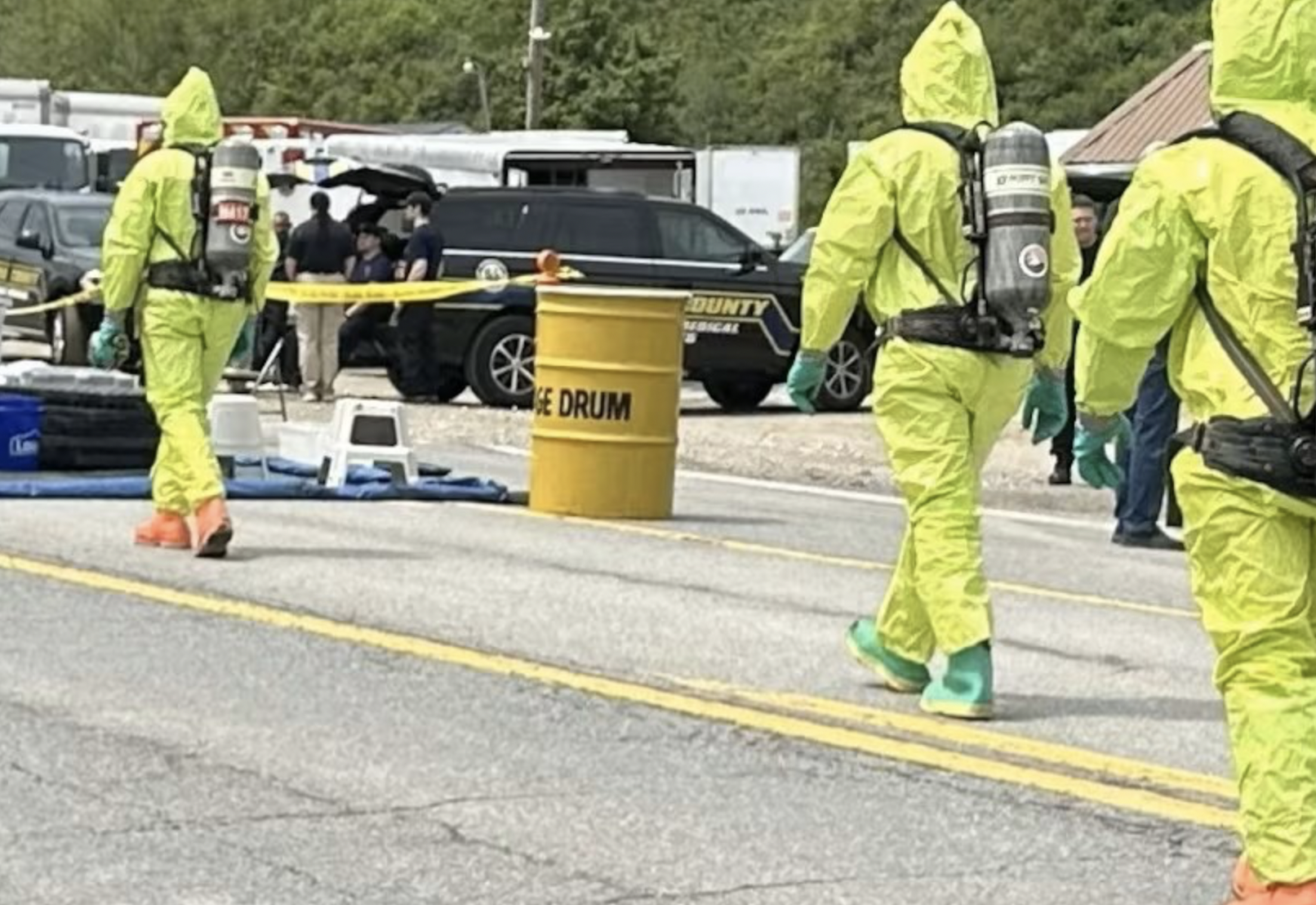
A devastating chemical leak at a West Virginia plant turned deadly Wednesday morning, leaving two people dead and 19 others hospitalized after what officials described as a violent reaction inside the facility.
The incident happened at Catalyst Refiners in Institute, West Virginia, around 9:30 a.m. as workers were cleaning part of the plant and preparing to shut down at least a portion of the operation. According to Kanawha County officials, the dangerous situation unfolded when nitric acid reacted with another substance known as M2000A, producing hydrogen sulfide, a highly toxic gas that can quickly become deadly.
Emergency officials said the chemical reaction happened almost instantly.
“It caused a violent reaction of chemicals, and it instantaneously overreacted,” Kanawha County Commission Emergency Management Director C.W. Sigman said as authorities worked to contain the crisis.
The tragedy sent first responders rushing to the scene just before 10 a.m., but the danger was so severe that officials quickly ordered a shelter-in-place for everyone within a one-mile radius of the plant. Nearby residents and businesses were alerted through an emergency notification system, while roads in the area were shut down and schools sheltered in place out of caution.
By the end of the ordeal, 21 people had been taken to the hospital, including the two victims who died. Officials said seven ambulance workers who responded to the scene were also among those injured, underscoring just how hazardous the spill had become even for trained emergency crews.
The response required a large-scale decontamination operation, with exposed individuals forced to remove their clothing and be sprayed down to prevent the toxic chemicals from spreading further.
Authorities later lifted the shelter-in-place order roughly five hours after the leak began, but not before fear and uncertainty had gripped the surrounding community.
Sigman said chemical plants are often most vulnerable during major transitions in operation.
“The two most dangerous times of a chemical plant’s life is start-up and shut down,” he noted.
Catalyst Refiners is described as a small, warehouse-sized silver recovery facility that extracts valuable silver from leftover industrial chemical materials. Officials said the plant can recover significant amounts of silver even from residue found in factory office areas, highlighting the unusual nature of the company’s work.
But what should have been a routine shutdown preparation instead turned into a fatal catastrophe.
Some workers at the site reportedly declined hospital evaluation after the leak, though officials said they could not force anyone to seek treatment.
The victims’ names have not yet been released, and officials also declined to identify those who were hospitalized.
Ames Goldsmith Corp., the company that owns Catalyst Refiners, called the tragedy “an unfathomably difficult time” and said its thoughts are with the victims, their families, and fellow workers. The company also said it would cooperate with local, state, and federal authorities as investigators work to determine exactly what went wrong.
For many, the deadly leak is likely to renew questions about industrial safety, worker protections, and oversight at chemical facilities in vulnerable communities. In a state long shaped by heavy industry, tragedies like this one continue to raise painful concerns about whether enough is being done to protect workers, first responders, and nearby families from preventable disaster.
Discover more from Next Gen News
Subscribe to get the latest posts sent to your email.