

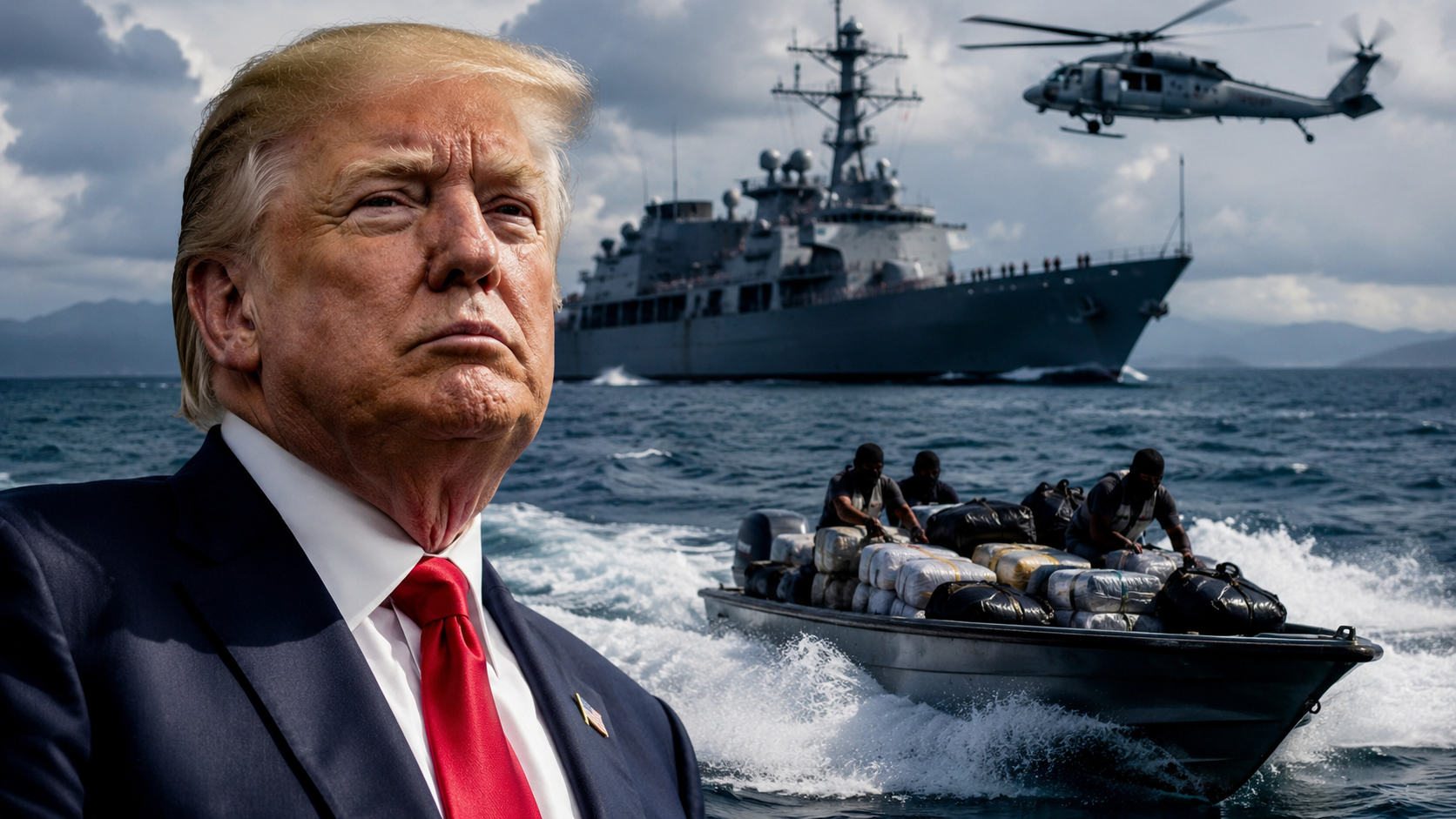
President Donald Trump’s high-seas war on alleged cocaine smugglers has now killed nearly 200 people, cost billions of dollars, and pulled thousands of American troops into one of the largest U.S. military operations in Latin America in decades.
But according to experts, there is one major problem with the White House’s hardline crackdown.
It does not appear to be making cocaine meaningfully harder to buy in the United States.
Nearly nine months after the Trump administration began launching military strikes on small boats off the coast of South America, addiction researchers, drug policy experts, and public health specialists say the U.S. cocaine market looks shockingly unchanged.
Prices remain stable. Purity levels have not dramatically dropped. Overdose patterns have not shown signs of a major supply shock. Border seizure data does not suggest traffickers have been crippled.
In other words, critics say Trump’s deadly campaign may be producing dramatic videos and tough-on-crime headlines, but not the sweeping disruption the administration has promised.
The operation, which has reportedly cost about $4.7 billion, has expanded far beyond its early focus on suspected drug boats in the Caribbean. It now stretches into the eastern Pacific and has involved guided-missile destroyers, roughly 15,000 American troops, ground strikes in Ecuador, and the high-profile capture of Venezuela’s former leader Nicolás Maduro on U.S. drug trafficking charges.
Maduro has pleaded not guilty.
Defense Secretary Pete Hegseth has defended the campaign as “highly effective,” pointing to massive Coast Guard seizures in 2025. The Coast Guard seized 511,000 pounds of cocaine that year, more than triple its annual average, according to the administration.
But outside experts say those numbers do not tell the full story.
The United Nations has estimated that Colombia alone produces roughly 5.7 million pounds of cocaine a year. That means the amount seized by the Coast Guard represents only a fraction of what traffickers are capable of producing and moving.
Experts say smugglers are not simply giving up because boats are being hit at sea. Instead, they are adapting.
Drug trafficking networks have long survived by shifting routes, changing transportation methods, and absorbing losses as part of doing business. When one route becomes riskier, shipments can move through container ships, overland corridors through Central America, or other maritime pathways.
That appears to be exactly what is happening now.
In many U.S. cities, street cocaine prices still hover between $60 and $100 per gram, roughly where they were before the strikes began. Researchers say cocaine purity has also remained steady, a key sign that supply has not been squeezed enough to force dealers to dilute the product or hike prices.
“It’s clearly not going in the expected direction,” University of North Carolina addiction scientist Nabarun Dasgupta told The New York Times.
Adam Isacson of the Washington Office on Latin America was even more direct.
“They’re not moving the needle at all,” he told the paper. “Is that worth killing all these people?”
That question is now at the center of the growing backlash.
Trump has cast the campaign as a necessary show of force against traffickers he says are poisoning American communities. His administration has released video of alleged drug boat strikes, portraying them as proof of a president willing to use military power where past leaders relied on slower law enforcement methods.
But critics argue the strategy raises serious moral, legal, and practical concerns.
Nearly 200 people have reportedly been killed in the strikes. The administration has described them as smugglers, but skeptics have questioned how much evidence is being publicly presented before deadly force is used. In at least one troubling episode, a site described as a “drug camp” reportedly turned out to be a dairy farm.
For opponents of the campaign, that kind of mistake underscores the danger of treating drug enforcement like a battlefield.
The drug trade is not a conventional army. It is a sprawling criminal economy with deep financial networks, flexible routes, corrupt partnerships, and a seemingly endless ability to replace shipments and workers. Killing suspected smugglers at sea may generate dramatic footage, but experts say it does little to address the demand for cocaine inside the United States or the conditions that allow cartels to thrive.
Public health experts argue the focus should be on addiction treatment, prevention, harm reduction, financial investigations, and targeted law enforcement against high-level trafficking networks rather than deadly strikes on small boats.
Carl Latkin, a professor of public health at Johns Hopkins University, said cocaine remains “highly available, highly prevalent and relatively inexpensive.”
He also offered a brutal comparison to The New York Times, saying the strategy was “as likely to succeed as much as would bombing a handful of McDonald’s in Dallas, Texas, and claiming that you’ve made America healthy again.”
That line may haunt the administration as it tries to defend a campaign with a rising death toll and few signs of success on American streets.
For now, Trump’s cocaine crusade has delivered body counts, military escalation, and tough political imagery. What it has not clearly delivered is a major blow to the cocaine market.
And as the operation grows more expensive and more deadly, the central question becomes harder for the White House to avoid.
If the drugs are still flowing, the prices are still stable, and traffickers are simply finding new routes, what exactly is America getting for $4.7 billion and nearly 200 lives?
Discover more from Next Gen News
Subscribe to get the latest posts sent to your email.
Usual evil WOKE NextGen nonsense…
The Leftist Socialist/Anarchist are helping the drug smugglers, manufacturers, politicians and criminals are doing everything they can to keep the drug flowing into America!! The Communist Party regime is using this to help destroy America!!