

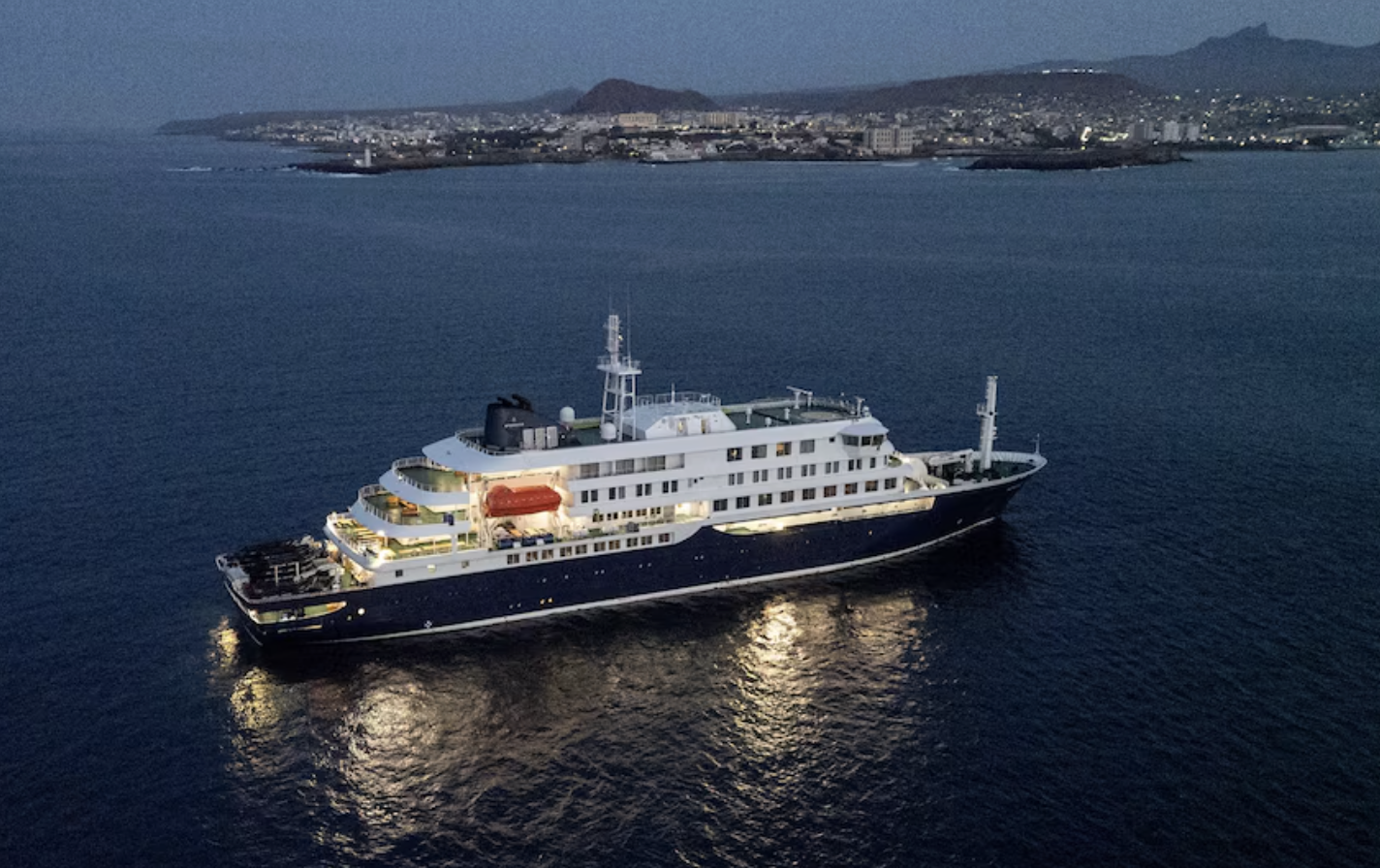
What began as an expedition cruise has now turned into an international public health scare, with U.S. officials monitoring passengers who have already returned home from the virus-stricken MV Hondius as health authorities race to contain a deadly hantavirus cluster.
The number of confirmed cases tied to the ship has now climbed to five, according to health officials, while more than 100 passengers remain aboard as the vessel heads away from Cape Verde toward the Canary Islands. So far, three people have died, and several others have been hospitalized or evacuated as officials across multiple countries try to prevent the outbreak from growing worse.
In the United States, health authorities in Arizona and Georgia say they are now keeping watch over passengers who returned home after traveling on the ship. Arizona officials said they are monitoring one resident, while Georgia health officials said two residents are being observed after disembarking from the Hondius. At this point, none of those passengers have shown signs of illness.
The Centers for Disease Control and Prevention said Wednesday that the threat to the general American public remains extremely low, even as concern builds over the outbreak aboard the ship. In a public statement, the CDC said its top priority is protecting U.S. passengers and noted that the State Department is leading a broader government response involving health officials at home and abroad.
Still, the situation has become increasingly alarming because this is not just any hantavirus outbreak. The virus involved has been identified as Andes hantavirus, a strain that has historically shown potential for person-to-person transmission. That detail has put global health officials on high alert, even as the World Health Organization continues to stress that the overall public health risk remains low.
The Hondius had been off the coast of Cape Verde when authorities began dealing with the outbreak more aggressively. Three people were medically evacuated from the ship, including two who were reported to be in serious condition. Those two have since landed in the Netherlands, where specialist medical and screening teams received them. A third evacuee, who has not shown symptoms but was identified as a close contact of a German passenger who died on May 2, was also removed from the ship, though officials said the flight transporting that individual experienced delays.
WHO Director-General Tedros Adhanom Ghebreyesus confirmed that monitoring and follow-up efforts are now underway not only for those still aboard the ship, but also for passengers who already left and returned to their home countries. In some cases, health authorities are urging former passengers to self-isolate as a precaution.
For the moment, officials say there are no symptomatic passengers still onboard. But that does not mean the danger has passed. According to WHO doctors involved in the evacuation effort, the people now considered most at risk are crew members and medical staff who had the closest contact with sick passengers during the crisis.
Two newly confirmed cases among crewmembers pushed the total confirmed infections to five. Health officials also confirmed that a passenger from the ship later sought care in Zurich, Switzerland, after responding to an email alert from the cruise operator. He has since been diagnosed and is receiving treatment.
The three earlier confirmed cases paint an even darker picture. One involved a woman who had already disembarked and was traveling home through the Netherlands. Another was a British national now listed in critical but stable condition at a hospital in Johannesburg. A third passenger, who had traveled on the first leg of the voyage, is being treated at University Hospital Zurich.
One of the deaths has also triggered a separate alert involving an international airline. Dutch carrier KLM said health authorities informed the company that one of the people who died from the virus had briefly boarded a KLM flight in Johannesburg on April 25. Because of the passenger’s medical condition, the crew did not allow that person to continue traveling. The passenger later died in Johannesburg. KLM said passengers who were on that flight are now being notified.
As the virus scare deepens, the Hondius is continuing its trip toward the Canary Islands, a journey expected to take several days. But even that next step has been surrounded by political tension. Officials in Cape Verde had earlier said the ship would likely sail to Tenerife, but leaders in the Canary Islands pushed back sharply. Canary Islands President Fernando Clavijo said his government opposed allowing the luxury vessel to dock there without more information, warning that the public had not been properly reassured about safety.
Spain’s health minister later said that once the ship reaches the port of Granadilla de Abona in the Canary Islands, authorities plan to launch a joint screening and evacuation operation to repatriate passengers. According to Spanish officials, foreign passengers will be sent home through the European civil protection mechanism unless their medical condition makes that impossible.
Oceanwide Expeditions, the company operating the ship, said it is also ramping up its onboard medical response. In coordination with Dutch public health authorities, the company said two infectious disease physicians from the Netherlands were being flown in to help provide additional care as the crisis evolves.
For now, officials are trying to strike a careful balance: avoiding public panic while acknowledging that a rare and potentially deadly virus has spread across national borders through a ship packed with international travelers. Even if the risk to the wider public is still considered low, the Hondius outbreak has already exposed how quickly a medical emergency at sea can become a global problem.
Discover more from Next Gen News
Subscribe to get the latest posts sent to your email.