

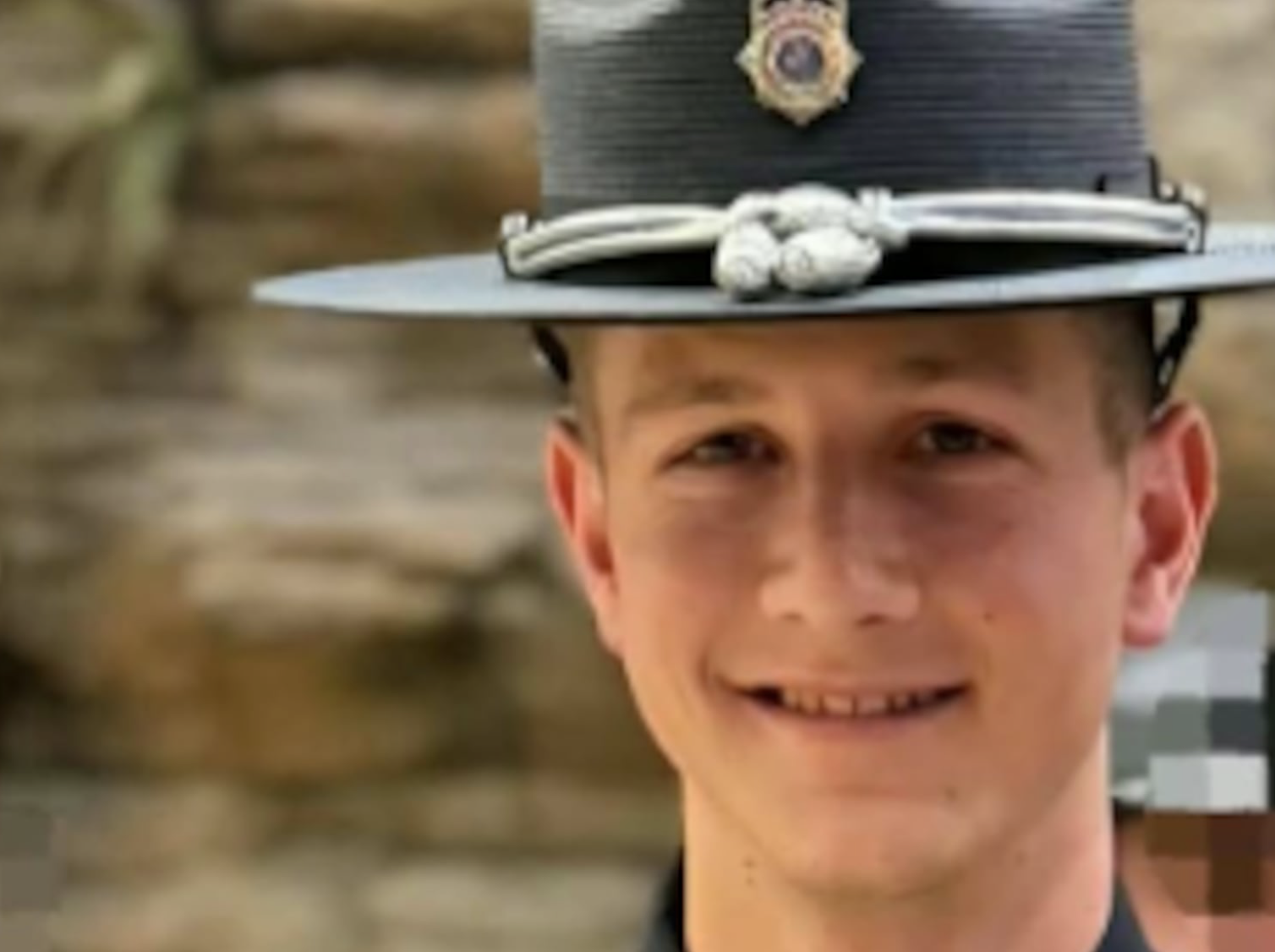
A 21-year-old Wisconsin state trooper who came to America as a teenager was handcuffed and detained by federal immigration agents while trying to visit his family, despite holding a government-issued work permit valid through 2030.
Carel Aaron Van Der Merwe, a South African native who has spent nearly seven years waiting for his family’s asylum case to be resolved, was arrested Thursday, November 5, at Dane County Regional Airport in Madison. He was released the following day, but the unusual arrest has sparked questions about the Trump administration’s immigration crackdown and why federal authorities targeted someone employed to enforce the law.
According to his attorneys, Van Der Merwe was preparing to board a domestic flight to visit his parents in New Mexico when plainclothes immigration officers approached him after he passed through airport security.
The trooper reportedly explained that he had a valid federal work permit and a pending asylum application. His attorneys said the agents responded that they did not care before placing him in handcuffs and leg shackles and transporting him to an immigration detention facility in Dodge County.
Van Der Merwe arrived in the United States legally with his parents in 2019, when he was just 14 years old. His family subsequently applied for asylum, but their case remains unresolved nearly seven years later.
During that time, he graduated from the New Mexico Military Institute with a criminal justice degree and pursued a career in law enforcement. He joined the Wisconsin State Patrol in July 2025 after completing the agency’s training program, which included a graduation ceremony attended by Democratic Gov. Tony Evers.
His attorneys say he was authorized to work by U.S. Citizenship and Immigration Services, a federal agency operating under the same Department of Homeland Security that oversees ICE.
That contradiction has become a central point of criticism.
“Now the same government that authorized him to work has locked him up,” attorney Marc Christopher said.
Homeland Security defended the arrest, arguing that Van Der Merwe had overstayed the six-month admission period granted when he entered the country in March 2019.
“Work authorization or a pending application do not confer legal status in the U.S.,” the department said.
While a work permit does not automatically grant lawful immigration status, Van Der Merwe’s attorneys maintain that his family followed the asylum application process and that his authorization to work remains valid.
The case has also drawn attention to a striking contrast in the Trump administration’s immigration policies. While the administration has prioritized refugee admissions for certain white South Africans, a South African-born officer already serving an American community found himself facing possible deportation.
The Wisconsin Law Enforcement Association publicly supported Van Der Merwe, calling for fair treatment and due process.
Republican Rep. Derrick Van Orden also reportedly intervened, contacting Homeland Security Secretary Markwayne Mullin about the detention before the trooper’s release.
Van Der Merwe was freed Friday, November 6, after approximately 24 hours in custody. However, his legal troubles are far from over.
He remains in deportation proceedings and must report regularly to immigration authorities under an order of supervision that includes electronic monitoring.
His attorneys are demanding answers about why he was detained in the first place.
“USCIS, an agency within DHS, authorized Carel to work. He used that authorization to serve and protect Wisconsin communities. ICE, another agency within DHS, then detained him,” his legal team said.
For now, the young trooper is out of detention, but his future in the country he has called home since childhood remains uncertain.
Discover more from Next Gen News
Subscribe to get the latest posts sent to your email.
I hope that he can get it resolved, become a full citizen and continue protecting the state of Wisconsin, but… HOW did he get a Wisconsin badge without being a citizen in the first place? Do they not do background checks on this there? (From experiences in the past, WY, KY, and NC do at least. I thought that all 46 States and 4 Commonwealths did.(?)….)