

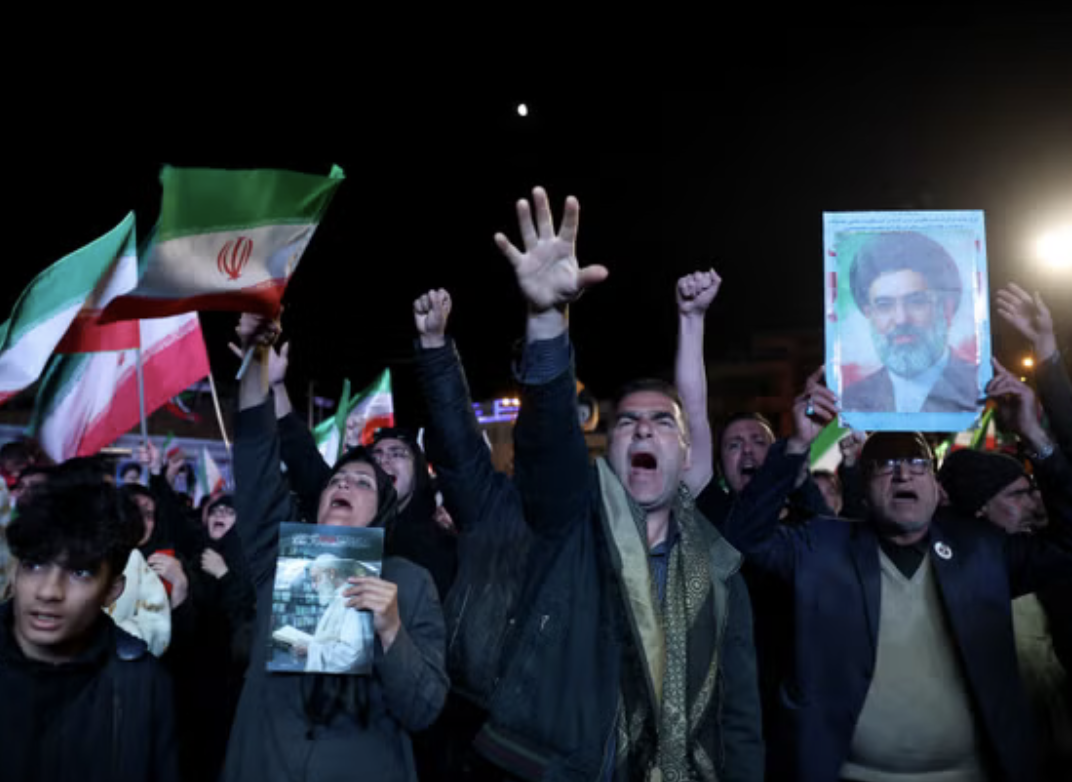
Donald Trump is reportedly trying to put the finishing touches on a sweeping new deal with Iran, and if the claims are true, the fallout could be massive.
According to the explosive new report, the proposed agreement is being pitched as a path to peace and a financial win for the United States, with supporters claiming it could eventually bring in as much as $1 trillion while also helping ease oil prices. But for many critics, the bigger question is whether this is really a peace plan or just another risky Trump power play dressed up as a victory lap.
The reported framework comes after fierce backlash over Trump’s decision to strike Iran, a move that has triggered outrage across the political spectrum and deepened fears about yet another dangerous U.S. entanglement in the Middle East. While Trump has insisted he is steering the situation toward stability, opponents say Americans are once again being asked to trust a leader whose foreign policy often seems driven more by ego and spectacle than strategy.
Retired Army Maj. Gen. Paul Vallely, one of Trump’s supporters, insisted the president is still controlling the chessboard.
“Trump is the ultimate negotiator,” Vallely said, arguing that the president uses intimidation and psychological tactics to keep adversaries off balance. He suggested Trump’s threats against Iran were part of a broader pressure campaign meant to force the regime into submission.
Still, even those backing the talks acknowledge that any final deal could take years to lock down. And in the meantime, the details now surfacing are already raising eyebrows.
One of the most controversial reported elements involves the Strait of Hormuz, the critical shipping lane through which about 20 percent of the world’s oil moves. Insiders claim Iran could keep control over the waterway under the proposal, while commercial ships would be required to notify intermediary companies about their cargo and pay a staggering $1 million fee per vessel.
Trump has reportedly floated the idea of a joint venture with Iran tied to those tolls, describing the concept as a win-win because the U.S. has spent enormous resources keeping the passage open and secure. Supporters argue that if America is footing the bill for regional stability, it should also share in the profits. Critics, however, are likely to see the idea very differently, especially given the ethical and geopolitical minefields such an arrangement would create.
The broader 10-point peace plan is said to go even further. Among the reported terms are a commitment to nonaggression, the lifting of major sanctions against Iran, and the scrapping of United Nations Security Council and International Atomic Energy Agency board resolutions targeting the regime. The proposal also allegedly includes the withdrawal of U.S. combat forces from Iran and a halt to military action across multiple fronts, including attacks by Israel on Lebanon.
Iran is also reportedly demanding that the U.S. pay for damage caused by recent strikes so the country can begin rebuilding. That demand alone is certain to ignite outrage among Americans who are already struggling with high costs at home and questioning why Washington always seems to find money for overseas conflicts but not for everyday people.
Foreign relations expert Michael Szanto argued that recent U.S. and Israeli actions have significantly weakened Iran, calling that a positive development for regional stability. But even that assessment is unlikely to quiet the growing concern over what Trump may be willing to give up in exchange for a headline-grabbing deal.
Trump, of course, is already trying to sell the public on the idea that everything is going according to plan. On Friday, April 17, he claimed the Strait of Hormuz was now completely open to commercial traffic while insisting the U.S. blockade on Iranian ports would remain in place until an agreement is finalized.
“Iran has agreed to never close the Strait of Hormuz again,” Trump wrote on Truth Social. “It will no longer be used as a weapon against the World!”
But the politics around the conflict are getting uglier by the day. The war has driven a sharp wedge into Trump’s own MAGA world, with even former allies turning on him. Among the loudest critics has been Rep. Marjorie Taylor Greene, who has accused Trump of caring more about war than the Americans he promised to protect.
Her frustration boiled over after Trump welcomed Sharon Simmons to the White House while she wore a “DoorDash Grandma” shirt and gave her a $100 tip. Greene used the moment to highlight the crushing financial pressure many Americans are facing.
“Cost of living is so high, and the value of a dollar is so low that senior citizens have to DoorDash to scrape by, but billionaires are always unaffected,” Greene wrote on X.
Then she delivered the line that cut straight to the political heart of the matter.
“Trump doesn’t care because he doesn’t feel it, and all he cares about is fighting his war with Iran,” she claimed.
For a president who built his image on putting America first, that kind of attack from one of his own former loyalists says a lot. And as more details about this reported Iran deal trickle out, Trump may find that selling it to an exhausted and financially strained public is much harder than posting about it online.
Discover more from Next Gen News
Subscribe to get the latest posts sent to your email.
Evil WOKE NextGen/Evil WOKE Democrats are horrified that TRUMP HAS BEEN SUCCESSFUL… AGAIN !!!
And they are left with nothing but TDS…
Friday the headlines were IRAN HAS SURRENDERED and Saturday the headlines were IRAN HAS BACKED OUT OF THE DEAL, attacked ships of their friends, and re-closed the straits!
Iran can’t be trusted, their negotiators agree to one thing, their military then requires/does the OPPOSITE !!!
Muslim Iran lies just like Muslim Obummer lied! Neither can be trusted! Never turn your back on them!