

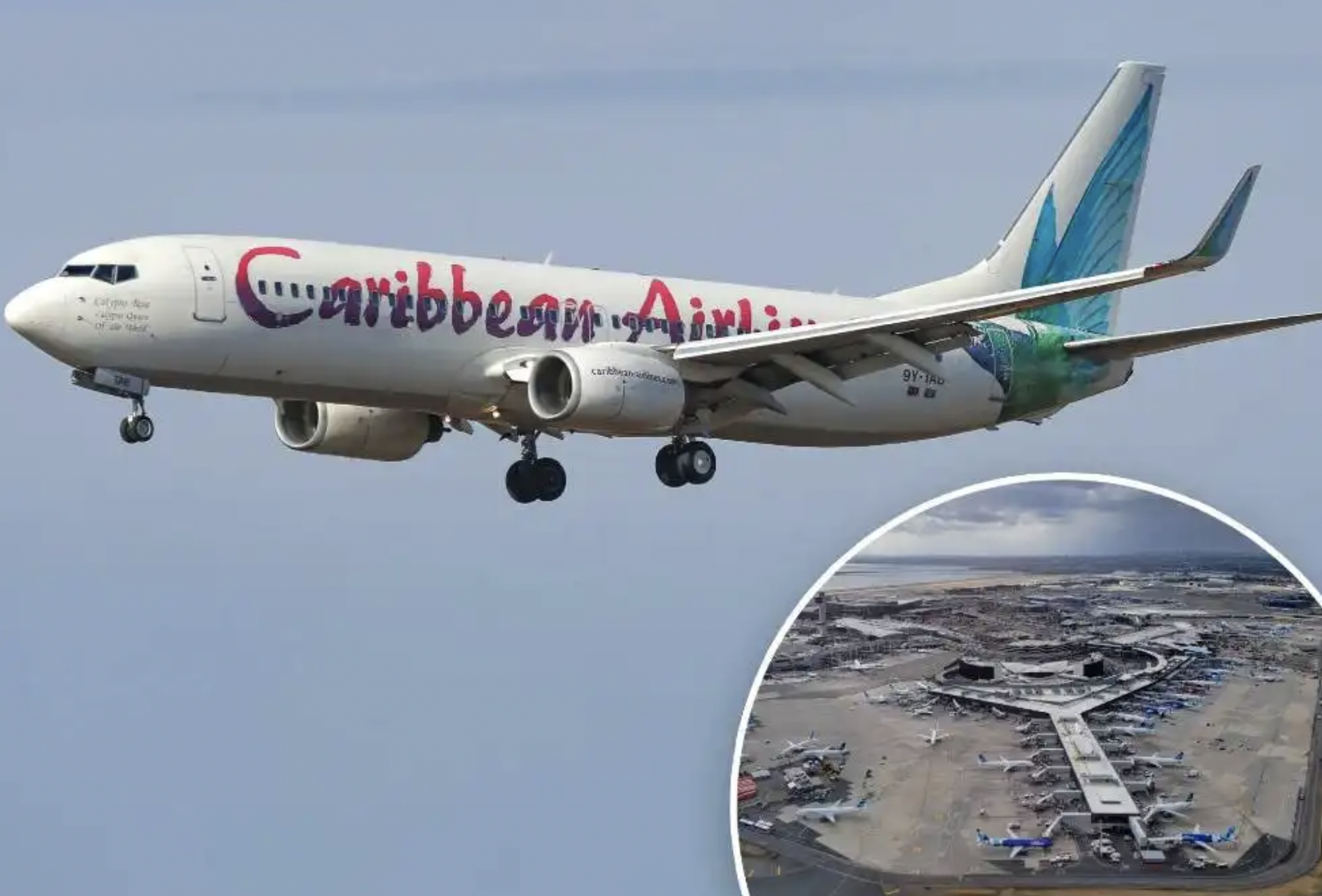
What should have been a routine flight from Jamaica to New York turned into a high-altitude drama with a legal twist few saw coming.
A passenger aboard Caribbean Airlines Flight BW005 went into labor and gave birth just as the plane was descending into New York City on April 4, setting off a stunning citizenship question that now has immigration experts and legal commentators weighing in. The mother delivered the baby shortly before noon as the flight approached John F. Kennedy International Airport, according to the airline.
Medical personnel were waiting when the plane landed, and both mother and newborn were attended to on arrival. Caribbean Airlines praised its crew for keeping calm and handling the situation professionally, saying the birth was managed according to standard procedures and that no emergency was declared during the flight.
But while the delivery itself ended safely, the bigger story may be what happened in the sky.
Now the child’s citizenship status appears to hang on a question that feels almost surreal: exactly where was the plane when the baby was born?
That detail could make all the difference. Legal experts say the answer may come down to whether the aircraft was inside US airspace at the exact moment of birth. If so, the child could qualify for American citizenship under the 14th Amendment and federal rules tied to births within US jurisdiction. If the birth happened outside US airspace, even by minutes, the situation becomes far murkier and could instead depend on the nationality of the parents or other international legal standards.
In other words, one baby’s future may be decided by a few miles in the sky.
The case has quickly drawn attention because it lands in the middle of an already heated national debate over immigration, borders, and birthright citizenship. For many on the left, the story is a reminder of how outdated and complicated immigration systems can become when human lives do not fit neatly inside political talking points. A baby being born between nations is not just a legal puzzle. It is also a deeply human moment exposing how fragile and bureaucratic the concept of belonging can be.
Air traffic control audio reportedly captured a ground controller joking that the baby should be named “Kennedy” after the airport. It was a light moment in an otherwise extraordinary situation.
Births on commercial flights remain exceptionally rare. A study published in 2020 found that between 1929 and 2018, only 74 infants were born on 73 commercial flights worldwide. That makes this latest case not just unusual, but the kind of story that instantly raises questions far beyond the cabin.
Caribbean Airlines says pregnant passengers can travel without medical clearance through the end of the 32nd week of pregnancy, though the airline does not allow passengers after the 35th week. That policy now sits in the background of a story that has become much bigger than an in-flight medical emergency.
For now, the baby’s arrival is being celebrated as a safe delivery. But the legal uncertainty left behind has turned what should have been a joyful ending into a cross-border riddle. And in a country still locked in political battles over who gets to belong, this child’s first breath may already be part of a much larger fight.
Discover more from Next Gen News
Subscribe to get the latest posts sent to your email.
Where are the parents from? If parents aren’t citizens the child should not be. If my cow had a baby over