

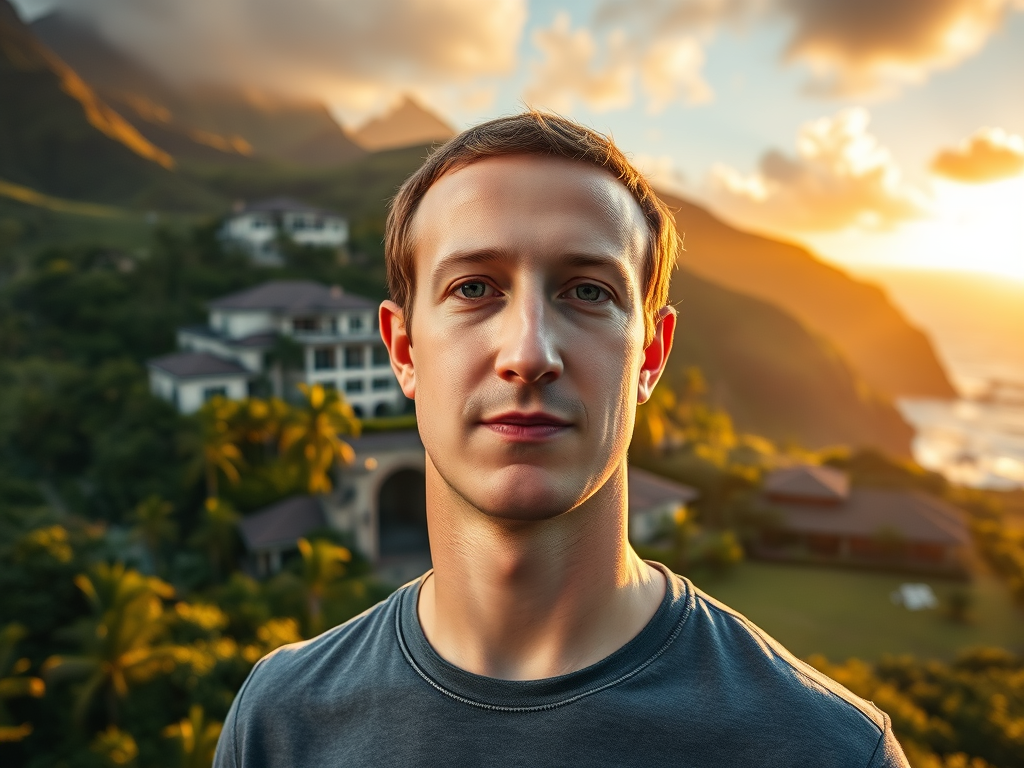
Mark Zuckerberg’s sprawling Hawaii property has often been the subject of fascination and controversy.
In a recent interview with Emily Chang on The Circuit, the Meta CEO dismissed claims about his estate’s purported doomsday bunker. Instead, he described the 5,000-square-foot underground facility as a simple “area of refuge” from hurricanes.
“I think the whole thing got blown out of proportion, as if the whole ranch was some kind of, like, doomsday bunker,” Zuckerberg said. “It’s just not true.”
The property, located on Kauai, has been under scrutiny since a 2023 investigation by Wired. The report detailed a network of treehouses connected by rope bridges, two luxury mansions, and the now-infamous underground bunker. According to the investigation, the bunker includes mechanical equipment, living spaces, and an escape hatch, all connected to the main residences via tunnel.
During the interview, Zuckerberg highlighted his agricultural ambitions. He aims to create what he calls “the highest quality beef in the world” through a vertically integrated ranching operation.
“We’re growing macadamia nuts on-site and even brewing beer because it helps the cows’ appetite,” he said. “It’s about doing things sustainably and innovatively.”
While Zuckerberg’s ranching vision has been framed as a commitment to sustainability, not everyone sees it that way. Local and indigenous groups have voiced concerns about his presence on the island. The land acquisitions by Zuckerberg and his family—which total hundreds of acres—have fueled tensions over access, cultural preservation, and environmental impacts.
A resident of Kauai, who wished to remain anonymous, said, “It feels like he’s building a fortress, not a home. No matter how much he donates, it doesn’t erase the fact that people feel pushed out.”
Zuckerberg, for his part, has sought to address these concerns. His family has donated to local charities and community programs, including funding education initiatives and conservation efforts. However, critics argue these contributions don’t mitigate the broader issues tied to land privatization.
Zuckerberg’s Kauai estate is designed for more than ranching. The primary mansions feature state-of-the-art amenities such as gyms, pools, saunas, and a tennis court. The compound’s unique architecture—including 11 treehouses—reflects a blend of luxury and innovation.
The bunker’s design, described as having a concrete-filled metal door reminiscent of bomb shelters, underscores the estate’s focus on security. Yet, Zuckerberg insists it’s “just a basement” with practical purposes.
Zuckerberg’s Hawaiian retreat exemplifies the intersection of extreme wealth, privacy, and public scrutiny. While he downplays the significance of his bunker, it remains a symbol of the growing divide between billionaires and the communities they inhabit.
As debates over land use and cultural respect continue, the question remains: can philanthropy and innovation outweigh the challenges of coexistence?
Discover more from Next Gen News
Subscribe to get the latest posts sent to your email.
As a supporter of evil warmongering Hitlerite Jokementia Bribery, Zuck prolly thought a bomb shelter bunker would come in handy some day soon…