

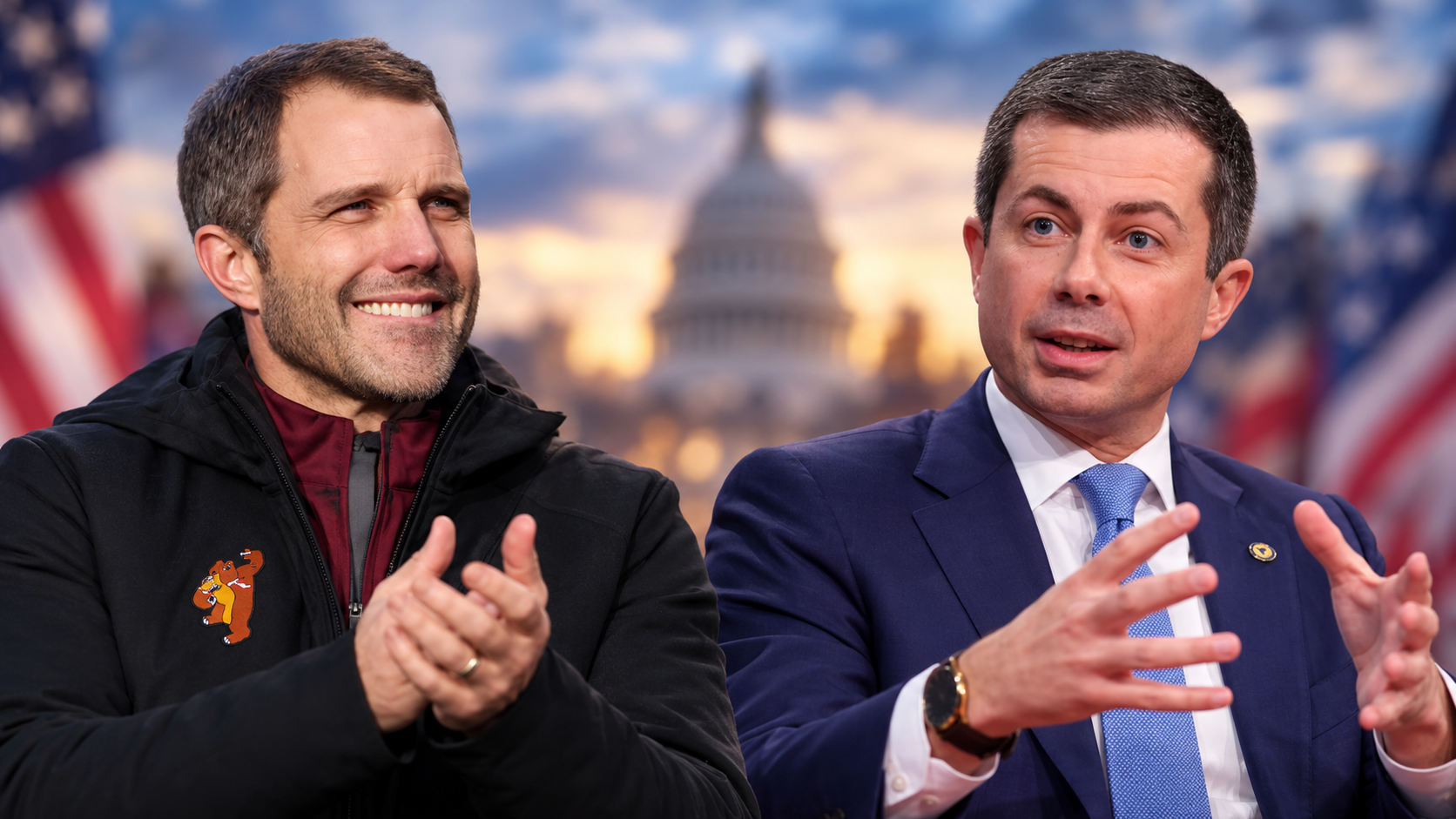
Former Transportation Secretary Pete Buttigieg has made a surprising political move that is exposing deep divisions within the Democratic Party just days before the midterm elections.
Buttigieg, one of the party’s most recognizable figures and a possible 2028 presidential contender, announced Friday that he is backing independent candidate Seth Bodnar in Montana’s closely watched U.S. Senate race, passing over the Democratic Party’s own nominee, Alani Bankhead.
The unexpected endorsement comes as Democrats search for ways to compete in traditionally Republican states and prevent President Donald Trump’s allies from strengthening their influence in Washington.
Buttigieg, 44, praised Bodnar’s military service, leadership and willingness to work across party lines, arguing that Montana needs someone who will put results ahead of political loyalty.
“Seth and I don’t agree on everything,” Buttigieg acknowledged in his endorsement, while emphasizing Bodnar’s commitment to public service.
He also highlighted several priorities important to Democratic voters, including protecting reproductive rights, reducing household expenses and confronting corruption in Washington.
Bodnar, 47, is a former Army Green Beret and former president of the University of Montana. Although he is running as an independent, his campaign has attracted support from prominent Democrats who believe he has a better chance of defeating Republican candidate Kurt Alme.
The seat is being vacated by retiring Republican Sen. Steve Daines, creating an opportunity for a competitive contest in a state Republicans have dominated in recent elections.
However, the strategy has created an increasingly bitter political fight.
Bankhead, a retired Air Force lieutenant colonel and former federal agent, won the Democratic nomination in June and has repeatedly refused calls to withdraw. She argues that abandoning Democratic candidates in favor of independents will only weaken the party’s ability to rebuild support in Republican strongholds.
The divisions became even more dramatic on October 12, when Montana Democratic Party Chair Shannon O’Brien resigned from her leadership position and endorsed Bodnar instead.
O’Brien argued that Bodnar offered the strongest opportunity to defeat Alme, while Bankhead accused the former party leader of working against her campaign for months.
Former Democratic Sens. Jon Tester and Max Baucus have also backed Bodnar, underscoring just how far the disagreement has spread among Montana Democrats.
The political calculations are complicated by conflicting polling. An October survey from Concord Public Opinion Partners showed Bodnar narrowly leading Alme, 37% to 35%, while Bankhead received 13%.
Other surveys have painted a considerably more difficult picture for the independent candidate. A more recent Quantus Insights poll placed Alme at approximately 46%, Bodnar at 29% and Bankhead at 21%.
Those differences leave considerable uncertainty about whether Bodnar can assemble enough support from Democrats, independents and moderate Republicans to overcome Alme.
The controversy surrounding Bankhead has also taken another turn.
During an interview with Montana PBS, the Democratic nominee alleged that she had been offered a position with the Democratic National Committee if she abandoned her Senate campaign.
Bankhead rejected the alleged proposal, expressing frustration with what she described as efforts by fellow Democrats to push her aside.
The DNC has firmly denied that it offered her a job, and Bodnar’s campaign has denied any involvement in an effort to offer her employment in exchange for withdrawing.
Montana Attorney General Austin Knudsen, a Republican, subsequently announced that his office would look into the allegation. No wrongdoing has been established.
Meanwhile, Republicans are treating the race seriously. Trump recently traveled to Montana to campaign for Alme, a former U.S. attorney, while Vice President JD Vance is also expected to visit the state before Election Day.
For Buttigieg, the endorsement represents an unusual departure from his extensive campaigning on behalf of Democratic candidates across the country.
It also highlights a larger question facing Democrats: whether the best path to challenging Republican dominance in conservative states involves strengthening the Democratic brand or supporting independent candidates who might appeal to a broader electorate.
There is another important distinction. Bodnar has pledged that, if elected, he will not caucus with either major party, meaning his victory would not automatically translate into another seat in the Democratic Senate caucus.
Still, his supporters believe his positions on issues such as reproductive freedom, affordability and government accountability make him an attractive alternative to Republican leadership.
With Bankhead remaining in the race and Republicans working to consolidate their support behind Alme, the contest has become a test of whether an unconventional political coalition can succeed in a deeply conservative state.
Montana voters will deliver their verdict on November 3, and the outcome could influence how Democrats approach difficult Senate races in the years ahead.
Discover more from Next Gen News
Subscribe to get the latest posts sent to your email.
 What's Up Today Editorial Team