

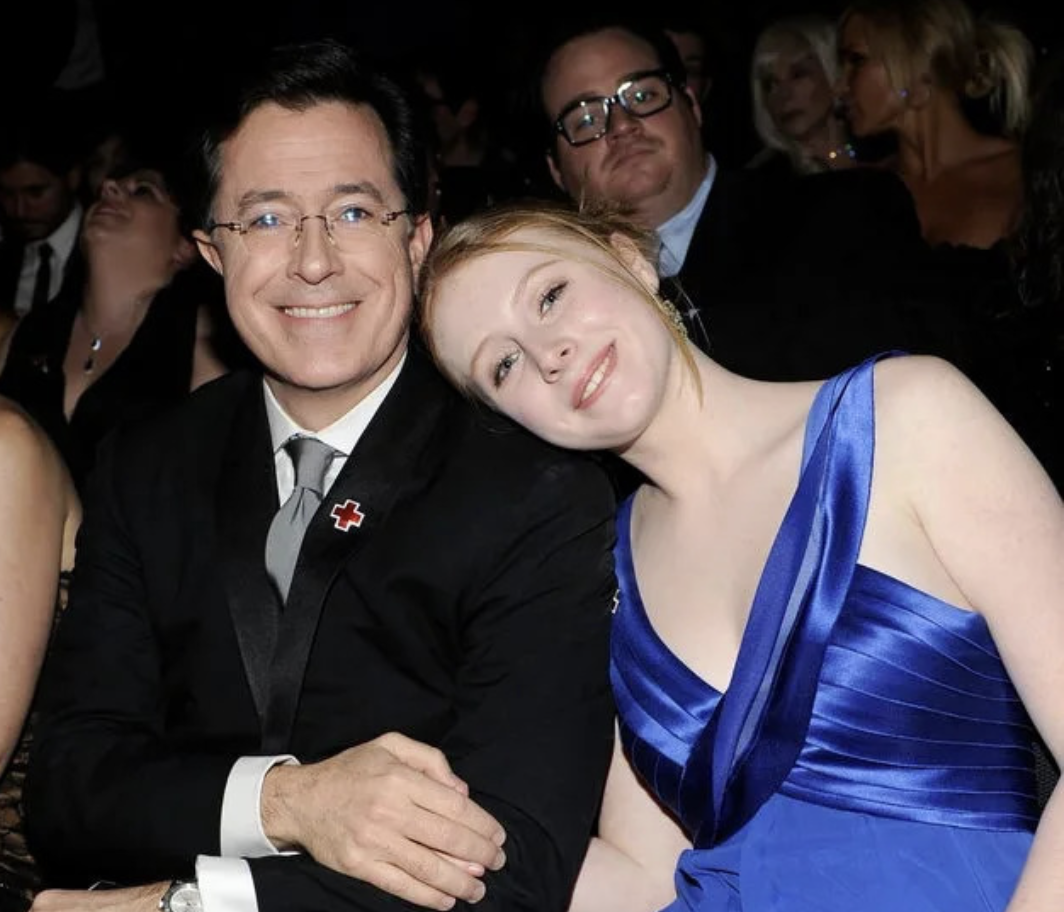
The turmoil inside CBS News appears to be deepening, with Stephen Colbert’s daughter reportedly becoming the latest producer to walk away from “60 Minutes” amid a wave of high-profile departures, internal unrest and unanswered questions about the legendary program’s future.
Madeleine Carlisle, a respected associate producer who previously worked as a journalist for Time and The Atlantic, resigned from “60 Minutes” in recent days, according to media newsletter Status.
Her departure creates an especially uncomfortable situation for CBS. Carlisle’s exit comes only months after the network canceled her father’s top-rated “Late Show,” bringing Stephen Colbert’s 11-season run to an end on May 21.
CBS insisted at the time that the decision to cancel Colbert’s program was “purely financial,” but the move sparked outrage among Democrats, media figures and viewers who questioned whether the outspoken Trump critic had become politically inconvenient for the network.
CBS and Carlisle declined to comment on her resignation.
Her exit is reportedly part of a much larger talent drain at “60 Minutes,” which has been rocked by the removal of several veteran journalists and producers. Staffers have reportedly dubbed the May purge “Black Thursday.”
Among those pushed out were correspondents Sharyn Alfonsi and Cecilia Vega, executive producer Tanya Simon and executive editor Draggan Mihailovich.
More departures may be coming as “60 Minutes” prepares for its fall return under CBS News editor-in-chief Bari Weiss and new executive producer Nick Bilton, according to Status.
The upheaval has fueled growing fears that one of television’s most respected investigative programs could be undergoing a dramatic ideological and editorial transformation.
The latest resignation also comes as CBS faces fresh scrutiny over a planned investigation involving convicted sex offender Jeffrey Epstein that never made it to air.
Sen. Ron Wyden, an Oregon Democrat, said he was interviewed by Alfonsi in March for a proposed report examining the relationship between major banks and Epstein.
However, neither Wyden’s interview nor the broader investigation was broadcast before the “60 Minutes” season ended in May.
CBS confirmed Alfonsi interviewed Wyden for a potential report but said the segment was not completed in time to air.
The network strongly denied that the investigation had been blocked for political or editorial reasons.
“We are proud of our aggressive and extensive reporting on the Epstein scandal,” a CBS News spokesperson said. “That reporting continues. We air pieces when they are ready and suggesting that an interview is being ‘suppressed’ for any reason is categorically false.”
Still, the unaired segment has become another source of suspicion as CBS struggles to defend its editorial independence during a period of enormous corporate and political pressure.
Alfonsi’s departure followed her public accusation that CBS management interfered with her reporting on Venezuelan migrants held inside El Salvador’s notorious CECOT prison.
CBS later declined to renew her contract.
Vega was also let go, while longtime executive producer Simon was replaced by Bilton, an outsider who now faces the difficult task of rebuilding the program before its return.
The shakeup did not stop there.
Scott Pelley, a CBS veteran of 37 years, was fired weeks later after confronting management about the overhaul, according to the report. Anderson Cooper also ended his nearly 20-year role as a part-time “60 Minutes” correspondent in February, saying he wanted to spend more time with his family.
The personnel crisis is unfolding as Paramount’s proposed merger with Warner Bros. Discovery faces an antitrust lawsuit from a coalition of state attorneys general.
CNN has increasingly emerged as the public center of that political and legal battle, particularly because the deal could place CNN and CBS under the influence of the Ellison family.
On Tuesday, TKO Group executive chairman Ari Emanuel suggested creating an outside editorial board to oversee CNN if the merger is approved.
Speaking on CNBC’s “Squawk Box,” Emanuel said the legal fight was partly “about politics, about CNN.”
He suggested an editorial board could reassure critics concerned about “Larry Ellison controlling CNN and CBS.”
Paramount CEO David Ellison previously argued in a New York Times opinion essay that CNN had become the real flashpoint in the merger dispute. He promised that the combined company would deliver news coverage “down the middle.”
Emanuel supported Ellison’s defense of the deal while proposing outside oversight to ease concerns about the family’s potential control over two of America’s most influential news organizations.
It remains unclear whether the editorial board idea will gain serious support.
A federal judge is expected to decide later this year whether the states’ antitrust challenge will proceed to trial or be delayed until 2027.
For now, Carlisle’s resignation adds another layer of uncertainty to a network already facing accusations of political pressure, corporate interference and a widening collapse of confidence among some of its most experienced journalists.
Discover more from Next Gen News
Subscribe to get the latest posts sent to your email.