

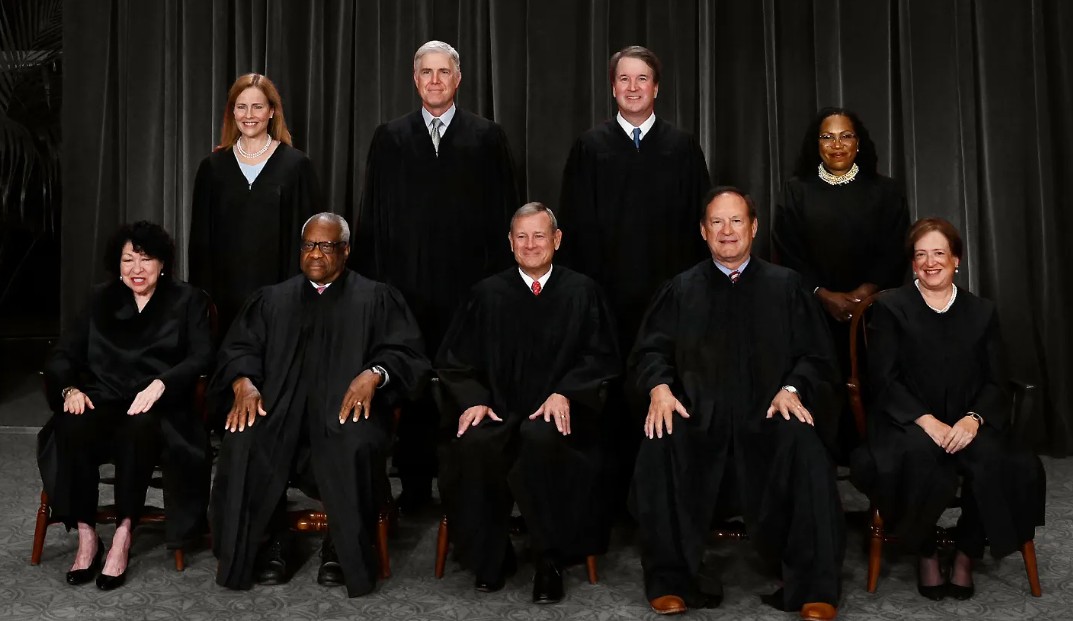
A once little-known Supreme Court tool is now at the center of a growing controversy — and a new report is pulling back the curtain on how it quietly reshaped major decisions in Washington.
According to a bombshell investigation by The New York Times, the Supreme Court’s so-called “shadow docket” — a fast-track system for emergency rulings — has evolved from a rarely used procedure into a powerful way to decide high-stakes issues without the usual transparency.
Traditionally, the emergency docket was meant for urgent matters that couldn’t wait. But over the past decade, it’s increasingly been used to influence major public policy decisions, often with little explanation and no signed opinions.
The turning point traces back to 2016, when the court abruptly blocked the Obama administration’s Clean Power Plan — a key environmental policy tied to Barack Obama — before it had even fully moved through the lower courts. The late-night ruling came in a brief, unsigned order that stunned legal experts and even some justices.
At the center of that decision was Chief Justice John Roberts, who reportedly moved quickly on an emergency request from West Virginia while other justices were already away for the court’s winter break. Conservative justices, including Samuel Alito and Clarence Thomas, backed the move — arguing that failing to act could undermine the court’s authority.
Not everyone agreed. Internal memos show Elena Kagan raising serious concerns about using such an extraordinary process for a sweeping policy decision, warning it broke from long-standing norms.
Even those involved admitted it was unprecedented at the time. But what started as a one-off has since become routine.
In recent years, the shadow docket has played a major role in advancing policies tied to Donald Trump, including decisions allowing cuts to the federal workforce and permitting a ban on transgender military service while legal challenges continued in lower courts.
Critics say the process lacks transparency, pointing out that many of these rulings are unsigned and come with little or no detailed reasoning — a sharp contrast to traditional Supreme Court opinions.
That concern is now being echoed from inside the court itself. Justice Ketanji Brown Jackson recently warned that the court is increasingly stepping into politically charged issues without acknowledging the broader consequences.
She noted that when she worked at the court in the late 1990s, the emergency docket was used almost exclusively for urgent cases like death penalty appeals — not sweeping policy battles.
Discover more from Next Gen News
Subscribe to get the latest posts sent to your email.
Well looks like more leakers in the so called highest court in the land. Well it looks like the left is pulling all the stops to stop President Trump on everything he is doing for the American people and America. The left already has the rest of the judicial system bought off why not Supreme Court justices also? Funny how the two leaks that have come out have both been on President Trump only? It’s just like all the leaks from government has been on President Trump administration’s. We all know who did that don’t we? Let President Trump do his job and stop the left’s and rino’s stupidity once and for all. Democrats just pushing their voters toward President Trump and I am one of them. I have watched democrats go flat out insane and I want to know what they are so afraid of? I now understand the MAGA supporters. I have learned President Trump has been right about everything. It is disturbing how many people have threatened him publicly. Please democrats why are you so bent on destroying him and everyone around him? All I see is hate, hate, hate, why?
Yep, combine failing WOKE NYTimes with evil WOKE NextGen and you’re not going to get a good result!
Democrats HATE losing the POWER to do EVIL/CORRUPTION/WARS/ISLAM !