

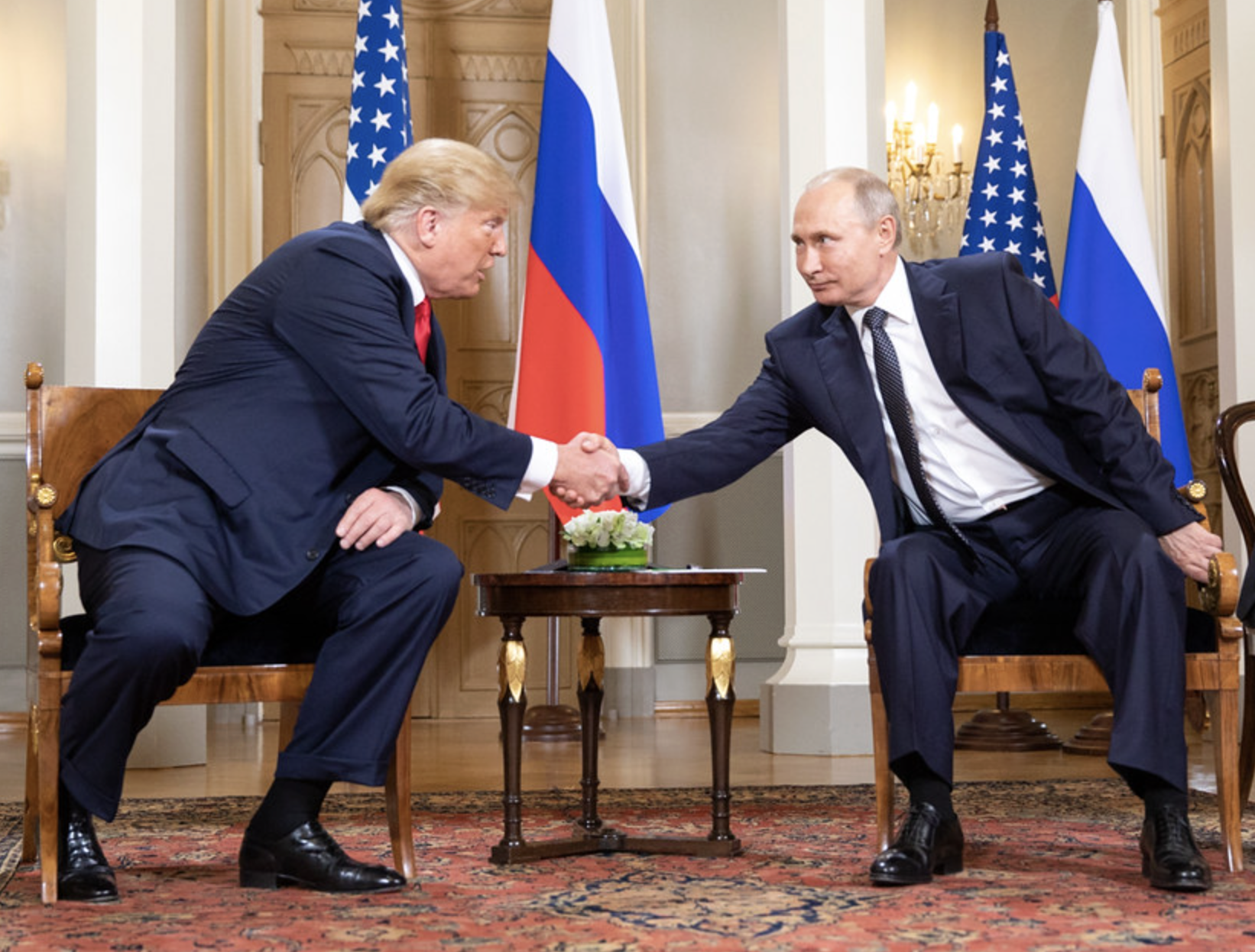
The fragile detente between President Donald Trump and Russian leader Vladimir Putin has once again detonated into a public standoff — and this time, experts warn, it could push the planet toward the edge of nuclear confrontation.
For years, Trump bragged about his “strong relationship” with Putin, calling him “a man I respect.” But behind the photo ops and warm words, cracks have long been visible.
According to multiple U.S. intelligence officials, a planned November summit between the two men fell apart after Putin unveiled Russia’s latest “doomsday weapon” — a nuclear-powered cruise missile capable of reaching the U.S. mainland.
One senior defense analyst told The Atlantic that “the relationship has gone from awkward alliance to open hostility in record time.”
“Putin has always tested American resolve,” the source added. “This time, Trump took the bait — and answered with fire.”
Late last month, Moscow confirmed the successful test of the Burevestnik missile — codenamed Skyfall by NATO — a weapon capable of flying nearly 9,000 miles and evading radar detection for hours.
The October 21 test reportedly lasted over 15 hours, with the missile launched from an Arctic military base before vanishing beyond the range of NATO satellites.
Defense analysts say it could strike targets like New York or Washington, D.C. without being intercepted. “It’s not just a missile — it’s a message,” said former CIA nuclear adviser Robert Kelley. “Russia is saying: we can hit you before you even know it.”
Enraged by the news, Trump fired back during a press gaggle aboard Air Force One, declaring that the United States doesn’t need to “show off” its capabilities.
“We test missiles all the time,” Trump said. “We have the best nuclear submarines in the world — right off their shore. They’re not playing games with us. We’re not playing games with them either.”
His remarks drew immediate concern from world leaders and U.S. allies, who fear Trump’s public threats could trigger an escalation unseen since the Cuban Missile Crisis.
“This isn’t a movie trailer,” said Democratic Senator Chris Murphy of Connecticut. “The President of the United States just threatened a nuclear strike over the Atlantic. That’s not diplomacy — that’s insanity.”
Arms-control expert Jeffrey Lewis of Middlebury College described Russia’s new missile as “a tiny flying Chernobyl.”
“It’s powered by a miniature nuclear reactor that spews radioactive exhaust,” he said. “Even testing it risks spreading contamination across the Arctic. This is the kind of science-fiction weapon that destabilizes the entire global balance.”
Lewis warned that the ongoing nuclear one-upmanship between Trump and Putin is “a blueprint for disaster.”
“This is what a new arms race looks like — only this time, it’s happening live on social media.”
Across Europe and Asia, governments are quietly bracing for what some diplomats call “the unthinkable.”
French newspaper Le Canard Enchaîné reported that France’s Ministry of Health has ordered hospitals to prepare for a “mass casualty event” by March 2026 — suggesting officials fear a major conflict is not just possible, but imminent.
Meanwhile, South Korea has requested an emergency $47.6 billion defense budget amid growing tension with both North Korea and China.
In Brussels, NATO Secretary-General Jens Stoltenberg urged “maximum restraint” from all parties, while hinting that the alliance was on “high alert.”
Despite global unease, Trump remains undeterred. In a rally speech in Pensacola, Florida, he brushed off talk of World War III as “fake news.”
“I’m not worried,” he told the cheering crowd. “We have the strongest military in the world — by far. Believe me.”
Yet behind the bravado, even some inside his administration are alarmed. A Pentagon official, speaking on background, admitted: “We’re watching a standoff between two men who both believe they can’t blink first. That’s how wars start.”
With Trump renaming the Pentagon the “Department of War” earlier this year and expanding military spending beyond Cold War levels, critics argue his rhetoric is no longer just bluster — it’s strategy.
“This is a president who thrives on brinkmanship,” said retired General Mark Hertling. “But when you play chicken with nuclear powers, one wrong move doesn’t mean political fallout. It means real fallout.”
Discover more from Next Gen News
Subscribe to get the latest posts sent to your email.
 What's Up Today Editorial Team
trump is an FI!