

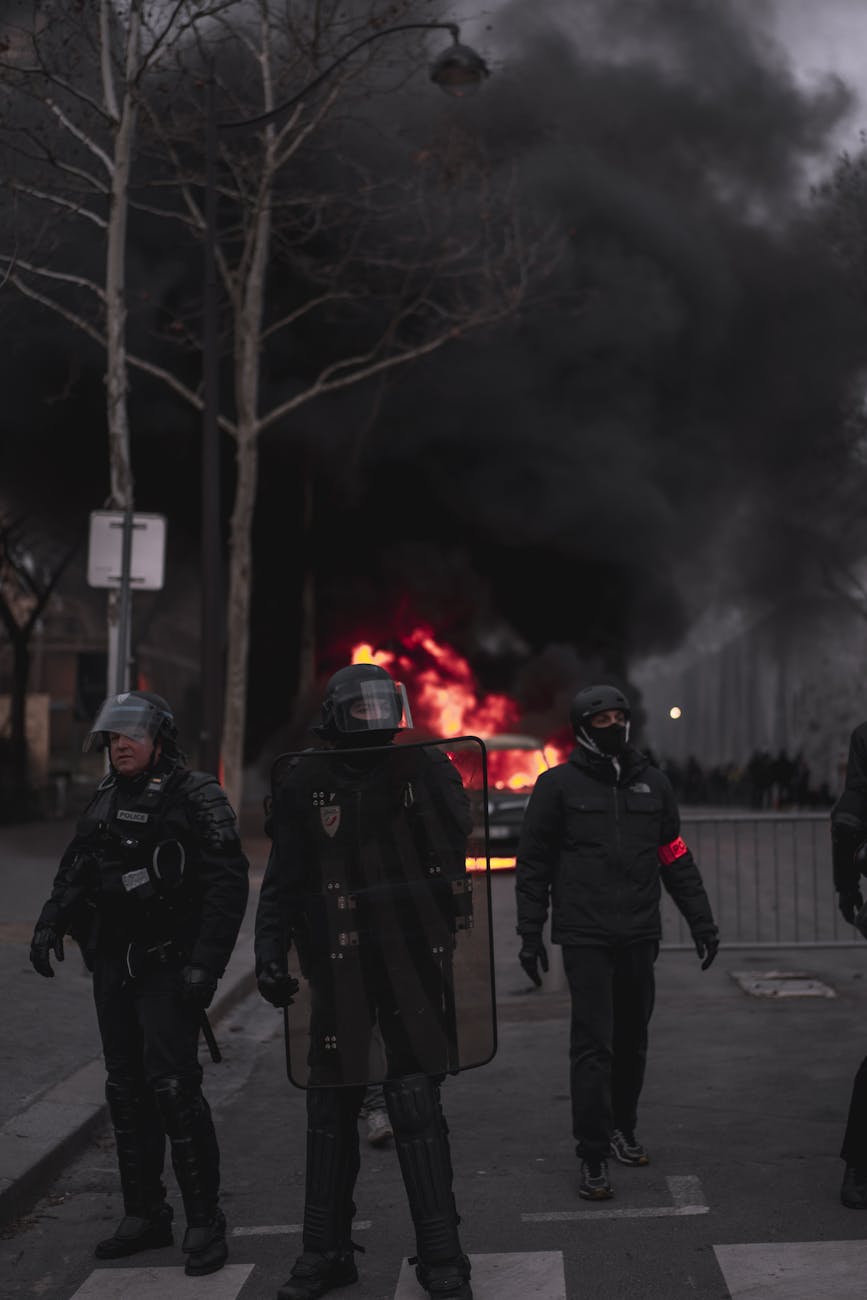
The largest gang raid in Rio de Janeiro’s history spiraled into chaos Tuesday, leaving at least 64 people dead — including four police officers — just days before world leaders and royals arrive for major events.
What began as a targeted operation to capture leaders of the Red Command drug cartel on October 28 turned into a full-blown urban battle in Rio de Janeiro’s northern suburbs.
Authorities deployed more than 2,500 officers, two helicopters, 22 armored vehicles, and a fleet of drones in what they dubbed Operation Contenção (“Operation Containment”). The raid struck the city’s notoriously volatile Penha and Alemão districts — home to sprawling favelas controlled by heavily armed traffickers.
Within minutes of the police’s arrival, gunfire and grenades exploded through the narrow alleys. Dozens of vehicles were torched and barricades set ablaze as residents fled.
“This is not common crime anymore,” said Rio state governor Cláudio Castro in a statement. “This is drug-terrorism. Our police are being met with bombs dropped from drones.”
By nightfall, at least 64 people were confirmed dead, making it the most lethal police operation ever recorded in Rio.
Among the dead were four officers — Civil Police members Marcos Vinícius Cardoso de Carvalho, 51, and Rodrigo Velloso Cabral, 34; and Military Police officers Heber Carvalho da Fonseca, 39, and Cleiton Serafim Gonçalves, 42.
In a somber message, the Civil Police said, “They were killed in defense of society on Public Servant’s Day. Our hearts are with their families and colleagues who continue this fight.”
Police officials reported seizing more than 90 rifles, half a ton of narcotics, and nearly 100 arrests. Authorities said they had prepared 51 arrest warrants before the operation — most targeting drug traffickers, with three suspects wanted for torture.
The deadly operation comes at a sensitive time for Brazil. In less than two weeks, the country is set to host the UN Climate Summit (COP30) in Belém on November 6, and Prince William is scheduled to arrive in Rio de Janeiro on November 5 for the Earthshot Prize awards.
International observers quickly condemned the bloodshed.
The UN Human Rights Office issued a rare rebuke, saying it was “horrified” by the loss of life. “This deadly operation furthers the trend of extreme lethal consequences of police actions in Brazil’s marginalized communities,” the statement read. “We remind authorities of their obligations under international human rights law and urge prompt, independent investigations.”
Human rights groups within Brazil echoed those concerns, warning that state security forces have grown increasingly militarized. “It’s a war being waged against the poor,” said Daniela Lima, a Rio-based activist. “These raids are designed to show force, not to bring justice.”
The Red Command (Comando Vermelho) — Brazil’s oldest and most powerful drug cartel — was born inside Rio’s prisons in the 1970s. It controls large portions of the city’s narcotics trade and has built a parallel system of authority in several favelas.
Experts say the operation was aimed at crippling the group’s logistics ahead of international visitors. But residents say the crackdown has left them trapped between crossfire and despair.
“I saw people dying on both sides,” said a local man who identified himself only as Rafael. “We’re used to hearing gunfire here, but never like this. It sounded like a war.”
President Luiz Inácio Lula da Silva has so far avoided direct comment, though political analysts note the timing could reignite debate over police violence and state control in Brazil’s most dangerous regions.
In 2024 alone, more than 1,300 people were killed in police operations across Brazil, according to local monitoring groups — most of them young, poor men from the favelas.
As smoke still hung over the Penha district Wednesday morning, armored vehicles patrolled the streets and terrified families searched for missing loved ones.
One Rio resident summed it up grimly: “The police came to fight the drug lords. But in the end, it’s the people who always pay the price.”
Discover more from Next Gen News
Subscribe to get the latest posts sent to your email.