

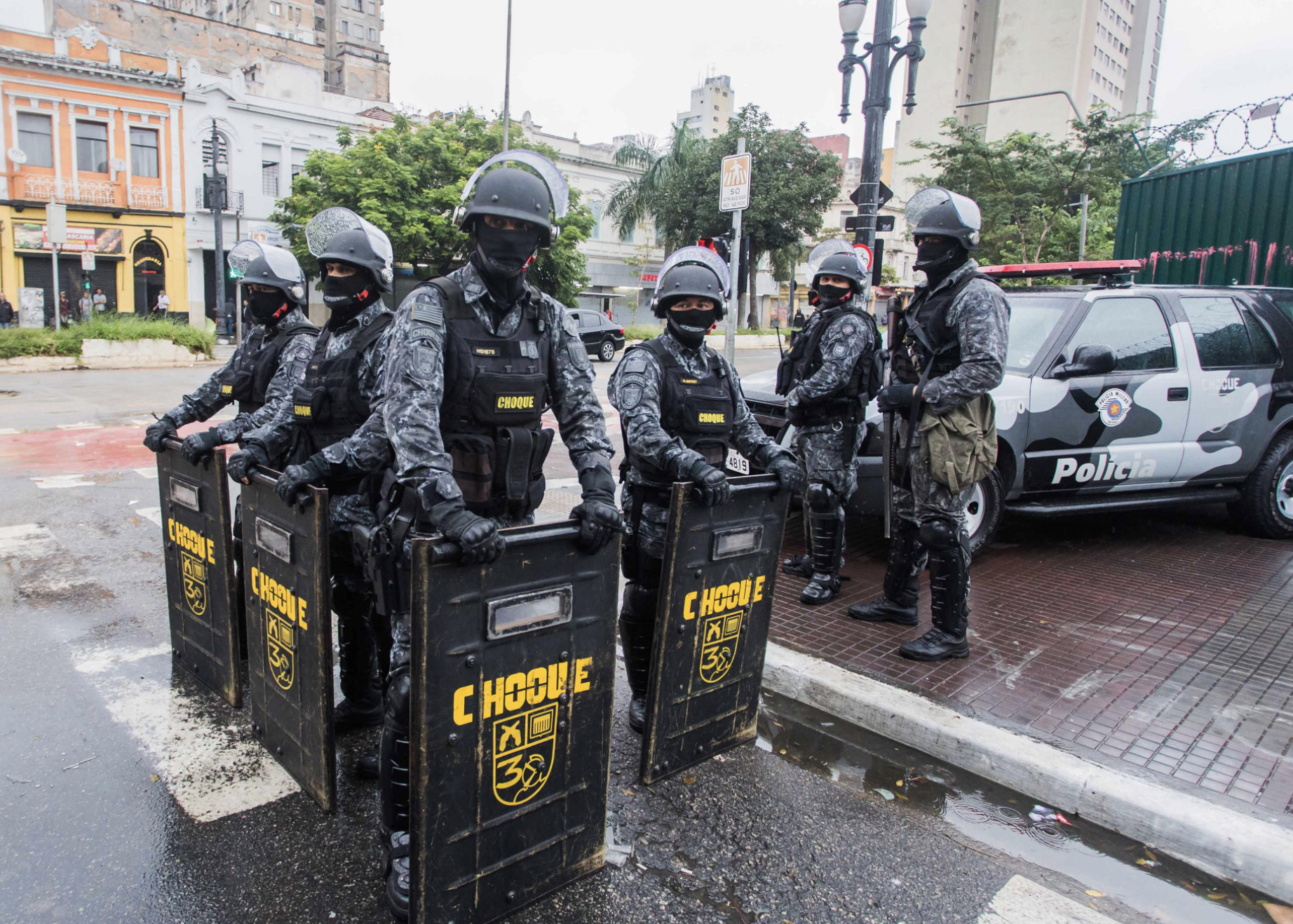
Brazil is reeling after a massive police operation in Rio de Janeiro turned into the deadliest anti-crime raid in the nation’s history. At least 121 people were killed and 56 arrested in a violent crackdown that authorities say targeted the notorious Comando Vermelho (Red Command) drug cartel.
Officials confirmed that the raid, which began early Tuesday across several favelas, was intended to “restore order” and disrupt one of the country’s most powerful criminal networks. But by Wednesday, images of streets littered with bodies and grieving families identifying victims had sparked international condemnation and questions over Brazil’s police tactics.
More than 2,500 officers from multiple agencies — including the elite BOPE (Special Police Operations Battalion) — stormed neighborhoods such as Complexo do Alemão and Penha, long known as strongholds of the Comando Vermelho. Armored vehicles rolled through narrow alleyways as gunfire erupted for hours.
Witnesses described scenes of chaos and terror. “It felt like a war zone,” said one resident of Penha, who asked not to be named for fear of retaliation. “We hid under the bed while bullets ripped through the walls.”
A Brazilian source told ABC News that by Wednesday morning, dozens of bodies had been laid out on the ground for identification. “Families were crying, calling out names. It was unbearable,” the source said.
State officials called the sweep Operação Contenção (Operation Containment) and hailed it as a “decisive strike” against organized crime. Governor Cláudio Castro praised the officers’ “courage” in the face of “criminal tyranny.”
“This was the largest and most coordinated police action in Rio’s history,” a military police spokesperson said. “We targeted gang leaders responsible for terrorizing entire communities.”
Yet, the staggering death toll has overshadowed those claims. Rights groups have accused Brazilian authorities of carrying out an extrajudicial massacre. “There is no justification for this level of violence,” said Carolina Ricardo, executive director of the Instituto Sou da Paz. “These are not isolated shootouts — this is systemic brutality.”
President Luiz Inácio Lula da Silva reportedly learned of the raid only after it was underway. Justice Minister Ricardo Lewandowski told reporters that Lula was “shocked” by the number of fatalities and “surprised” such an operation occurred “without federal coordination.”
The timing has raised eyebrows in Brasília. Brazil is set to host major international events in the coming weeks, including the C40 Global Mayors Summit and Prince William’s Earthshot Prize ceremony in Rio, followed by the U.N. Climate Conference (COP30) in Belém.
“This is the worst possible moment for an operation that paints Brazil as a country of lawless violence,” said political analyst Tereza Carvalho. “The government wanted to project stability before COP30 — now it’s dealing with global scrutiny.”
The United Nations swiftly weighed in. “The Secretary-General is gravely concerned by the large number of casualties,” said U.N. spokesperson Stéphane Dujarric. “He urges Brazilian authorities to ensure that all police operations respect human rights and to conduct an immediate investigation.”
Human Rights Watch echoed that demand, calling the deaths “a stain on Brazil’s democratic record.”
For Rio’s residents, Tuesday’s raid was just the latest chapter in a decades-long struggle between heavily armed gangs and militarized police forces. Despite years of anti-drug campaigns, Rio’s favelas remain under the grip of organized crime.
“Every few years, the government promises to end this cycle,” said sociologist José Claudio Alves, who has studied Rio’s urban violence for three decades. “Instead, we keep burying more bodies. The city lives between two wars — one fought by criminals, and one waged by the state.”
As night fell over Penha, gunfire had subsided. But the echoes of the deadliest day in Rio’s history still lingered — in the sirens, in the silence of mourning families, and in a nation once again forced to question whether its war on crime has gone too far.
Discover more from Next Gen News
Subscribe to get the latest posts sent to your email.