

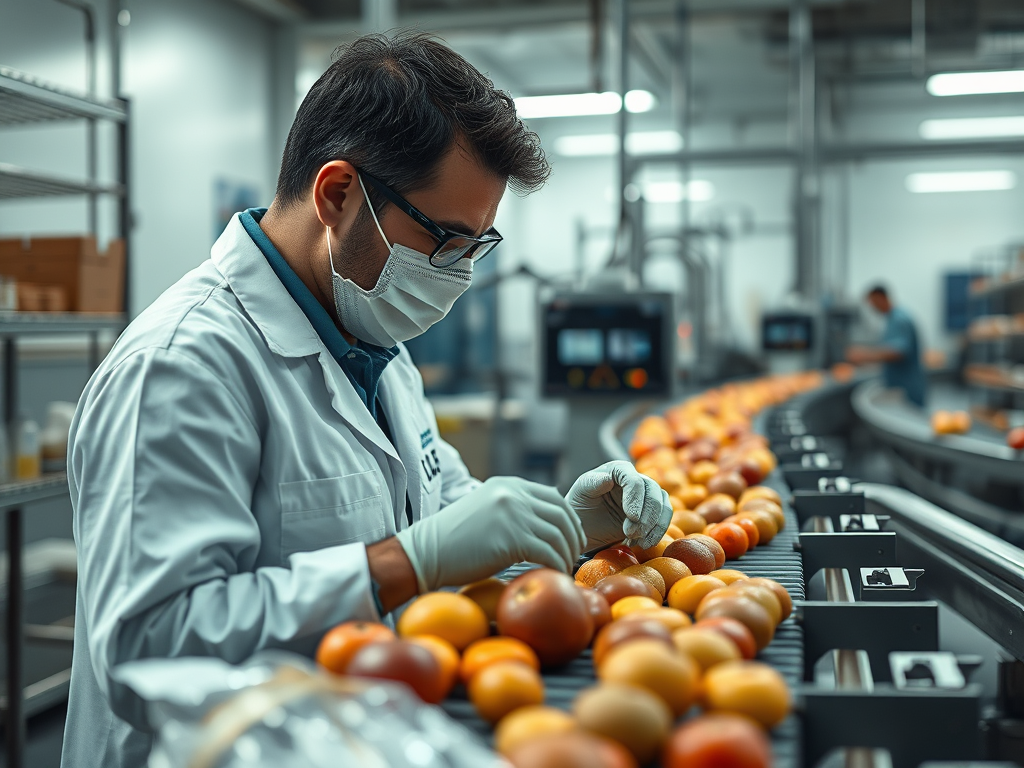
In a move that has alarmed food safety experts and public health advocates alike, the Food and Drug Administration is quietly drafting plans to slash its routine food safety inspections, effectively shifting oversight to state and local agencies—a shift critics warn could put millions of Americans at greater risk of foodborne illness.
Sources inside the FDA and other federal health agencies told CBS News the initiative, which has been in the works for years, would dramatically scale back the agency’s direct involvement in food facility inspections across the country. The proposed strategy would outsource most of the work to local governments, a cost-saving tactic that some say amounts to the federal government abandoning its core responsibility to protect the food supply.
While the Department of Health and Human Services denies any final decision has been made, internal discussions paint a different picture. The agency is reportedly moving forward with plans that may eventually require congressional funding to execute.
“They’re pulling out,” said a former FDA official who helped develop the plan and requested anonymity. “And they’re doing it under the radar.”
The FDA already relies on state partners to handle about one-third of its food inspections, mostly lower-risk facilities. Now, under the new plan, even more oversight would fall to state governments—some of which lack contracts with the FDA altogether, including states like Delaware and Hawaii. That leaves critical gaps in coverage with no clear plan to fill them.
Consumer safety advocates say the move is a dangerous rollback of federal protections at a time when foodborne illness remains a persistent threat. The Centers for Disease Control and Prevention estimates that roughly 48 million people get sick from contaminated food every year in the U.S., with 3,000 dying from preventable outbreaks.
“This is not modernization—it’s abdication,” said Thomas Gremillion, food policy director at the Consumer Federation of America. “You don’t fix a broken inspection system by walking away from it.”
Gremillion pointed to the Administration’s track record on food policy as “reckless,” accusing leadership of favoring deregulation over public health. “This is the same FDA that’s been slow to act on contaminated baby formula, toxic produce, and salmonella outbreaks. And now they want to do even less? It’s outrageous.”
The shift comes as the FDA grapples with steep internal cutbacks. Layoffs in the agency’s inspection support offices have already slowed its ability to carry out medical and international inspections, and now the agency appears to be turning to contractors and local authorities to pick up the slack.
FDA Commissioner Dr. Marty Makary has reportedly approved plans to hire outside firms to replace laid-off staff. Critics warn this outsourcing trend threatens the agency’s ability to maintain impartial, science-based inspections, especially in cases involving large corporate food manufacturers.
Although the Biden Administration is overseeing the rollout, several former officials said the groundwork for this rollback was laid during the Trump presidency, which pushed aggressively for shrinking the federal footprint across regulatory agencies.
“Trump’s people made no secret about wanting to ‘streamline’ food oversight by shifting it away from Washington,” said a retired public health officer familiar with the internal discussions. “This is that vision playing out. It’s deregulation by neglect.”
Supporters of the plan, including some state officials and food industry lobbyists, claim local agencies can perform inspections more efficiently and at lower cost. But that assumes states have the staffing, training, and resources to keep pace with complex national food systems—a dangerous assumption, say experts.
“This move creates a patchwork system where food safety depends on your ZIP code,” said epidemiologist Dr. Lena Patterson. “That’s not how you protect a country as large and interconnected as the U.S.”
From packaged snacks to fresh produce, seafood to eggs, most of the nation’s food supply falls under the FDA’s jurisdiction. Under the new plan, the agency would retain some oversight—like inspections of infant formula plants and foreign imports—but the vast majority of its domestic routine inspections could soon be offloaded, delayed, or dropped entirely.
Public trust in the food system, already shaken by past contamination scandals, may now face its greatest test.
“This is how outbreaks get missed,” warned Gremillion. “This is how people die.”
Whether Congress steps in remains to be seen. But with food safety on the line, critics argue Americans deserve better than a government willing to walk away from its most basic duty: keeping the food supply safe.
Discover more from Next Gen News
Subscribe to get the latest posts sent to your email.
trump wants every damn thing relegated to the states. he needs to be relegated to an assylum. this is so ignorant & folks will die.!!
Did anyone really read this article? It’s an old rehash of a previous article and I quote from it, “ Although the Biden Administration is overseeing the rollout…” who is overseeing the rollout?? Is Biden President or Trump? The article admits earlier that this process started years ago under Biden so don’t immediately blame Trump.
First off earlier this year the Supreme Court rules that government agencies can only have the authority granted them by law from the legislative body be it State or Federal. The ruling anldo states that if the executive branch or agency thinks the law is unclear they must refer back to the legislative body for clarity and not assume roles it wasn’t authorized to do. In other words not to create their own laws by making rules etc.
This is important because the FDA for example was only given a mandate when it was created by Congress to insure food and drugs are labeled with what’s in them. That’s it! No drug testing and approval, no food inspections etc!!
So therefore the President, no matter who they are would just be following the Law by stopping both food inspections and drug testing and approval functions!!!
I could go on with more detail about the FDA but not here. Therefore, if the people want federal government food testing not the states then you need to contact your congressperson and the legislature needs to craft a law creating that agency or giving those powers to the FDA. It’s not a Presidential issue! Further that new law should provide taxpayer funding for the testing and not provide the agency’s funding to come from drug testing and approvals and food testing because that stops them from being impartial!
btw both NY and Arizona where I currently live have very aggressive health agencies does your community?
😮 en ves de mejorar vamos empeorando! a la vez que la inflación nos come! No pues wow 😨
TWISTED ARTICLE.
When we take into account all the recalls over the last few years, especially due to salmonella, listeria, and other infectious agents, it seems the FDA has not been doing their job very well, so if that responsibility gets moved to the states, things might improve. Bacterial infections just don’t show up overnight. The cultures take time to grow. These offending companies could show days or weeks of neglect before it becomes a problem. It may be that the states might do a much better job just to prove that they can. Nothing in the Constitution puts the responsibility of food safety on the federal government, so the 10th Amendment should have put it on the states many years ago.