

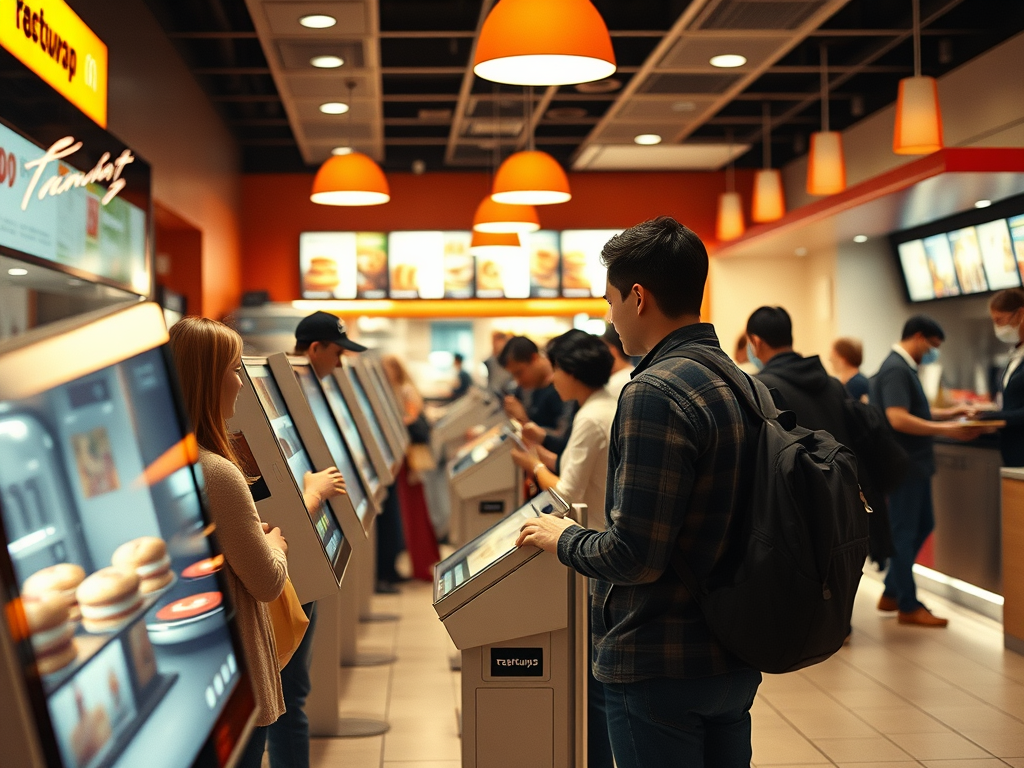
Self-service kiosks at McDonald’s and other fast-food restaurants have long been thought to threaten jobs since they were introduced 25 years ago. However, the real impact has been surprising to many.
In 1999, a trade publication mentioned that McDonald’s was developing kiosks that could eventually replace some workers. Instead, these touchscreen kiosks have actually created more work for kitchen staff and encouraged customers to order more food compared to traditional cash registers. This shift shows how technology can have unexpected effects in fast-food and retail, much like with self-checkout machines.
Today, rather than replacing workers, kiosks help redistribute tasks. Employees can focus on preparing orders, assisting with pickups, adjusting prices, and speeding up service. Not all chains use kiosks extensively; some, like Subway, Chick-fil-A, and Starbucks, still rely more on human cashiers.
Kiosks help boost sales by suggesting extras like milkshakes or fries during the ordering process. Shake Shack’s CEO noted that when staff are busy with long lines, they may not prioritize upselling. With kiosks, employees can spend more time helping customers or working in the kitchen.
Some McDonald’s franchisees are now introducing kiosks that accept cash, but even in these cases, cashiers are being assigned to new roles, such as helping customers use the kiosks.
Experts point out that while kiosks were meant to save labor costs, they often create more complexity due to mobile ordering and delivery services. This means that any labor saved is usually redirected to manage these new tasks, essentially creating a “restaurant within a restaurant.”
In some instances, kiosks have failed. For example, the bowling alley chain Bowlero introduced kiosks for ordering food, but they were rarely used because neither staff nor customers were trained to use them effectively.
Interestingly, some benefits of kiosks, such as speeding up service and encouraging more purchases, don’t always happen. A study found that when lines form behind kiosk users, they feel more stressed and end up buying less food. Plus, customers often take longer using kiosks compared to ordering directly from a cashier, and the machines can malfunction.
If kiosks truly improved speed and accuracy, they would be more widely used across the industry, according to analysts.
The rise of kiosks has also been influenced by increasing minimum wage laws. For instance, California recently raised the minimum wage for fast-food workers by $4, prompting concerns about job replacements by technology. Despite these fears, the fast-food and fast-casual restaurant sectors are still growing, with job levels now higher than before the pandemic.
Sociologist Christopher Andrews suggests that the effects of kiosks are similar to other self-service technologies like ATMs. Instead of causing massive job losses, they allow workers to focus on more valuable tasks.
Overall, self-checkout machines haven’t significantly reduced retail jobs either, although they can lead to higher theft rates. Andrews emphasizes the need for fast-food chains and retailers to better communicate the benefits of kiosks to both customers and employees. If customers see kiosks as improving service rather than just reducing labor costs, they may be more accepting of this technology.
Discover more from Next Gen News
Subscribe to get the latest posts sent to your email.