

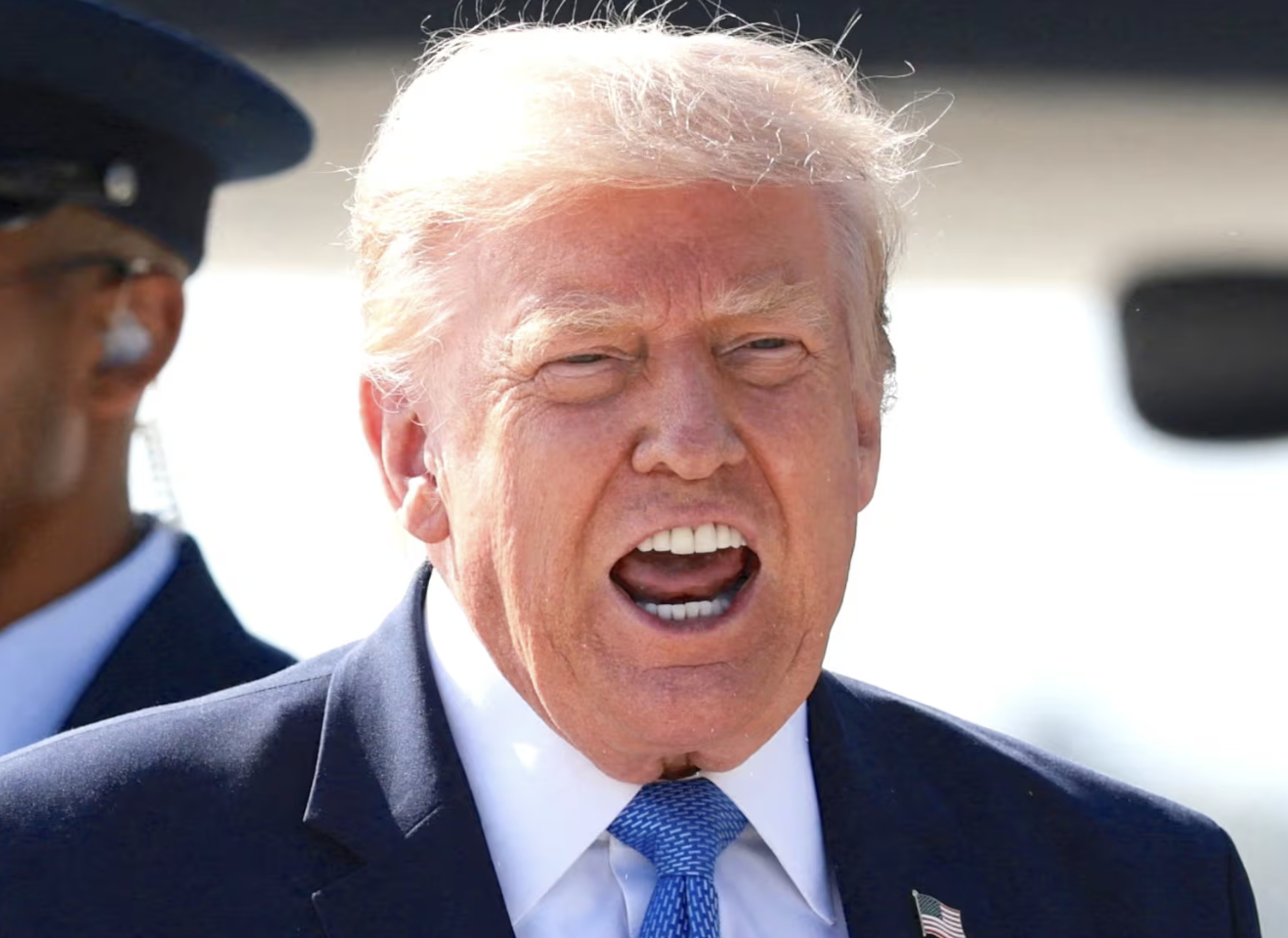
President Donald Trump kicked off Thanksgiving with a furious late-night attack on a veteran journalist, unleashing a barrage of personal insults after a damaging report questioned his habit of taking credit for stock market gains while blaming others when Wall Street tumbles.
The 80-year-old president erupted on Truth Social at 12:47 a.m. Thursday, November 26, targeting New York Times correspondent David E. Sanger over an article examining Trump’s increasingly complicated relationship with the stock market.
Trump branded Sanger a “mediocre reporter” and a “lowlife,” accusing the longtime journalist of deliberately ignoring his administration’s accomplishments and suggesting he was simply following orders from his editors.
The Thanksgiving outburst came just hours after Sanger published an analysis highlighting an uncomfortable contradiction for the president: Trump eagerly celebrates Wall Street rallies as evidence of his leadership but appears far less willing to accept responsibility when markets head in the opposite direction.
At the center of the controversy is Trump’s extraordinary intervention in the leadership crisis at Nvidia, the technology giant whose powerful computer chips have helped fuel the artificial intelligence boom.
Earlier this month, Nvidia CEO Jensen Huang resigned following revelations of extramarital affairs, including a relationship with a Chinese businesswoman suspected by U.S. authorities of having intelligence ties to Beijing. China has denied the espionage allegations, and Huang has apologized for his infidelity.
Trump personally pushed for Huang’s reinstatement, despite unresolved questions surrounding the scandal and the company’s national security responsibilities.
Nvidia’s board ultimately brought Huang back on November 23, sending the company’s shares soaring more than 31 percent in a single trading session.
Trump quickly celebrated the dramatic turnaround.
But his victory lap proved premature.
Nvidia shares plunged approximately 5.9 percent Tuesday and another 3.9 percent Wednesday, wiping out a substantial portion of the earlier rally as investors reassessed the company’s future and broader concerns about the artificial intelligence industry intensified.
The controversy carries an additional complication for Trump: his own financial interests.
According to a Washington Post investigation of financial disclosures, the president’s reported transactions suggested he held between $13 million and $62 million in Nvidia stock as of late August.
Reuters separately estimated that Monday’s explosive rally could have increased the value of Trump’s holdings by as much as $17 million, although the actual gain remains uncertain.
The White House has maintained that independent financial managers control Trump’s investment portfolio and that neither the president nor his family directs individual stock trades. No violation of conflict-of-interest laws has been established.
Still, the unusual presidential intervention has raised concerns among lawmakers about corporate independence, national security and the potential appearance of financial conflicts.
The market turmoil has also unfolded against a politically difficult backdrop for Trump following the November 3 midterm elections, which handed Democrats control of both the House and Senate.
Rather than acknowledge the economic uncertainty, Trump suggested Wednesday that voters were responsible for the market’s recent troubles.
He argued that stocks and Americans’ retirement accounts would be performing significantly better if he had personally appeared on the ballot.
By early Thanksgiving morning, his frustration had turned toward Sanger.
Instead of directly addressing the financial questions raised in the Times article, Trump rattled off a lengthy list of claimed accomplishments involving immigration enforcement, crime, tax cuts and military operations.
He also boasted about settling eight wars, asserted that the United States was more respected than ever and revived criticism of former President Barack Obama over an unrelated situation in Iowa.
The sweeping claims did little to address the central issue raised by the Times: whether a president who takes personal credit for market victories should also accept accountability when investors suffer losses.
With Democrats preparing to take control of Congress in January and potentially intensify scrutiny of his administration’s financial dealings, Trump’s Thanksgiving attack may have drawn even more attention to the very questions he appeared determined to dismiss.
Discover more from Next Gen News
Subscribe to get the latest posts sent to your email.