

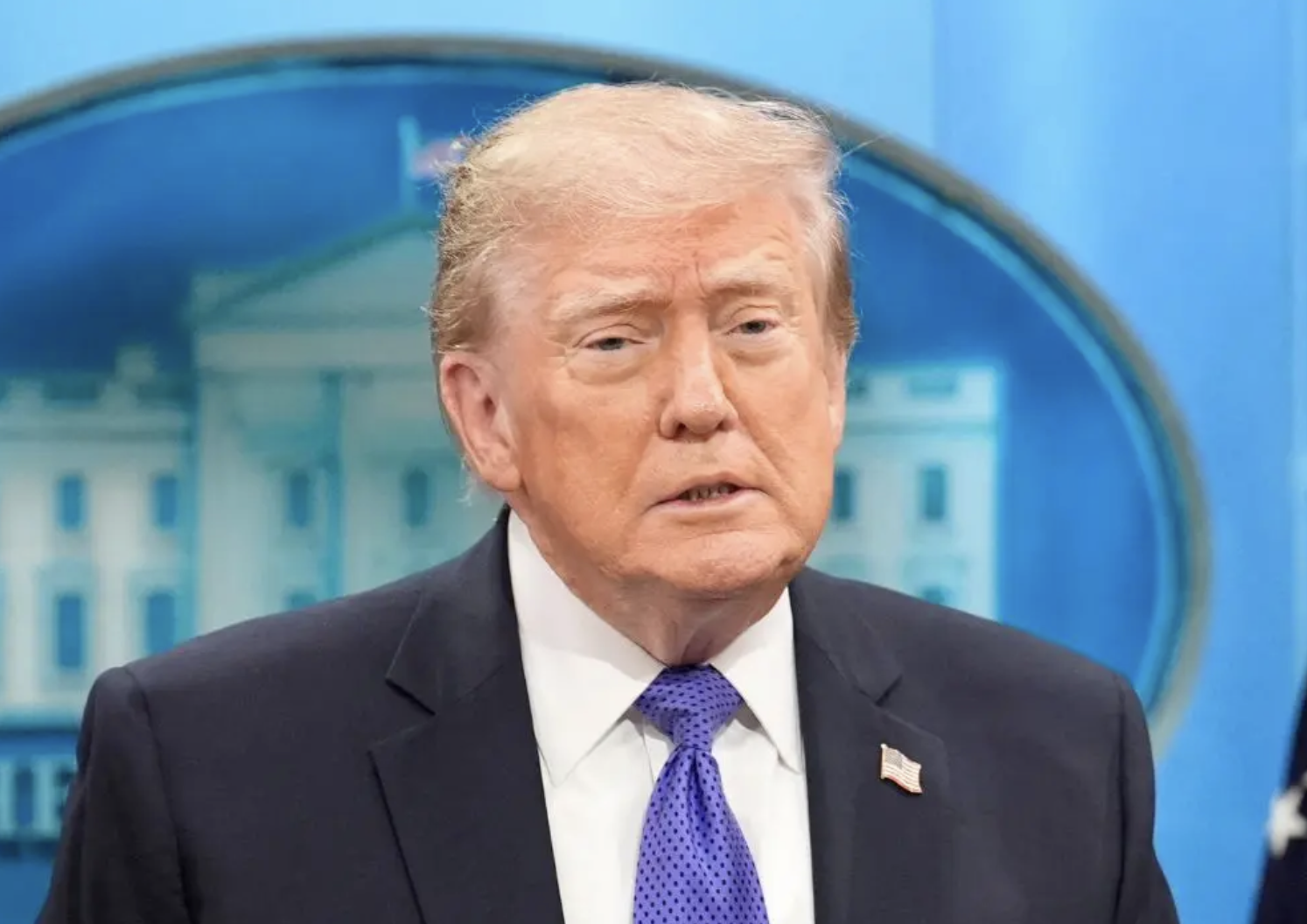
President Donald Trump is facing a fresh wave of criticism after a bizarre television interview in which he made a puzzling remark about a technology executive’s “blood,” defended his alleged ties to a suspected Chinese spy, and openly acknowledged intervening to help the embattled billionaire reclaim his job.
The 80-year-old president raised eyebrows Monday, November 23, during a lengthy CNBC interview about Jensen Huang, the Nvidia CEO who was dramatically reinstated less than two weeks after resigning amid revelations of extramarital affairs and national security concerns.
What began as a discussion about Huang’s stunning corporate comeback quickly veered into unexpected territory, with Trump warning that China could attempt to lure the influential technology executive away from the United States.
Trump suggested that Chinese President Xi Jinping might personally want Huang to lead a Chinese technology company, arguing that America could not afford to lose someone responsible for developing some of the world’s most advanced artificial intelligence chips.
Then came a particularly strange remark.
“He’s got a little blood in him, you know,” Trump said, repeating the reference to blood as he imagined Huang abandoning America to run Chinese telecommunications giant Huawei.
The president never clearly explained what he meant by the comment, which appeared in the middle of a rambling hypothetical about Huang’s possible loyalty to China.
When CNBC correspondent Eamon Javers pressed Trump on whether there was any actual indication that Huang might leave the United States, the president acknowledged that no such suggestion had been made.
The exchange quickly drew criticism online.
Former Obama White House communications director Dan Pfeiffer was among those who reacted, declaring, “This is deranged.”
Retired Army Special Forces officer Mike Nelson also expressed alarm, writing that there was a great deal wrong with the interview.
Other critics went further, speculating about Trump’s cognitive health and questioning whether his increasingly unusual public remarks should raise concerns about his fitness for office. However, such comments are political opinions, not evidence of a medical diagnosis.
But the president’s unusual language was only part of the controversy.
Trump also acknowledged that he had personally pressured Nvidia’s board to bring Huang back after the executive resigned on November 12.
Asked how he managed to change the directors’ minds, Trump responded, “I convinced ’em.”
The admission raised immediate questions about why the president of the United States was involving himself so directly in the leadership decisions of a publicly traded company, particularly one facing sensitive federal investigations.
Huang’s departure followed revelations of an affair with Alice Huang, a Chinese businesswoman whom U.S. intelligence officials reportedly suspect of having connections to Beijing’s intelligence services. Chinese authorities have denied the espionage allegations, and the accusations against her have not been established in court.
Nvidia has also faced scrutiny over whether advanced American-made artificial intelligence chips have reached China in violation of U.S. export restrictions.
Despite those unresolved concerns, Trump insisted that Huang had effectively been “exonerated” following a government review.
He also defended the executive as a technological genius whose importance to the American economy outweighed the controversy surrounding him.
At another point, Trump dismissed suspicions surrounding Alice Huang, suggesting that attractive Chinese women are too readily accused of being spies. He then abruptly brought up Democratic politician Eric Swalwell and his past association with a woman suspected of working for Chinese intelligence.
The president’s sweeping defense of Huang stood in sharp contrast to the continuing investigations into Nvidia’s business practices and national security safeguards.
Nvidia confirmed Monday that its board had unanimously voted to reinstate Huang after receiving assurances from senior U.S. government officials that his return did not pose a national security threat.
However, the company also acknowledged that its independent investigation into whether Huang had been targeted by a foreign intelligence operation would continue.
The extraordinary reversal has triggered bipartisan concern on Capitol Hill.
Democratic Sen. Elizabeth Warren demanded answers about the administration’s involvement, while Democratic Rep. Robert Garcia warned that Trump’s intervention raised serious questions about national security and potential corruption.
Republican lawmakers have also challenged the decision, with some demanding to know how federal officials determined that Huang’s reinstatement presented no security risk.
Huang is scheduled to testify publicly before the Senate Banking Committee on December 3, with additional congressional questioning expected.
For Trump, however, the controversy appeared to be a triumph. He repeatedly praised Huang’s abilities and embraced CNBC personality Jim Cramer’s description of the executive as a “national treasure.”
But the president’s celebration has left critics asking a far more troubling question: Why was the White House so determined to rescue a billionaire technology executive while significant questions about national security and corporate accountability remain unanswered?
Discover more from Next Gen News
Subscribe to get the latest posts sent to your email.