

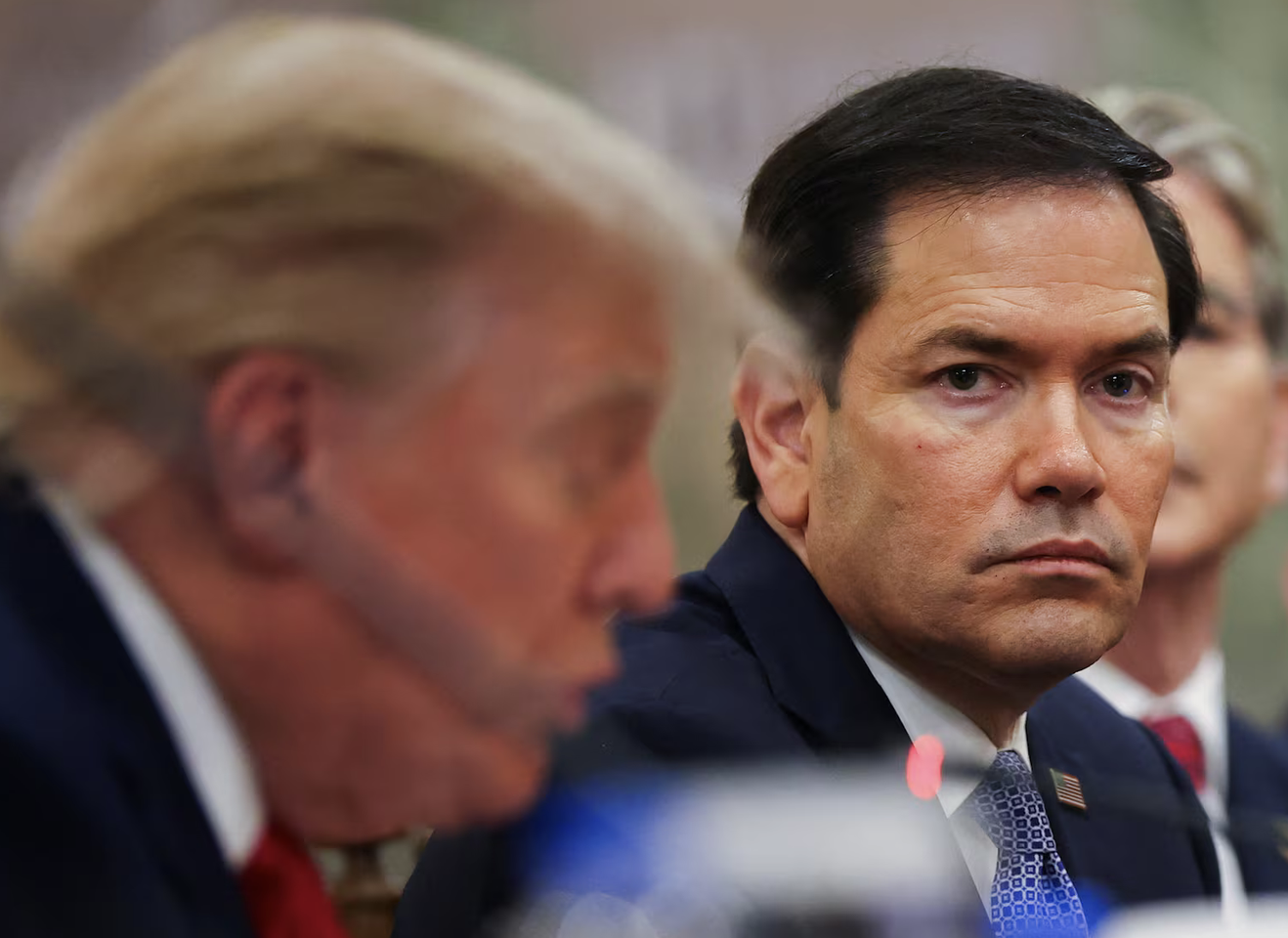
A growing rift inside President Donald Trump’s administration has reportedly left Secretary of State Marco Rubio furious after the president brushed aside national security concerns to engineer the stunning comeback of a billionaire technology executive caught in a Chinese espionage controversy.
Rubio was particularly angry Monday morning when he learned that Nvidia CEO Jensen Huang had been reinstated just 11 days after resigning amid revelations about extramarital affairs, including one involving a businesswoman suspected of having ties to Chinese intelligence, according to CBS News.
The decision came despite warnings Rubio had personally delivered to Trump months earlier, raising fresh questions about whose advice the president is willing to follow when powerful business interests are involved.
Huang, the billionaire co-founder of artificial intelligence giant Nvidia, resigned November 12 after acknowledging an affair with Alice Huang, a Singapore-based technology executive whose alleged connections to China’s intelligence services had already attracted the attention of U.S. investigators. The two are not related.
Rubio reportedly prepared a classified intelligence memorandum earlier this year outlining concerns about Alice Huang’s contacts with an officer of China’s Ministry of State Security. He also personally briefed Trump about the intelligence aboard Air Force One in May, before the president traveled to China with Jensen Huang joining his delegation.
Despite those warnings, Trump and Vice President JD Vance spent the weekend of November 21 pushing Nvidia’s board to reverse its decision and bring Huang back.
According to CBS News, administration officials reassured board members that Huang was not the target of a Justice Department investigation and that his reinstatement would not pose a national security problem.
Rubio and CIA Director John Ratcliffe were notably absent from the effort.
The stunning reversal was announced November 23, less than a week after Nvidia’s board chairman had publicly indicated the company had no intention of rehiring its former chief executive.
Trump later acknowledged personally intervening in the company’s decision, telling CNBC that he had convinced board members to bring Huang back.
But while the president celebrated the outcome, the mood inside parts of his administration was reportedly far less enthusiastic.
Sources familiar with the situation told CBS News that Rubio and Treasury Secretary Scott Bessent had privately expressed concerns about the decision. Rubio was reportedly especially upset when the announcement became public.
His discomfort appeared to spill into public view Monday when a reporter asked whether Huang’s reinstatement represented a national security risk.
Rather than answer, Rubio turned and walked away.
The controversy has also exposed competing priorities within Trump’s inner circle. Supporters of Huang argued that his leadership was essential to America’s position in the global artificial intelligence race, while officials concerned about China questioned whether his return was premature.
Meanwhile, the scandal has taken another potentially explosive turn involving Trump’s own finances.
A separate CBS News investigation found that financial disclosures showed Trump held between $13 million and $58 million in Nvidia stock at the end of 2025. The precise value of his holdings when Huang was reinstated remains unclear.
Nvidia shares surged following Huang’s comeback, prompting government ethics experts to question whether the president’s financial interests created a conflict as he personally pressured the company’s board.
The White House rejected suggestions of improper financial influence, telling CBS News that Trump’s investments are independently managed and that neither the president nor his family directs trading decisions.
The underlying espionage allegations also remain unresolved. During a classified congressional briefing Tuesday, intelligence officials reportedly said they had found no evidence that China directed Alice Huang’s relationship with the Nvidia executive or that she provided significant intelligence to Beijing.
However, investigators remain concerned about her reported contacts with Chinese intelligence and continue examining possible violations of U.S. technology export restrictions involving her former employer, Megaspeed International. The company denies violating U.S. export laws, and China has denied allegations that Alice Huang is a spy.
Democratic lawmakers, including Sen. Elizabeth Warren of Massachusetts, have demanded greater transparency about the administration’s role in Nvidia’s decision. Several Republicans have also raised concerns about the national security implications.
Huang is expected to face congressional questioning in early December, ensuring the controversy is far from over.
For Rubio, the episode represents an uncomfortable political dilemma. The former Florida senator built much of his reputation as a fierce critic of Beijing, yet he now serves a president who reportedly disregarded his intelligence warnings while personally championing the return of a business executive at the center of a China-related investigation.
And despite reports of his anger, Rubio has shown no public indication that he intends to resign or openly challenge Trump over the decision.
For now, the secretary of state appears determined to remain loyal to the president, even as the controversy raises increasingly difficult questions about national security, political influence and the extraordinary power of America’s wealthiest technology executives.
Discover more from Next Gen News
Subscribe to get the latest posts sent to your email.