

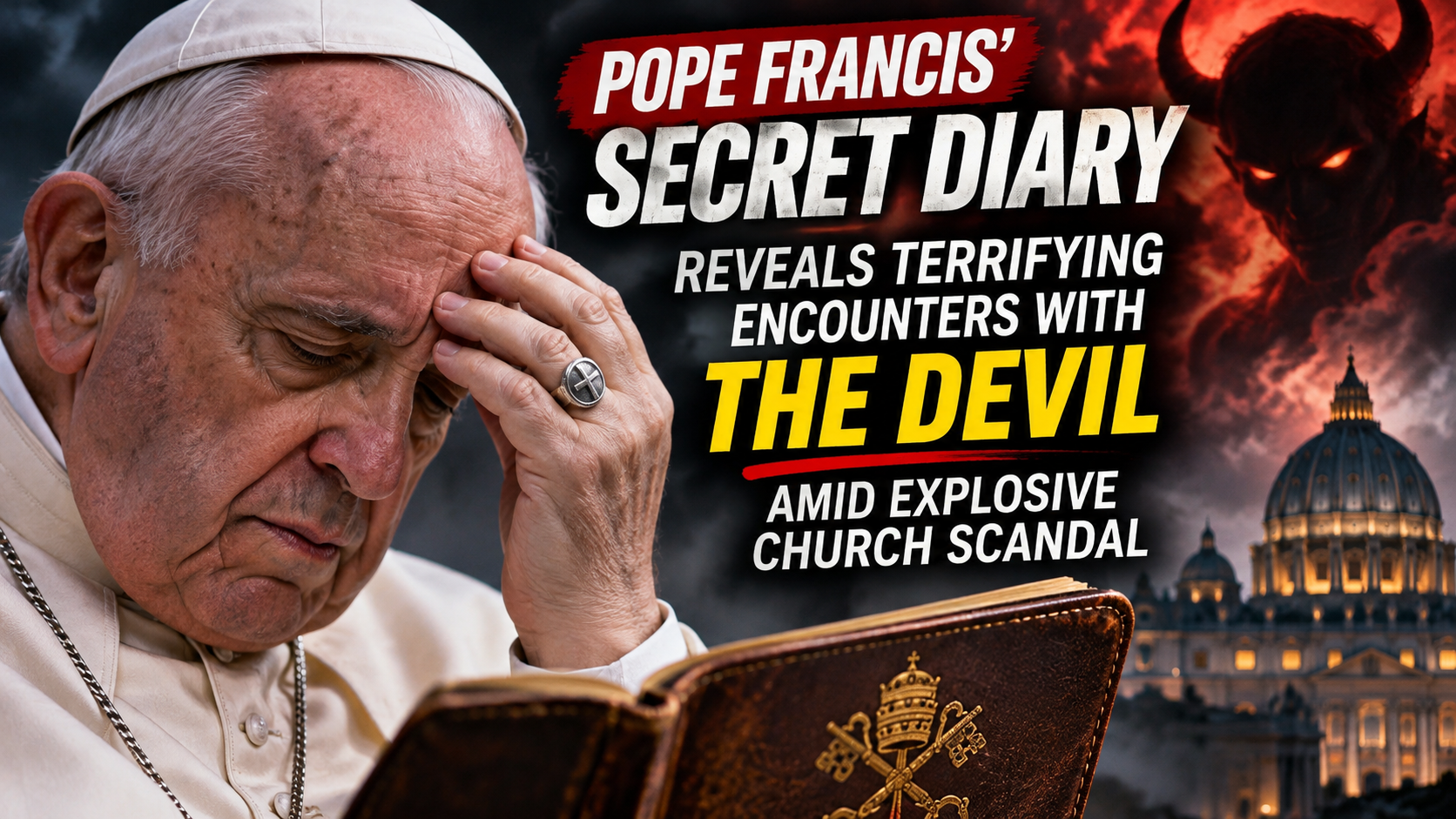
Pope Francis reportedly believed he had come face-to-face with the devil as the Catholic Church’s devastating sexual abuse scandal engulfed his papacy, according to newly released private writings that expose a deeply troubled side of the late religious leader.
The extraordinary revelations appear in The Private Diary of Pope Francis, published Tuesday, November 24, offering an unprecedented glimpse into the fears, spiritual struggles and personal demons Francis kept largely hidden while leading more than a billion Catholics worldwide.
Among the most startling disclosures are three encounters in which Francis claimed to have seen the devil, including one following his disastrous 2018 visit to Chile, where his defense of a controversial bishop sparked outrage among survivors of clergy sexual abuse.
In a diary entry dated January 24, 2021, Francis recalled seeing a terrifying figure shortly after returning to Rome from Chile three years earlier. He described hearing a triumphant voice declare that it had finally achieved everything it wanted.
The experience apparently haunted him for years, with Francis writing that he could never forget the figure’s eyes or the disturbing sound of its voice.
The frightening account was closely connected to one of the darkest chapters of his papacy.
During his visit to Chile, Francis publicly dismissed allegations from abuse survivors who accused Bishop Juan Barros of helping conceal misconduct by notorious priest Fernando Karadima. Journalists challenged the pope over his defense of Barros, forcing an uncomfortable confrontation that would eventually become a turning point.
A subsequent Vatican investigation confirmed the seriousness of the victims’ allegations, prompting Francis to acknowledge his mistakes, apologize to survivors and demand the resignations of Chile’s bishops.
Privately, however, the fallout appeared to leave him devastated.
In a June 2018 diary entry, Francis described seeing the entrance to hell, connecting the disturbing experience to temptation, shame and the growing realization that serious wrongdoing had taken place within the Church.
His writings reveal a leader struggling not only with the failures of powerful Church officials but also with his own role in initially dismissing those who had come forward.
The revelations raise difficult questions about how long abuse survivors struggled to be believed, even as the man overseeing the Catholic Church privately wrestled with the consequences of its failures.
But the most surprising admissions extend beyond the abuse scandal.
Between 2021 and 2022, Francis endured what his closest adviser, Cardinal Víctor Manuel Fernández, describes as a profound spiritual crisis involving his relationship with power and authority.
Despite his public reputation as a champion of humility, immigrants and marginalized communities, Francis privately struggled with the temptation to believe he could solve every problem himself.
Those struggles unfolded as his health deteriorated and the Vatican faced a sprawling financial corruption investigation that raised uncomfortable questions about his leadership.
Fernández suggests Francis feared becoming consumed by the extraordinary authority of the papacy, a position that placed him at the center of an institution governing the spiritual lives of approximately 1.4 billion Catholics.
By late 2022, Francis reportedly found relief through prayer and a renewed commitment to trusting God’s mercy rather than his own authority.
The diary also contains another intriguing mystery. According to Fernández, Francis recorded some of his most confidential thoughts in a nearly indecipherable personal code. Those passages have not been reproduced, leaving the public unaware of what additional secrets the late pope may have taken to his grave.
The writings span more than three decades, beginning in 1992 when Francis was a bishop in Argentina and ending in August 2024, less than a year before his death on April 21, 2025.
Fernández, who personally selected and organized the excerpts, said Francis wanted his private reflections shared after his death in the hope that they might help others. Pope Leo XIV subsequently supported their publication.
Still, the book is not a complete record of Francis’ private thoughts. Certain passages involving other individuals were excluded, while Fernández’s commentary shapes how readers understand the revelations.
For those who admired Francis as a reformer, the diary exposes the vulnerability of a leader who openly questioned his own judgment. For critics of his handling of abuse allegations and Vatican governance, it offers a troubling acknowledgment of the dangers of unchecked power.
What emerges is a far more complicated portrait of the late pope: a religious leader who spent years confronting darkness within his own institution while privately fearing that some of that darkness could be found within himself.
Discover more from Next Gen News
Subscribe to get the latest posts sent to your email.
Catholic Church has always been in league with the Devil and kept belief in a Devil alive… it also has kept Europe at wars for past 1700 years… created Roman Catholic vs Eastern Orthodox Catholic Wars for 975 years… such as current War in Ukraine…