

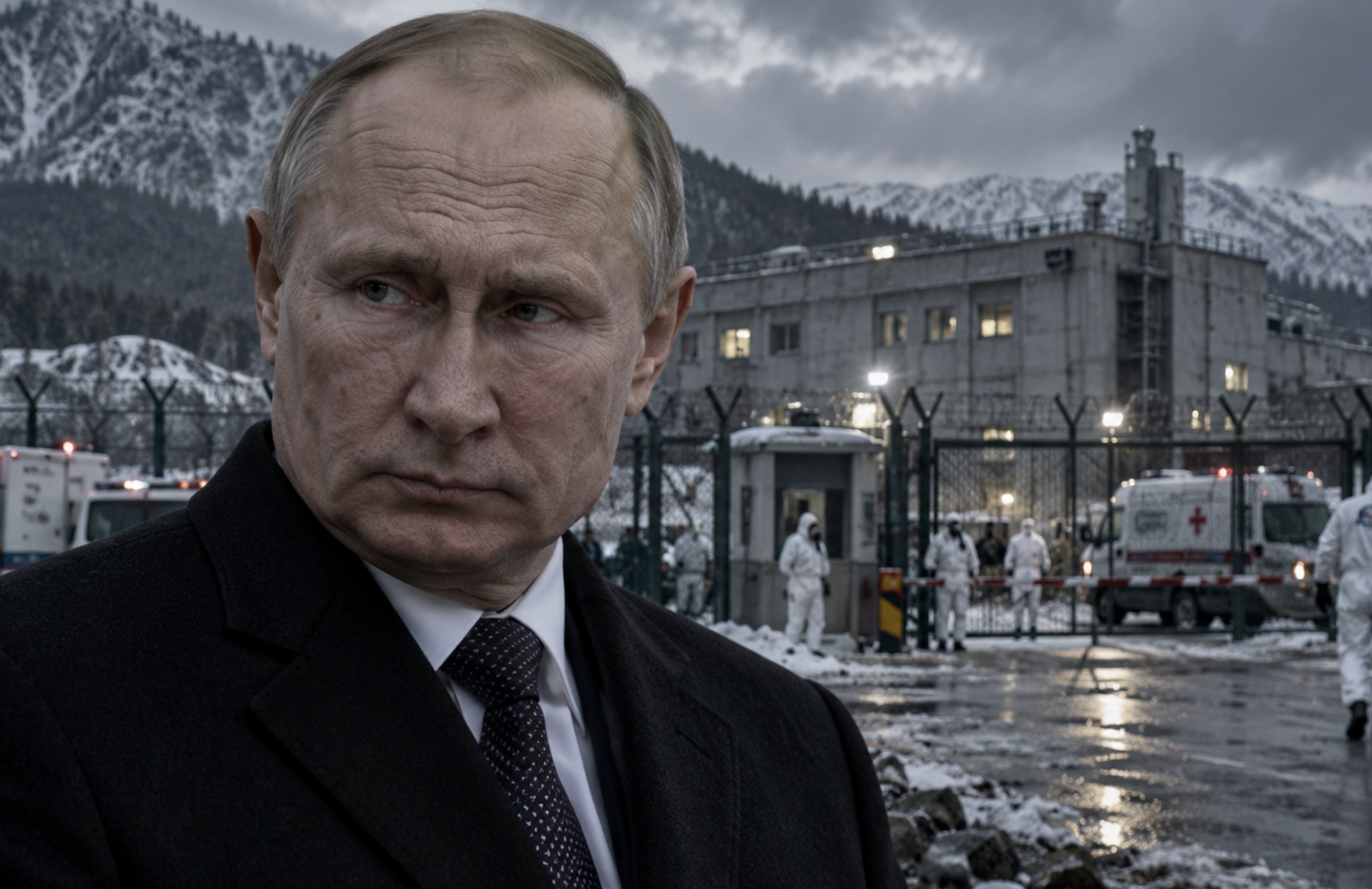
Mystery Lab Death Sparks Chernobyl-Style Questions for Putin
Forty years after the Soviet Union tried to keep the Chernobyl nuclear catastrophe hidden from the world, Russia is facing uncomfortable questions over another mysterious health scare — this time involving a young laboratory worker, a facility that studies some of the world’s most dangerous diseases and reports of sweeping quarantine measures in Siberia.
There is no confirmed plague outbreak.
But the confusion surrounding the death of 28-year-old laboratory technician Darya Shipilova has attracted international attention and revived an old question about Moscow: Can the outside world trust what Russian authorities are saying when something potentially dangerous happens behind closed doors?
Shipilova worked at the Irkutsk Anti-Plague Research Institute of Siberia and the Far East, a facility involved in studying plague and other serious infectious diseases.
She became ill in late September and was hospitalized on September 29 with severe pneumonia. She died in the early hours of October 2.
Russia’s public health agency, Rospotrebnadzor, has described her illness as “pneumonia of unknown aetiology,” meaning doctors had not publicly identified its cause.
Russian authorities say testing found no microorganisms connected to Shipilova’s professional work and have denied reports of a dangerous laboratory accident.
But those assurances have done little to stop speculation.
Russian regional media reported that Shipilova may have been exposed to Yersinia pestis — the bacterium responsible for plague — after a test tube allegedly broke at the institute. That account has not been independently confirmed, and Russian officials have denied that an accident involving dangerous microorganisms occurred.
Adding to the confusion, Alexey Tsydenov, the head of the neighboring Russian republic of Buryatia, initially wrote publicly that a woman had died of plague before reportedly changing his wording to say she had “possibly” died from the disease.
Meanwhile, authorities took precautions that appeared unusually extensive for an ordinary case of unidentified pneumonia.
Reports indicated that dozens of employees at the Irkutsk institute were isolated, several medical facilities restricted movement or visitors, and nearly 200 people who may have had contact with Shipilova were placed under medical observation.
A nearby aluminum plant also introduced mask requirements as a precaution.
Russia’s chief public health official, Anna Popova, traveled to Irkutsk as officials convened an emergency regional sanitary and anti-epidemic meeting.
The measures fueled fears among residents, even as officials repeatedly insisted the situation remained stable.
The World Health Organization is now monitoring the case.
On Tuesday, October 6, the WHO said Russian authorities had informed the organization that there were no confirmed plague cases in Irkutsk and that people identified as contacts of the deceased worker had tested negative for dangerous infectious pathogens.
The WHO has assessed the danger to the wider Russian population as low and the international threat as very low.
One important question nevertheless remains unresolved publicly: exactly what caused Shipilova’s death.
The United States is also watching developments.
American officials have urged Moscow to provide accurate and timely information about the case, while U.S. health authorities continue monitoring reports coming out of Siberia.
The concern is understandable because pneumonic plague, while extremely rare today, can be particularly dangerous.
Plague is caused by Yersinia pestis, the bacterium historically associated with some of the deadliest epidemics in human history. The pneumonic form affects the lungs and can spread between people through respiratory droplets during close contact.
Unlike during the Middle Ages, however, plague can now be successfully treated with commonly available antibiotics when doctors recognize the disease and begin treatment quickly.
That is why public-health experts have cautioned against treating the Siberian incident as evidence of an unfolding pandemic.
The situation bears little medical resemblance to the catastrophe at Chernobyl.
The comparison instead centers on information.
When Reactor 4 at the Chernobyl Nuclear Power Plant exploded in April 1986, Soviet officials initially attempted to keep the disaster quiet.
The outside world discovered that something was seriously wrong only after radiation alarms began going off hundreds of miles away at Sweden’s Forsmark nuclear power plant.
Workers there initially feared their own facility had suffered a radioactive leak. Tests eventually showed the contamination had arrived from somewhere else.
Attention turned toward the Soviet Union, forcing Moscow to acknowledge that an accident had occurred at Chernobyl.
That disaster became one of history’s most infamous examples of the dangers created when governments conceal information during an emergency.
The circumstances in Siberia today are dramatically different. There is currently no evidence of a widespread outbreak, no indication of infections spreading internationally and no confirmation that Shipilova died from plague at all.
But conflicting reports, deleted or revised statements, quarantines and unanswered questions surrounding the worker’s death have created precisely the kind of information vacuum that encourages rumors to spread.
The Kremlin has urged Russians to rely on statements from the country’s health authorities rather than speculation.
For now, the available evidence is reassuring.
No additional plague cases have been confirmed. People who had contact with Shipilova are being monitored. Tests disclosed by Russian authorities have so far been negative, and international health officials say the danger beyond the immediate region is extremely low.
The biggest mystery is no longer whether Siberia is experiencing a massive plague outbreak. There is currently no evidence that it is.
The unanswered question is simpler: What killed a 28-year-old worker at one of Russia’s premier anti-plague laboratories — and why did authorities respond with such extraordinary precautions?
Until Russia provides a clear and verifiable answer, those questions are unlikely to disappear.
Discover more from Next Gen News
Subscribe to get the latest posts sent to your email.