

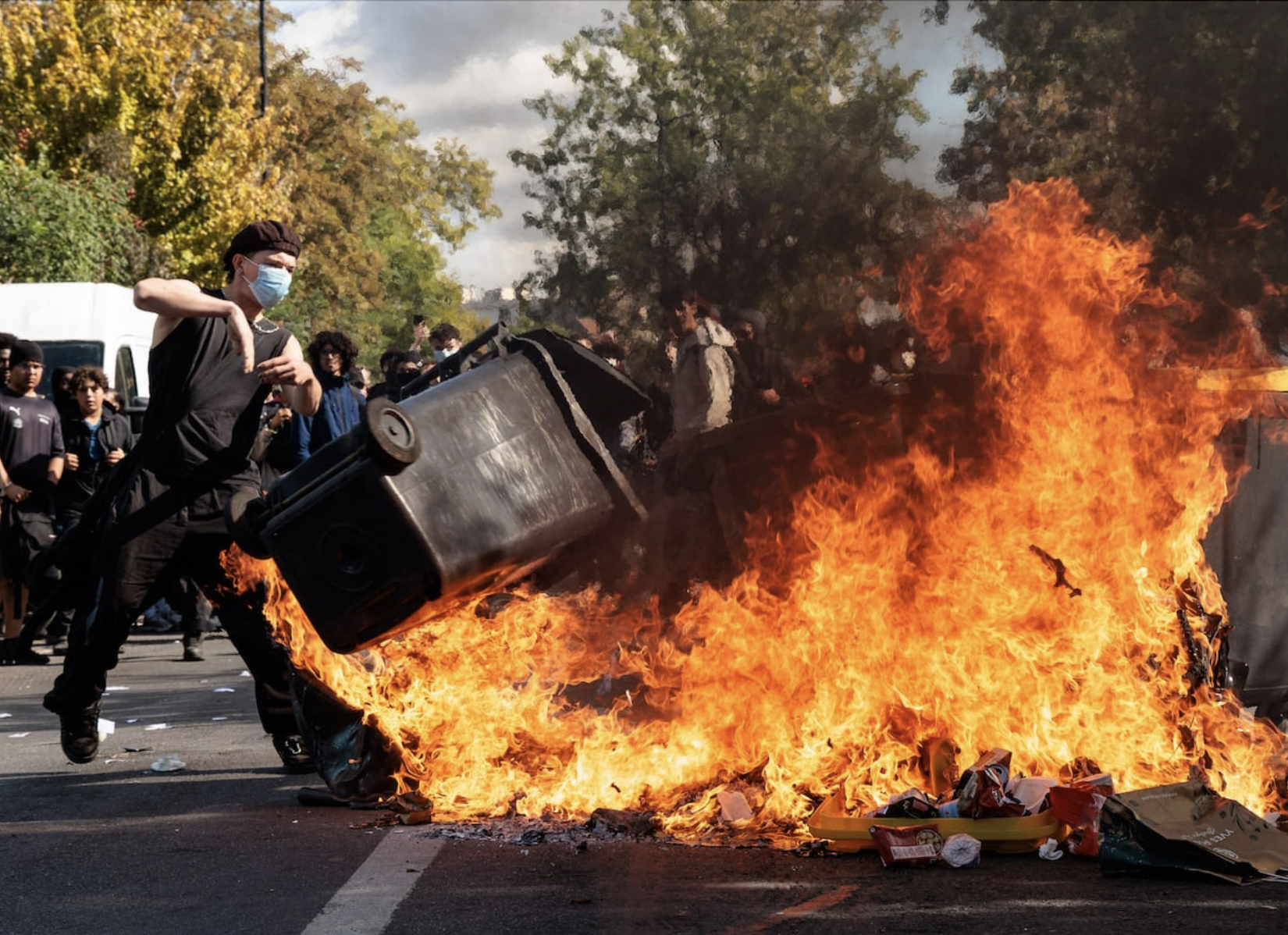
France is struggling to contain a rapidly growing student protest movement that has erupted into violence across the country, leaving thousands arrested, hundreds injured and scores of schools temporarily shut down.
What began as demonstrations over teacher shortages, overcrowded classrooms and crumbling school buildings in the Paris suburbs has spread nationwide, creating one of the most serious waves of student unrest France has seen in years.
More than 5,000 people, many of them teenagers, have now been arrested since the demonstrations intensified, according to French authorities.
The scenes have become increasingly chaotic.
Riot police have fired tear gas during clashes in Strasbourg, fireworks have been launched toward officers in Marseille, and trash bins and other objects have been set ablaze in Rennes and other cities.
Schools themselves have also been damaged. Fires have been reported at some campuses, while authorities say teachers, students and police officers have been injured during the unrest.
The protests began in the Paris region in September, fueled by complaints that students were being asked to learn in deteriorating buildings while dealing with missing teachers, packed classrooms and difficult schedules.
Those grievances quickly found an audience elsewhere.
By the beginning of October, protests, strikes or blockades had affected more than 1,000 high schools across France, according to government figures.
Students have complained that lessons are routinely disrupted because teachers are absent or positions remain unfilled. Others say aging school buildings desperately need repairs and that the education system places too much pressure on teenagers preparing for exams and university.
But as the demonstrations expanded, peaceful protests became mixed with increasingly destructive confrontations.
French officials say violent groups have taken advantage of the student movement to attack police and damage property.
Education Minister Edouard Geffray said the demonstrations had reached a dangerous turning point and accused “ultra-violent groups” of hijacking legitimate student concerns.
French authorities have reported hundreds of injuries among police and security personnel as well as injuries involving students and school employees.
Paris police chief Patrice Faure went even further, warning that the movement had become “out of control” and urging parents to keep young people away from violent demonstrators.
The scale of the disruption has forced hundreds of schools to close.
Roughly 400 educational facilities were shuttered Friday as officials attempted to reduce the possibility of more clashes. Authorities later warned that as many as 500 high schools could remain closed Monday depending on conditions.
The controversy is also quickly becoming political.
President Emmanuel Macron’s government has condemned attacks on police and schools while insisting peaceful students have the right to demonstrate.
Meanwhile, politicians on France’s left have accused authorities of responding too aggressively to young protesters.
Jean-Luc Mélenchon and his left-wing France Unbowed movement have voiced support for the students’ broader demands while criticizing police tactics. Government officials and political opponents, however, have accused elements of the hard left of encouraging or exploiting the unrest.
The protests come at a particularly difficult moment for Macron’s government as France debates its spending priorities.
The government has proposed approximately €65.5 billion for education in its next budget, but students and teachers argue that years of staffing shortages and deteriorating facilities cannot be solved simply by announcing a larger headline number.
Some of the sharpest complaints have emerged from poorer suburbs around Paris, where students say educational inequalities are especially visible.
In Seine-Saint-Denis and other disadvantaged areas, students have described classrooms without enough teachers and fears that they will be expected to take important examinations despite having missed significant amounts of instruction.
The unrest has now moved far beyond its original birthplace.
Demonstrations have been reported from Paris and Lille to Marseille, Strasbourg, Lyon, Rennes and numerous smaller cities.
And the confrontation may not be over.
Student and labor organizations are planning additional demonstrations, raising fears that the protests could merge with broader anger over government spending and France’s economic problems.
For Macron’s government, the challenge is becoming increasingly complicated: address the students’ complaints about schools while preventing a protest movement centered on education from spiraling further into nationwide unrest.
What started with teenagers demanding teachers, functioning classrooms and better conditions has now become a major test for the French government — with thousands arrested and authorities bracing for what could come next.
Discover more from Next Gen News
Subscribe to get the latest posts sent to your email.