

Mitch McConnell’s long-awaited return to Capitol Hill is putting a new spotlight on the 84-year-old Kentucky senator after more than three months away from the Senate.
McConnell returned Sept. 14 following a 92-day absence that began after a fall at his Washington home in June. The longtime Republican leader was hospitalized, later treated for mild pneumonia and ultimately spent time undergoing rehabilitation before returning to work in a wheelchair.
But an appearance at a Senate Agriculture Committee meeting two days later quickly drew attention.
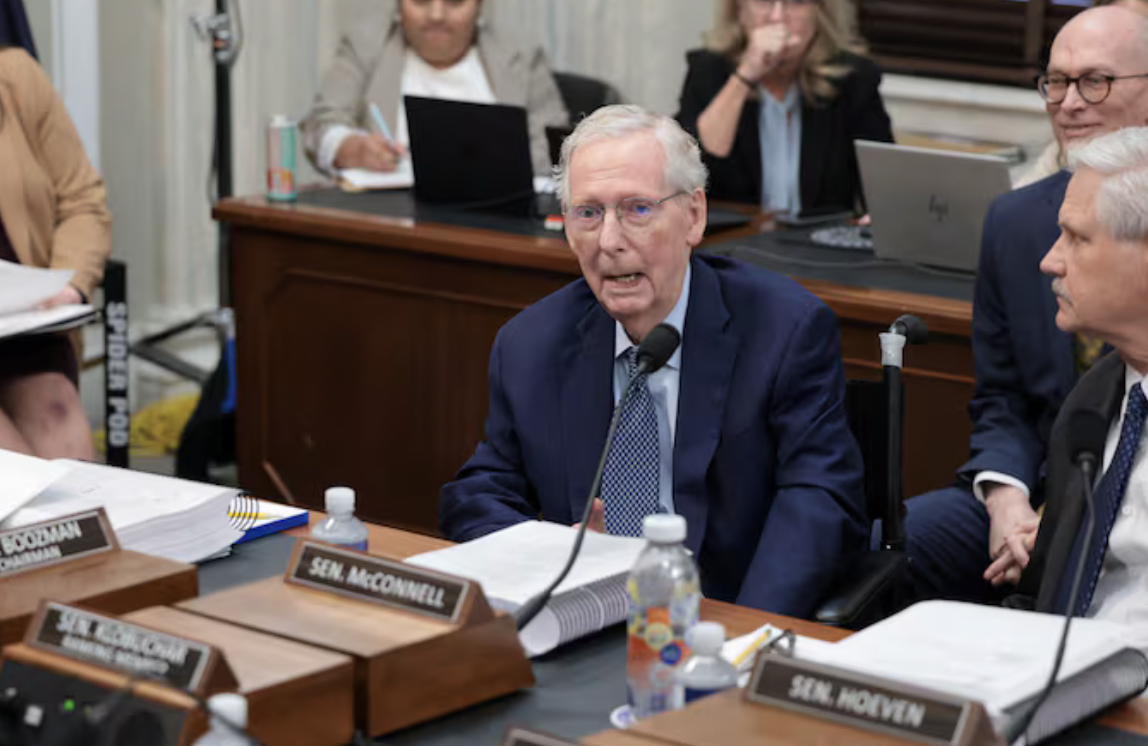
McConnell was present for a crucial Sept. 16 vote on the Agriculture Act of 2026, commonly called Farm Bill 2.0. Video from the meeting showed colleagues and aides speaking to him as his name was called before he ultimately cast an “aye” vote.
Reuters photographs from the meeting confirm McConnell participated and voted in favor of advancing the legislation.
His vote mattered.
The Agriculture Committee approved the bill 12–11 along party lines, sending it to the full Senate. An earlier effort to advance the measure had stalled while McConnell was absent, leaving Republicans without enough votes on the committee.
Committee Chairman Sen. John Boozman said after Wednesday’s vote that he was pleased to have McConnell back and said the Kentucky senator had made a special effort to return that week for the vote.
The scene nevertheless renewed scrutiny of McConnell’s condition after months in which comparatively little was publicly known about his recovery.
McConnell initially entered the hospital in June with his office providing few details. Weeks later, he personally disclosed that he had fallen at home and briefly lost consciousness.
McConnell said doctors performed extensive testing and found no broken bones, concussion, heart attack, stroke, tumors or hemorrhaging. He also revealed that he had been treated for mild pneumonia before moving into rehabilitation.
By August, McConnell remained in rehab and was receiving physical therapy designed to improve his strength and mobility and reduce the risk of another fall. His childhood bout with polio has long affected his mobility.
When he finally returned to the Capitol on Sept. 14, McConnell acknowledged that his recovery was not complete.
He told reporters he was “not quite back to 100%” and indicated that he could still miss some votes while recovering. However, he said he intended to continue working during the remaining months of his Senate career.
McConnell has already announced that his current term will be his last. In February 2025, he said he would not seek an eighth Senate term, ending a career that began when Kentucky voters first elected him in 1984.
His public appearances this week have nevertheless generated questions about how much assistance he currently requires while conducting Senate business.
Those questions should be separated from claims about McConnell’s cognitive health. There has been no publicly disclosed medical diagnosis establishing cognitive impairment, and his July statement said doctors had ruled out several serious neurological and cardiovascular conditions following his fall.
At the same time, McConnell’s office has continued publishing detailed statements under his name.
Following Wednesday’s agriculture vote, McConnell’s official X account said he was proud to support the legislation and argued that it would benefit Kentucky farmers and rural communities. The original statement can be viewed on McConnell’s official X account.
It is not unusual for congressional communications staff to prepare or assist with lawmakers’ official statements, so the written posts alone do not establish how much of the wording McConnell personally drafted.
Another point in the original reporting also deserves clarification.
McConnell spoke with reporters near the Senate chamber after returning, and critics questioned why the encounter did not produce more video of him speaking. But official Senate media guidelines do allow forms of press coverage in the Ohio Clock Corridor. The Senate Radio-TV Correspondents Gallery says radio coverage is permitted there, while Senate photography and video are governed by separate credentialing and coverage rules.
That makes it difficult to support the broader claim that McConnell’s staff deliberately chose the location because “the world could not find his voice” without additional evidence.
What is clear is that McConnell’s presence still carries real consequences inside the closely divided Senate.
His return immediately changed the math on the Agriculture Committee. The farm bill had previously stalled, but with McConnell back, Republicans had the votes to advance it 12–11. The legislation now heads toward a much more difficult fight on the Senate floor, where its provisions involving agriculture programs and food assistance remain politically contentious.
For McConnell, the next several months will also provide considerably more public evidence of how actively he can participate as he finishes the final stretch of a Senate career spanning more than four decades.
Discover more from Next Gen News
Subscribe to get the latest posts sent to your email.