

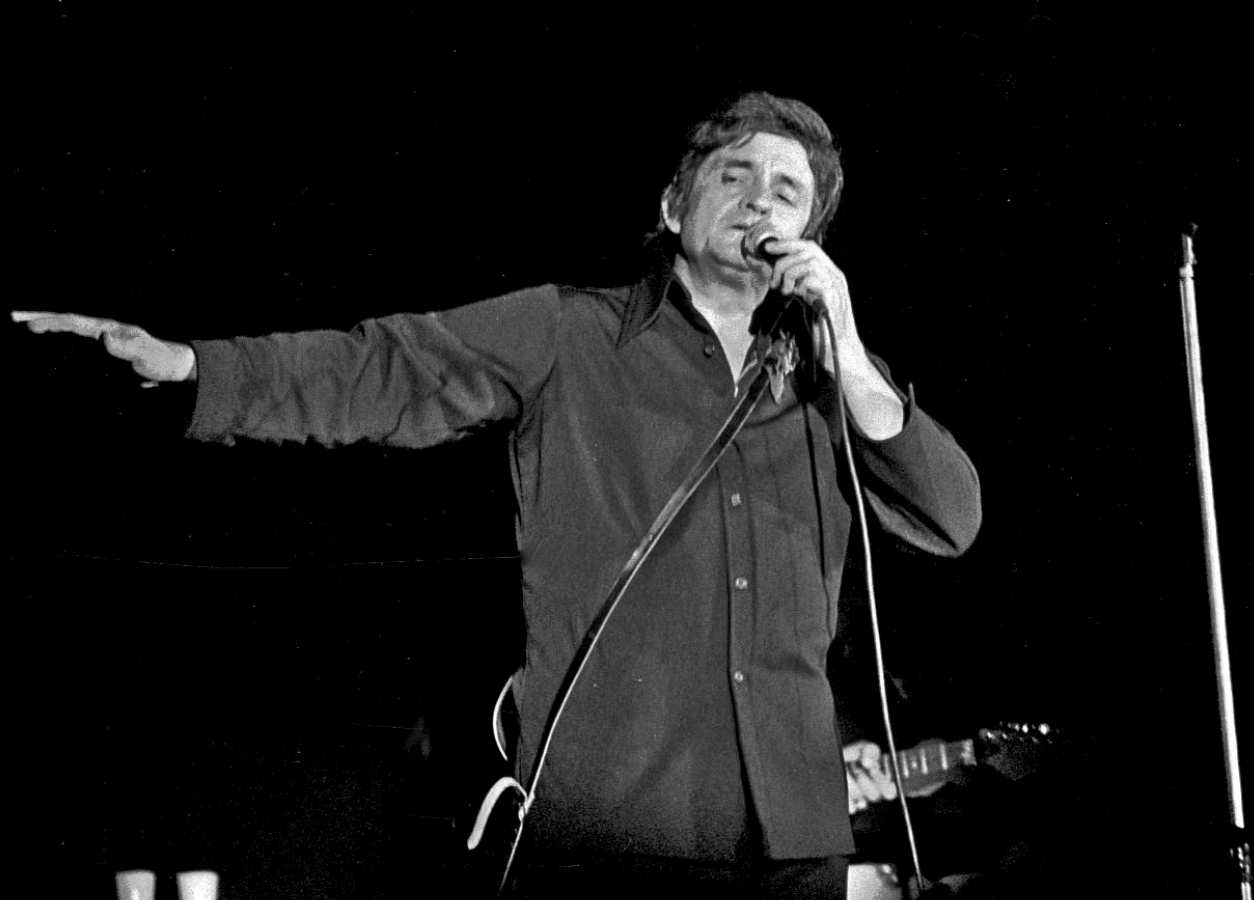
The family of legendary country icon Johnny Cash has filed a bombshell lawsuit against The Coca-Cola Company, accusing the beverage giant of using an unauthorized imitation of Cash’s unmistakable voice in a national college football campaign.
Filed on November 25 in the U.S. District Court for the Middle District of Tennessee, the complaint alleges that Coca-Cola violated both federal false-endorsement laws and Tennessee’s new ELVIS Act, a groundbreaking statute designed to protect the voices and likenesses of public figures — including digital or imitated recreations.
“This isn’t about money,” said the estate’s attorney Tim Warnock of Loeb & Loeb LLP. “It’s about respect. Stealing the voice of an artist is theft — theft of his integrity, identity, and humanity.”
The estate claims Coca-Cola used a Johnny Cash soundalike in a commercial titled “Go the Distance,” part of its “Fan Work Is Thirsty Work” 2025 NCAA football ad campaign.
According to court filings, Coca-Cola hired Shawn Barker, a known Johnny Cash tribute performer, to recreate vocals that the estate says were “readily identifiable and attributable” to the Man in Black himself — without permission or compensation.
The John R. Cash Revocable Trust, which manages the late star’s estate, argues the company “never even bothered to ask” before using the imitation. “Coca-Cola knows exactly what it was doing,” the complaint reads. “It exploited Johnny Cash’s voice to boost sales, betting consumers wouldn’t notice — or worse, that they would.”
The lawsuit includes screenshots from social media showing fans expressing confusion and even excitement, believing they were hearing an unreleased Johnny Cash song.
One viewer wrote they were “perplexed that there was a Johnny Cash song I hadn’t heard before,” while another said they rewound the commercial multiple times, convinced it was a lost Cash recording.
“That’s proof enough,” a source close to the estate told Newsweek. “People believed it was Johnny — that’s the very harm this law was written to prevent.”
The Ensuring Likeness, Voice, and Image Security (ELVIS) Act, signed into law in March 2024, is among the first of its kind in the nation. Effective since July 1, it expands Tennessee’s right-of-publicity protections to cover both real and simulated voices.
Legal experts say the Cash lawsuit could become the first major test of the new legislation — and possibly reshape the entertainment and advertising industries.
“The ELVIS Act is a wake-up call,” says Nashville entertainment lawyer Karen Brantley, who isn’t connected to the case. “It tells companies: even if you use a human impersonator, you’re not in the clear. The sound of a voice is now property.”
So far, Coca-Cola has not publicly commented on the allegations. The company, one of the most recognized brands in the world, could face serious penalties if the court sides with the Cash estate.
The lawsuit seeks over $75,000 in damages, along with punitive penalties and a court order to pull the ad from circulation.
Industry insiders warn the case could set a historic precedent for how AI-generated voices, celebrity soundalikes, and posthumous performances are handled in media.
Johnny Cash’s unmistakable baritone made him one of America’s most beloved musicians — a man whose voice symbolized authenticity, rebellion, and heartbreak. Born in Kingsland, Arkansas, in 1932, Cash recorded more than 90 million albums and was inducted into both the Country Music Hall of Fame and the Rock & Roll Hall of Fame before his death in 2003.
Now, more than 20 years later, his estate is fighting to protect that voice from what it calls a “corporate cash-grab.”
“This isn’t just about Johnny,” Warnock said. “It’s about every artist who’s ever poured their soul into a song. If companies can fake a voice without permission, none of us are safe.”
Coca-Cola is expected to formally respond to the lawsuit in the coming weeks. The case could either settle quietly behind closed doors — or move toward what experts predict could be a landmark trial for the future of celebrity voice rights.
If the court sides with the Cash estate, the ruling could reverberate across Hollywood, Madison Avenue, and Silicon Valley, redefining who owns the sound of a human voice in the age of AI and imitation.
“This case will echo far beyond Nashville,” Brantley added. “It could rewrite the rules of the music industry — one voice at a time.”
Source: Newsweek, Middle District of Tennessee court filings, and industry legal analysis from Latham & Watkins LLP.
Discover more from Next Gen News
Subscribe to get the latest posts sent to your email.
Oh ohSent from my iPhone
This law is kinda a stretch as there are many people who’s voices naturally sound just like that of famous people… Gen./Pres. Eisenhower sounded somewhat like famous character Rhett Butler/actor Clark Gable… Of course, hiring a known Cash impersonator helps the claim some…
They probably should be glad that the ad revives memories of the long dead and forgotten Cash… introduces young people to his sound…
As far as I recall, the ad did not mention the name Johnny Cash, so that brings up a question. Did Mr. Barker have permission from the Cash estate to impersonate Johnny? If so, could Coca Cola have assumed that his acceptance of this job would carry that permission over to their ad? If not, has the Cash estate gone after Barker or any other “tribute artist” who performed as Johnny without explicit permission?
Was Barker paying royalties to the estate for each time he used the Cash Sound?