

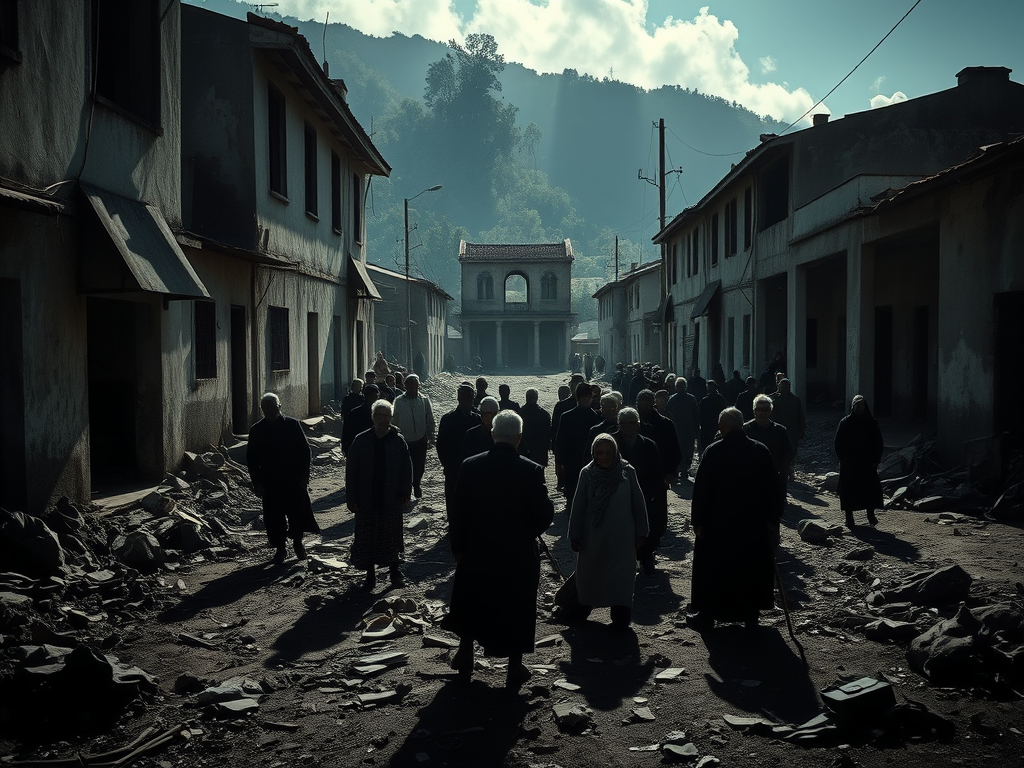
A horrifying massacre has rocked Haiti, as over 110 elderly residents of Cité Soleil were brutally killed in a spree ordered by notorious gang leader Monel “Mikano” Felix. The killings, carried out with knives and machetes, were reportedly fueled by Felix’s belief that his child’s illness and subsequent death were caused by witchcraft.
The violence unfolded over the weekend after a Voodoo priest allegedly told Felix that senior residents in the community had cursed his child, according to the National Human Rights Defense Network (RNDDH).
Witnesses described the killings as methodical and ruthless.
“Nobody was spared once they fit the profile—elderly and vulnerable,” said a survivor, speaking anonymously for fear of retaliation.
The death toll includes at least 60 people killed on Friday and another 50 on Saturday, the RNDDH reported. Felix’s child reportedly passed away late Saturday afternoon, just hours after the second wave of violence.
The massacre is the latest chapter in Haiti’s escalating security crisis, which has claimed over 5,000 civilian lives this year alone, according to U.N. human rights chief Volker Türk. Violent gangs have capitalized on years of political instability, filling the power void with unchecked brutality.
Felix’s gang, known as Wharf Jérémie, is one of the largest in Cité Soleil, controlling parts of the impoverished slum as well as neighboring areas like Fort Dimanche and La Saline. With an estimated 300 members, the gang wields immense influence and instills fear across local communities.
A local activist, who declined to be named for safety reasons, called the massacre a symptom of the country’s deeper struggles.
“This isn’t just gang violence. It’s what happens when there’s no government, no law, and no hope,” the activist said.
Haiti’s government has repeatedly called for international intervention to stabilize the country. While the U.N. has deployed a partial mission, the response has been limited due to geopolitical tensions. Both China and Russia have opposed expanded intervention efforts, citing sovereignty concerns.
Meanwhile, local police remain outnumbered and under-equipped to confront gangs, which are often armed with more sophisticated weaponry.
“This is a humanitarian crisis,” Türk told reporters on Monday. “The world must do more to support the Haitian people.”
This isn’t the first large-scale atrocity linked to gang activity in Haiti. In October, a different gang slaughtered over 115 people in Pont-Sondé, 60 miles north of Port-au-Prince, after locals resisted paying illegal tolls imposed on drivers.
For residents of Cité Soleil, survival means navigating daily threats from gang violence, poverty, and systemic neglect.
“We’ve been abandoned,” one resident said, tears welling in their eyes. “Every day feels like it could be your last.”
As Haiti teeters on the brink, calls for global action grow louder, but so far, concrete solutions remain elusive. The question haunting many is simple: How much longer can this go on?
Discover more from Next Gen News
Subscribe to get the latest posts sent to your email.