

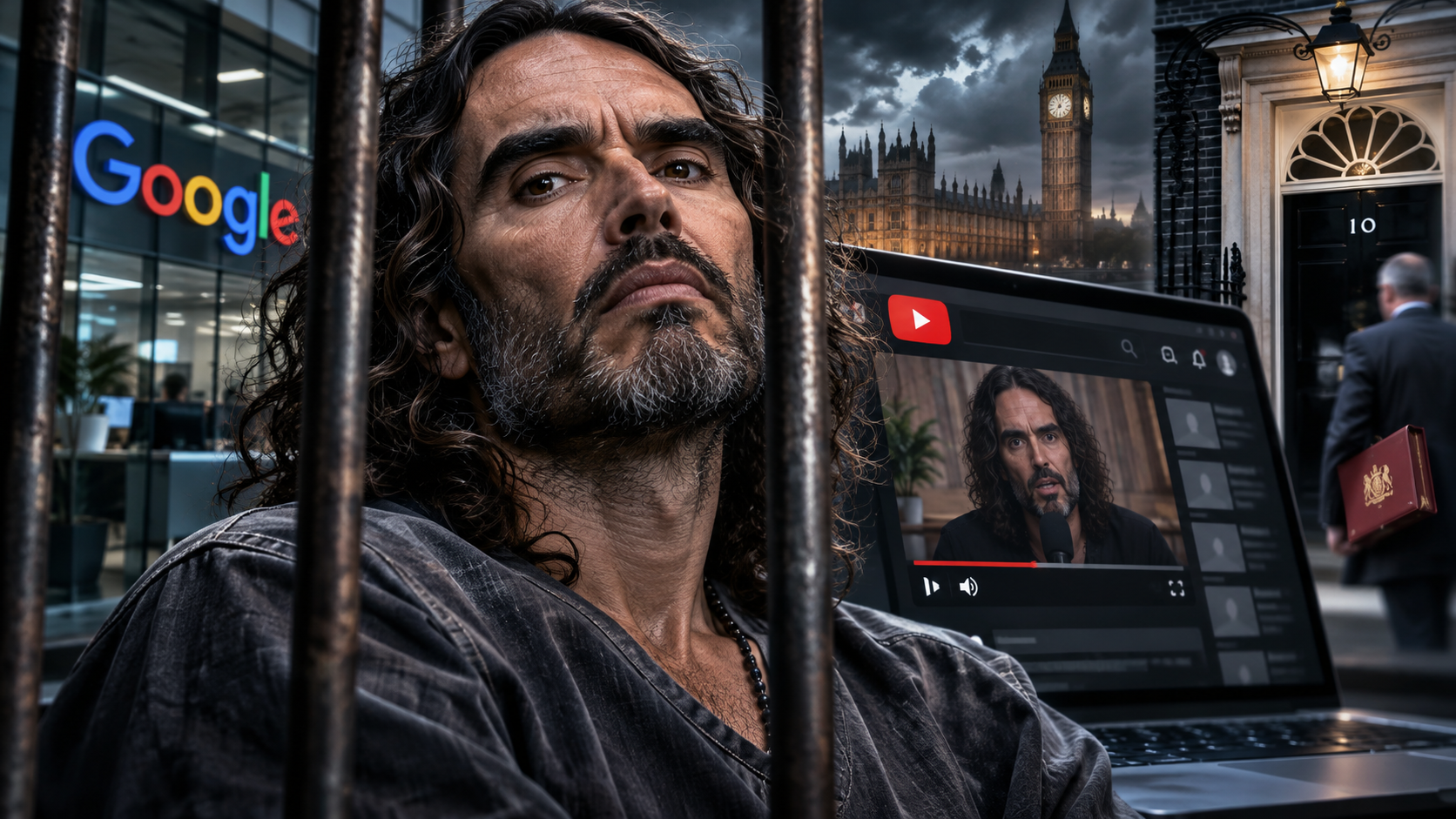
Russell Brand has sparked a fierce new controversy from behind bars, dragging Google into an increasingly heated confrontation with the British government over a YouTube video in which the disgraced comedian insists he is innocent of the crimes that landed him in prison.
The 51-year-old former Hollywood star, who was sentenced to 10 and a half years behind bars for rape and sexual assault, is now at the center of a bitter dispute involving Google executives, government ministers, and even Britain’s prime minister.
The controversy erupted after Brand’s wife, Laura Gallacher, shared a message from her imprisoned husband during the November 15 episode of their YouTube program, Sunday Service with the Brands.
Rather than appearing on camera himself, Brand had his wife read a written statement in which he denied committing the offenses for which a jury had convicted him.
The declaration immediately triggered outrage among British officials, who accused the former comedian of showing little consideration for the women whose testimony helped secure his conviction.
Brand was sentenced on November 9 after being found guilty of raping one woman and sexually assaulting three others between 2004 and 2009. During sentencing, the judge described him as a sexual predator and criticized his attitude toward the victims.
Yet just six days later, Brand was once again addressing his enormous online audience, prompting questions about whether convicted criminals should be permitted to use social media to publicly challenge their convictions from prison.
The backlash quickly reached the highest levels of the British government.
Prime Minister Andy Burnham personally called on Google and other technology companies to remove the controversial material, urging them to consider the devastating impact it could have on Brand’s victims.
Speaking during a visit to Berlin on November 19, Burnham urged social media companies to “show some decency” and remove the videos rather than continue amplifying the convicted entertainer’s message.
The British Ministry of Justice also formally requested that YouTube remove the recording, arguing that the content could cause further distress to the women involved in the case.
But Google refused the government’s request, according to reporting by the BBC and Sky News, creating an extraordinary standoff between one of the world’s most powerful technology companies and British political leaders.
The company has maintained that Brand’s YouTube account has been barred from earning advertising revenue since September 2023, when allegations against the comedian first prompted major scrutiny of his online presence.
A Google spokesperson confirmed that the company was reviewing the latest controversy, but the decision to leave the video accessible has only intensified the political backlash.
The confrontation has also reportedly created tensions behind the scenes.
RadarOnline cited an unnamed Google insider who described frustration among company executives over being drawn into another high-profile controversy involving Brand.
According to the outlet’s source, the company faces criticism regardless of its decision. Removing the video could ignite accusations of censorship, while leaving it online risks angering victims’ advocates and government officials who believe Brand should no longer have such a prominent public platform.
Those claims about Google’s internal discussions have not been independently confirmed.
Meanwhile, British authorities have launched a separate investigation into whether Brand violated prison regulations by issuing the statement through his wife.
Prisoners in England and Wales face strict restrictions on communicating with the media and making public statements that could cause distress to victims.
Officials have not announced whether Brand breached those rules, but the investigation could create further complications for the former entertainer as he serves his sentence.
The controversy has also exposed a significant limitation on the government’s authority over social media platforms.
Although officials can request the removal of material, they cannot automatically force YouTube to delete content simply because they consider it offensive or distressing.
That has prompted renewed debate over whether existing online safety regulations provide sufficient protection for victims of serious crimes.
Google’s refusal has become particularly controversial because another technology giant has already taken more aggressive action against Brand.
Meta, the parent company of Facebook and Instagram, disabled his accounts following his conviction earlier this month.
For now, the dispute shows no signs of disappearing. Brand remains imprisoned, his message has received widespread attention, and British officials continue pressing Google to reconsider its position.
What began as a statement read by his wife has escalated into a national controversy over celebrity influence, the rights of crime victims, and the power of technology companies to decide who gets heard.
And with both sides refusing to back down, Brand’s latest controversy could have consequences extending far beyond his prison cell.
Discover more from Next Gen News
Subscribe to get the latest posts sent to your email.