

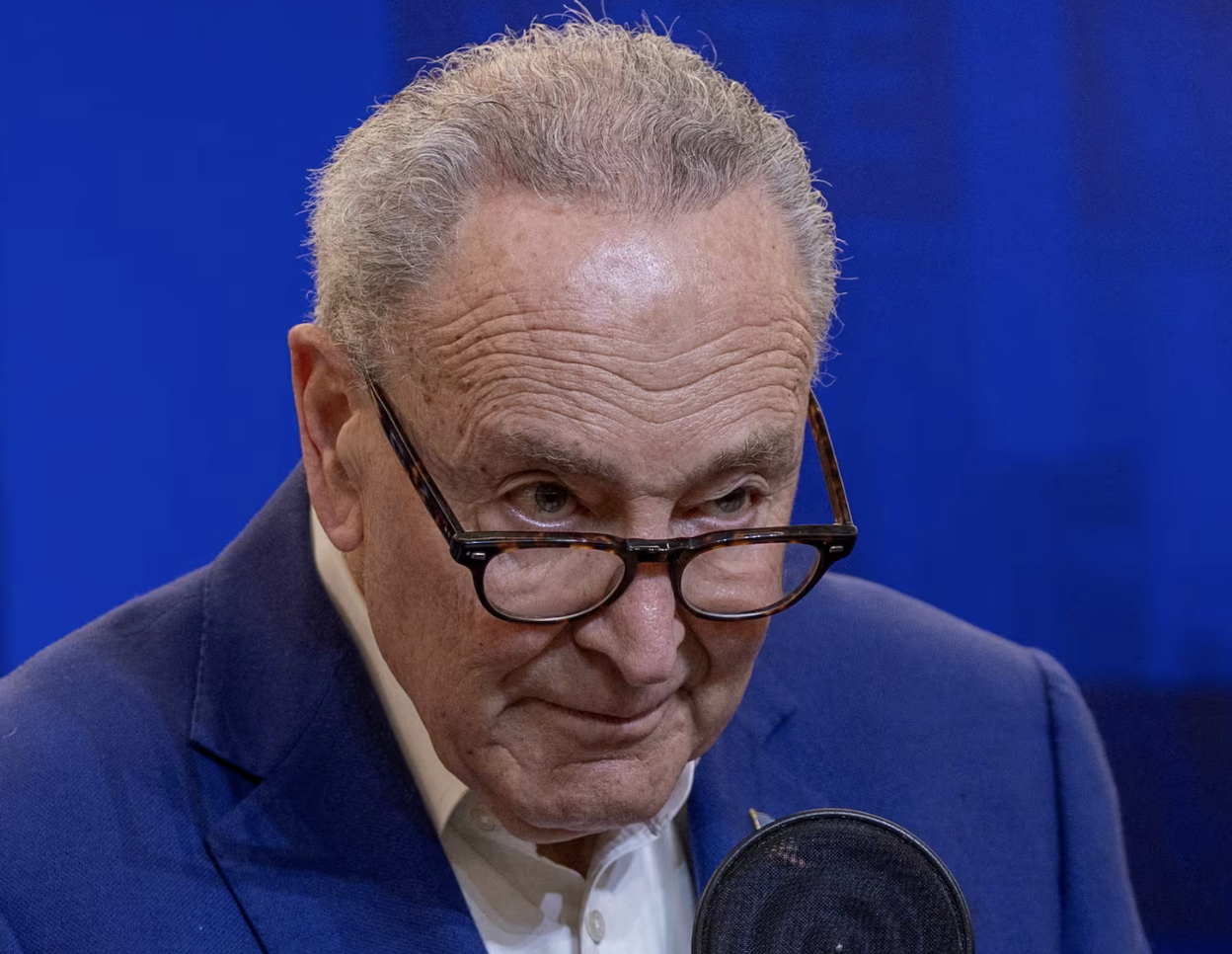
One of Barack Obama’s most influential political advisers is delivering a blunt warning to Senate Democratic leader Chuck Schumer: Don’t repeat the mistake that helped end Joe Biden’s presidency.
Veteran Democratic strategist David Axelrod is urging Schumer, 75, to prepare for a new generation of leadership rather than cling to power following the party’s sweeping victories in the 2026 midterm elections.
The extraordinary public intervention comes as Democrats celebrate winning back control of Congress while simultaneously confronting an increasingly contentious battle over who should lead them into the second half of President Donald Trump’s term.
In a pointed message posted Friday on X, Axelrod drew a direct comparison between Schumer’s political future and Biden’s controversial decision to seek reelection in 2024.
“Joe Biden promised to be a transitional president, then misread the meaning of the ’22 midterms and changed his mind, to his own detriment and the country’s,” Axelrod wrote.
Biden entered the White House in 2021 portraying himself as a bridge to the next generation of Democratic leadership. But after his party performed better than expected in the 2022 midterm elections, he pressed ahead with another presidential campaign despite persistent concerns about his age.
That decision ultimately unraveled following his disastrous June 2024 debate against Trump, which triggered weeks of intense pressure from fellow Democrats and ended with Biden withdrawing from the race.
Vice President Kamala Harris replaced him as the Democratic nominee but lost the November election, returning Trump to the White House.
Now, Axelrod fears Democrats could be heading toward a similar mistake if their longtime Senate leader interprets the party’s latest electoral success as a mandate to remain in charge indefinitely.
The former Obama adviser acknowledged that Schumer deserves substantial credit for helping Democrats secure their impressive midterm victories. But he argued that the election also delivered an unmistakable demand for change.
Axelrod urged Schumer to commit to stepping aside after two years and spend that time elevating younger Democrats as the party’s public faces.
“He would be wise to do what Biden did not. Be the bridge,” Axelrod declared.
His warning carries considerable political weight. Axelrod helped engineer Obama’s historic 2008 presidential victory and played a central role in his successful reelection campaign four years later.
It also comes at a particularly delicate moment for Schumer.
Democrats captured the House of Representatives and are preparing to enter the new Congress with a 56-44 Senate majority, marking a dramatic reversal of the Republican victories that brought Trump back to power just two years earlier.
Schumer has celebrated the results as a generational transformation of his party, but his own leadership is facing serious scrutiny.
Sen. Chris Van Hollen of Maryland, 67, has announced that he will challenge Schumer for the position of Senate majority leader, setting up a rare internal election scheduled for December 1.
Van Hollen argues that Democrats cannot promise voters a different direction while automatically preserving the same leadership structure in Washington.
His campaign has attracted support from prominent progressive figures, including Sen. Bernie Sanders of Vermont, as well as newly elected Democrats who believe the party needs a more aggressive strategy for confronting Trump.
Schumer, however, is refusing to back down.
The New York Democrat, who has led Senate Democrats since 2017, maintains that he has enough support to retain his position and believes his record of recruiting candidates and winning elections demonstrates his effectiveness.
His allies argue that replacing a leader immediately after such a significant electoral victory would overlook the experience and political relationships that helped deliver the Senate majority.
But the disagreement reflects tensions that have been building inside the Democratic Party for more than a year.
Schumer faced intense criticism from progressive activists in 2025 after supporting a Republican-backed government funding measure to avert a shutdown. Critics accused him of failing to confront the Trump administration forcefully enough, while Schumer defended his decision as necessary to prevent greater harm.
Those frustrations have resurfaced as Democrats begin debating their priorities for the new Congress, including lowering living costs, pursuing government oversight and responding to Trump’s policies.
The leadership contest is especially consequential because Senate Democrats have not faced a seriously contested election for their top position in more than three decades.
With many senators still publicly uncommitted, the secret-ballot vote could expose disagreements over the party’s direction that its midterm success temporarily overshadowed.
Axelrod’s intervention also raises a larger question about Democratic leadership heading toward the 2028 presidential election.
Should the party’s established figures remain in charge after delivering major electoral victories, or should they use that success to prepare the next generation to lead?
For Axelrod, the lesson of Biden’s final presidential campaign is that electoral success can sometimes obscure the need for political change.
He believes Schumer has an opportunity to conclude his decades-long career in public service by helping shape the Democratic Party’s future rather than remaining its dominant Senate figure.
Whether Schumer accepts that advice remains to be seen.
But with a leadership challenger already campaigning for his job and one of Obama’s closest political advisers publicly urging a transition, the Senate Democrat now faces a difficult question just weeks after helping his party reclaim power: How long should he stay at the top?
Discover more from Next Gen News
Subscribe to get the latest posts sent to your email.
 What's Up Today Editorial Team