

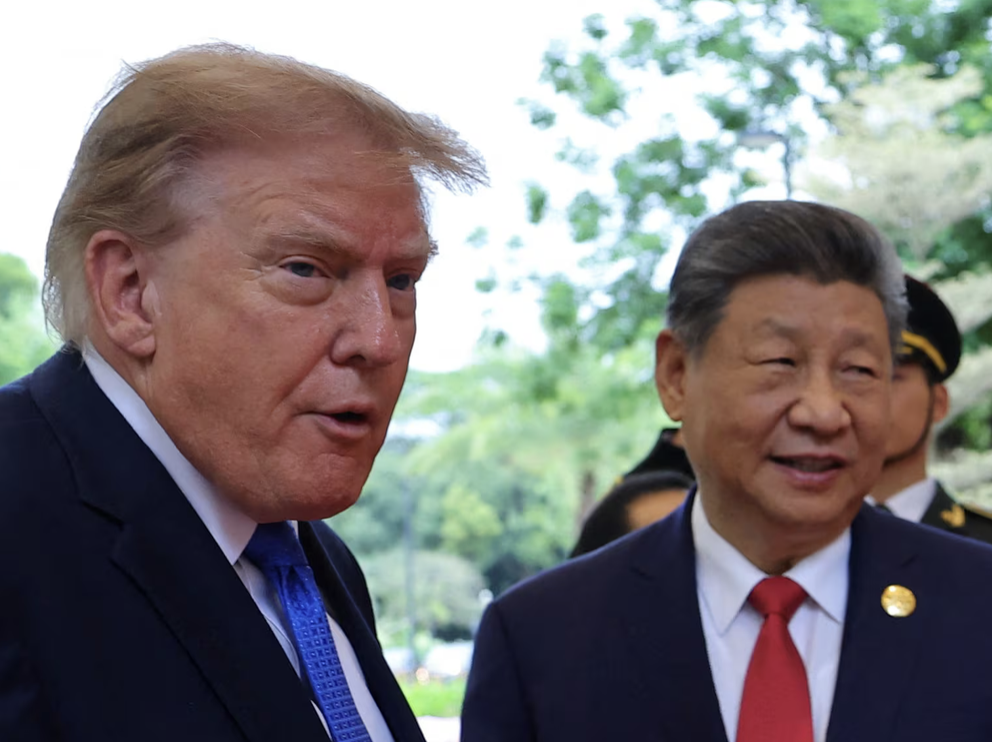
An American journalist was abruptly banned from President Donald Trump’s high-stakes meeting with Chinese President Xi Jinping and Russian President Vladimir Putin after asking an uncomfortable question about a growing espionage scandal involving one of America’s most powerful technology companies.
The incident unfolded Thursday, November 19, during Trump’s closely watched visit to Shenzhen, China, where the three leaders gathered for historic discussions about nuclear weapons, artificial intelligence and international security.
Bloomberg’s chief political correspondent Annmarie Hordern was covering an earlier meeting between Trump and Xi when she shouted a question about former Nvidia CEO Jensen Huang, whose shocking resignation has been linked to revelations about an affair with a woman suspected of working for Chinese intelligence.
“President Trump, has Jensen Huang been disloyal to the United States?” Hordern asked.
Trump did not answer.
According to reporters covering the summit, Xi briefly glanced toward the assembled journalists before turning his attention elsewhere. Chinese officials quickly moved to discourage further questions, reportedly warning that shouting at world leaders was considered extremely rude.
Another reporter who attempted to ask a question was also silenced.
But the situation took a more troubling turn when Hordern was told she would not be allowed to attend the subsequent meeting involving Trump, Xi and Putin.
The decision was confirmed in an official White House press pool report, which stated that Chinese authorities barred the Bloomberg journalist specifically because she had asked a question during the earlier meeting.
“A WH official said they pushed to have her reinstated but Chinese officials insisted she be excluded,” the report stated.
The White House’s reported intervention was unsuccessful, leaving an American journalist shut out of a major diplomatic event for attempting to question her own president.
The confrontation has raised fresh concerns about press freedom during Trump’s closely choreographed meetings with authoritarian leaders, particularly in China, where independent journalism faces severe government restrictions.
The question that sparked the controversy was hardly a routine political inquiry.
Huang, the billionaire co-founder of Nvidia, resigned as the company’s chief executive on November 12 after admitting to an extramarital affair amid reports that one of the women involved was suspected of having ties to Chinese intelligence.
The woman, identified as Alice Huang, previously held a senior position at Megaspeed International, a major Nvidia customer.
American authorities have been investigating suspicions that she was gathering information for Beijing, although the espionage allegations have not been independently established. China has denied that she was working as a spy.
Nvidia’s board also launched an independent investigation into the matter, while Reuters reported that Huang had misled senior company officials about the nature of his relationship with the woman.
The controversy carries potentially enormous national security implications because Nvidia produces advanced computer chips central to the global race for artificial intelligence dominance.
With Washington and Beijing already locked in a fierce technological rivalry, questions about possible Chinese intelligence operations targeting American technology executives have taken on extraordinary significance.
Trump had previously indicated that he did not intend to raise the Huang scandal directly with Xi.
That made Hordern’s question particularly sensitive during a visit intended to showcase cooperation between the world’s most powerful leaders.
The journalist’s exclusion also highlighted the stark differences between American press traditions and the restrictions imposed on reporters covering events in China.
American journalists routinely shout questions at presidents during public appearances, including moments when leaders are entering or leaving meetings.
In China, however, officials exercise far tighter control over media access and frequently restrict opportunities for unscripted questioning.
Similar tensions emerged during Trump’s previous visit to Beijing in May, when American and Chinese officials reportedly clashed over journalists’ access to a presidential appearance at the Temple of Heaven.
The latest incident unfolded against the backdrop of an elaborately staged summit that brought Trump together with Xi and Putin for discussions involving some of the world’s most pressing security challenges.
Yet while the three leaders presented an image of diplomatic cooperation, the exclusion of an American reporter offered a reminder of the very different approaches their governments take toward freedom of the press.
There is no evidence that Trump personally ordered Hordern’s removal. In fact, the White House press pool report indicates that American officials attempted to reverse the decision.
Nevertheless, the episode presents an uncomfortable question about the limits of American influence when the president meets with authoritarian leaders.
Hordern asked a question concerning a potentially serious threat to U.S. national security. Chinese authorities responded by denying her access to one of the summit’s most important events.
And despite the White House’s reported objections, the Chinese government’s decision stood.
The result was a striking scene at a summit intended to project strength on the world stage: an American journalist barred from questioning powerful leaders after raising an issue those leaders apparently preferred not to discuss.
Discover more from Next Gen News
Subscribe to get the latest posts sent to your email.