

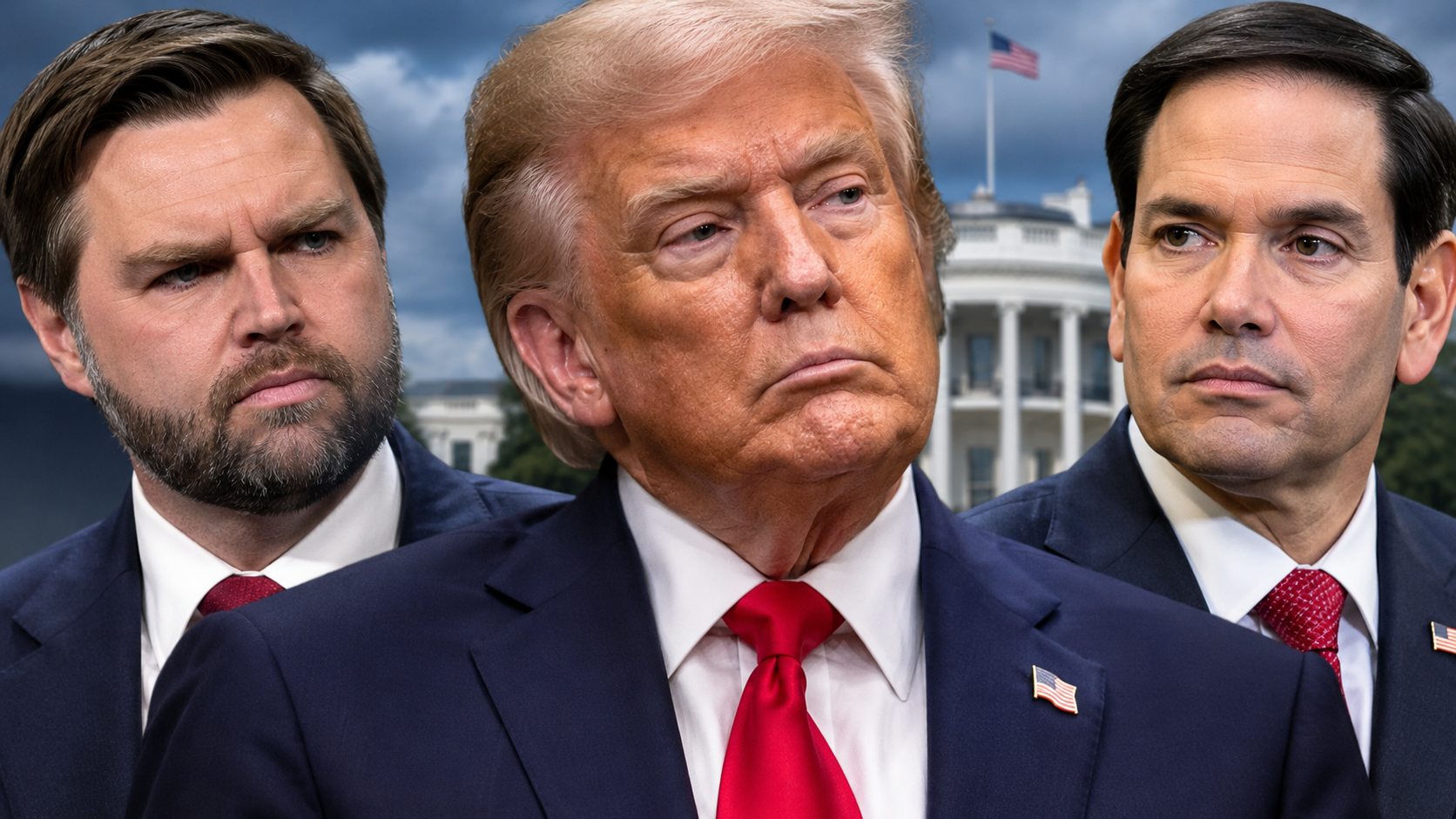
President Donald Trump is reportedly growing increasingly frustrated with Vice President JD Vance, as a bitter disagreement over the devastating Republican midterm elections threatens to fracture their political alliance and shake up the race to succeed him in 2028.
And while Vance appears to be losing favor with the president, another prominent Republican is reportedly gaining ground: Secretary of State Marco Rubio.
According to a November 18 report from The New York Times, Trump has spent the past two weeks privately complaining to aides and political allies about Vance’s blunt assessment of the Republican Party’s humiliating election losses.
The dispute began after Democrats delivered a stunning defeat to Republicans on November 3, seizing control of both the House and Senate and winning races in states that had long been considered reliable GOP strongholds.
Rather than blaming poor turnout or Democratic messaging, Vance publicly pointed the finger at Trump’s controversial war with Iran.
“The reason we lost is the war,” the vice president declared in a lengthy November 4 post on X.
Vance argued that Republicans had alienated their own supporters by continuing the costly conflict while Americans struggled with rising gas prices and everyday expenses.
He also suggested that many voters who supported Trump in 2024 had abandoned Republicans just two years later because of the administration’s foreign policy decisions.
The remarks were especially striking because Vance had previously expressed reservations about the war, which began in February and has continued for months despite Trump’s early predictions of a much shorter conflict.
Initially, Trump appeared willing to accept his vice president’s assessment, telling reporters that Vance’s explanation was largely accurate.
But behind closed doors, the president’s reaction has reportedly been very different.
Sources familiar with Trump’s private conversations told The New York Times that he was particularly irritated because Vance failed to acknowledge that launching the war had been the correct decision.
Trump has repeatedly defended the military campaign, insisting it was necessary to prevent Iran from developing a nuclear weapon, even as the conflict has contributed to higher energy prices and growing public frustration.
The disagreement now threatens to complicate Vance’s political future at a particularly vulnerable moment.
Long considered one of the leading candidates to inherit Trump’s MAGA movement, Vance is weighing a possible presidential run in 2028. But his standing with the president could become increasingly important as Republicans struggle to recover from their election losses.
Meanwhile, Rubio appears to be benefiting from the growing tension.
Unlike Vance, the secretary of state has consistently defended Trump’s decision to confront Iran, arguing that protecting American national security sometimes requires unpopular choices.
Trump has reportedly been praising Rubio privately and suggesting that he could make a strong presidential candidate.
His public comments have been equally enthusiastic.
During an appearance in Manila on Tuesday, Trump singled out Rubio for praise, calling attention to his performance as secretary of state and describing him as fantastic.
Rubio has also accompanied Trump on his high-profile trip through Asia, taking part in important diplomatic meetings while Vance has remained in Washington.
The contrast has fueled speculation that Rubio could be emerging as Trump’s preferred political heir.
And the president did little to quiet those rumors during a recent 60 Minutes interview.
When asked who might succeed him in 2028 besides Vance, Trump immediately brought up Rubio.
“I think Marco’s great,” the president said, praising his work at the State Department.
Trump also suggested that several other Republicans could be strong candidates, while refusing to commit to endorsing anyone.
That uncertainty is particularly significant for Vance, whose national political rise has been closely tied to Trump’s support.
Neither Vance nor Rubio has formally launched a presidential campaign, and the reported tension does not mean Trump has decided to abandon his vice president.
Still, the growing disagreement exposes a potentially serious divide within the Republican Party over how to respond to its electoral collapse.
Vance appears to believe Republicans must acknowledge that the Iran war cost them crucial support, while Trump remains determined to defend the decision that helped make the conflict a defining issue of his second presidency.
For Democrats, who are preparing to take control of Congress following their sweeping victories, the emerging Republican infighting adds another layer of uncertainty to Trump’s remaining two years in office.
And for Vance, the stakes could hardly be higher.
After spending nearly two years positioning himself as Trump’s natural successor, the vice president now faces the possibility that his most powerful political ally could eventually throw his support behind someone else.
Discover more from Next Gen News
Subscribe to get the latest posts sent to your email.