

Megyn Kelly is facing renewed scrutiny after defending disgraced comedian Russell Brand, even after a British court convicted him of rape and sexual assault and sentenced him to more than a decade behind bars.
The conservative commentator reignited controversy during the November 11 episode of The Megyn Kelly Show, where she suggested Brand had been targeted by powerful forces in Britain because of his religious conversion and increasingly conservative political beliefs.
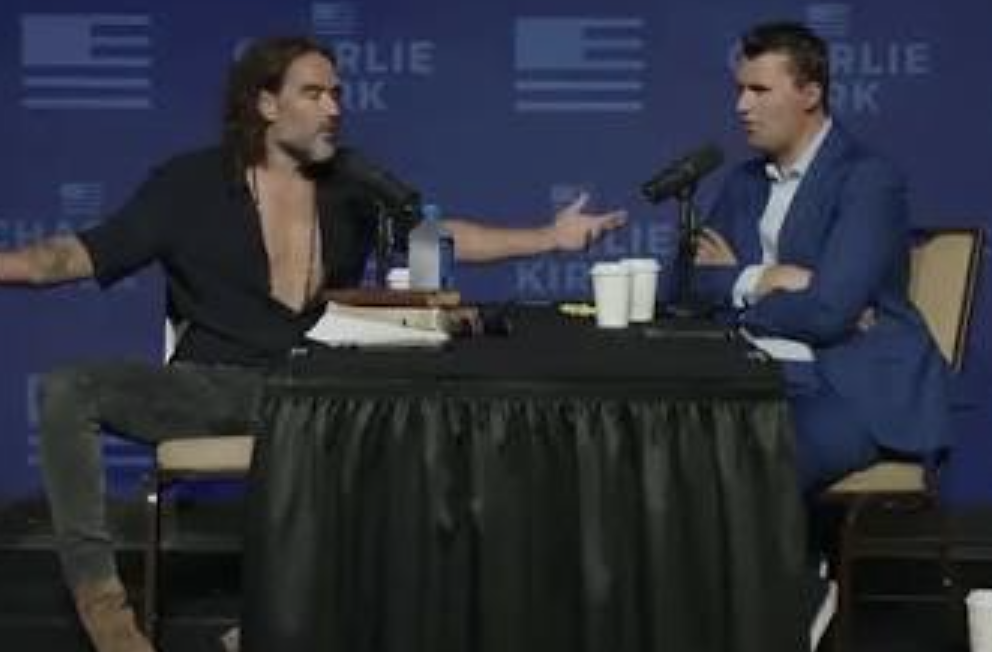
Kelly, 55, also invoked her late friend Charlie Kirk, the Turning Point USA founder who was assassinated in September 2025, playing footage of him defending Brand against criminal allegations just two months before his death.
The remarks came days after Brand, 51, was sentenced to 10 years and six months in prison for raping one woman and sexually assaulting three others between 2004 and 2009.
A jury at London’s Southwark Crown Court convicted the former Hollywood star on November 5 following a four-week trial. He was acquitted of two additional rape charges and one count of attempted indecent assault.
During sentencing on November 9, Judge Joel Bennathan delivered a blistering assessment of the comedian’s conduct, describing Brand as a sexual predator who had exploited his growing celebrity status.
Despite the verdict and prison sentence, Kelly continued questioning the motivations behind the prosecution.
While speaking with Brand’s friend and supporter Samantha Pressdee, Kelly revisited a July 2025 interview in which Kirk publicly defended the comedian at Turning Point USA’s Student Action Summit.
“Charlie saw the story correctly from the beginning,” Kelly declared before playing footage of their conversation.
In the resurfaced clip, Kirk accused British authorities of pursuing Brand over what he believed were fabricated allegations.
“The entire government is going after Russell,” Kirk told the audience, claiming Brand was being targeted over “completely fake stuff.”
Kirk went further, suggesting the criminal investigation was connected to Brand’s decision to embrace Christianity.
“And you better believe the enemy is not happy that now you’re proclaiming Jesus in front of millions of people,” Kirk told Brand.
He characterized the comedian’s legal troubles as a “satanic attack,” arguing that spiritual forces were attempting to shame Brand over his past.
Brand publicly converted to Christianity in 2024, several months after allegations of sexual misconduct first emerged in major British news investigations. He later became increasingly prominent in conservative political circles, where he received support from several right-wing commentators.
Kelly described watching Kirk’s remarks as “chilling,” noting that her longtime friend would be killed just weeks after the interview.
But rather than reconsider Kirk’s claims in light of Brand’s conviction, Kelly insisted he had correctly understood the situation.
She suggested British authorities and critics wanted to portray Brand as a villain because they disapproved of his transformation into a religious conservative.
Kelly also argued that Brand’s celebrity status had given him ample opportunities for consensual relationships, questioning why he would have needed to commit sexual offenses.
Her comments effectively cast doubt on a criminal case in which a jury had already heard evidence from multiple women and found Brand guilty of four serious offenses.
Kelly maintained that Brand had transformed his life through religion, marriage and fatherhood, accusing his critics of refusing to acknowledge those changes.
“They are completely resistant to that narrative because the new version of Russell is what they find truly deplorable,” she claimed.
Her defense stands in sharp contrast to the findings of the British court.
During sentencing, Judge Bennathan emphasized that Brand’s fame had helped shield him from accountability for years. The judge said the comedian had displayed a profound disregard for women’s right to refuse sexual contact.
Prosecutors likewise argued that Brand exploited his celebrity and influence to pursue women without regard for their consent.
The case has become a flashpoint in the broader debate over celebrity influence, political loyalty and whether public figures should continue defending allies after criminal convictions.
Brand has denied the allegations against him, and British authorities are continuing to investigate separate rape allegations involving two additional women. Those claims have not resulted in convictions.
For Kelly, the decision to revive Kirk’s defense has drawn fresh attention to the lengths some prominent conservative commentators have gone to support Brand.
While Kelly continues portraying the comedian as a victim of political and religious persecution, the British justice system has reached a dramatically different conclusion.
Brand is now serving a prison sentence of more than 10 years, a reality that has not stopped one of his most prominent American defenders from questioning the case against him.
Discover more from Next Gen News
Subscribe to get the latest posts sent to your email.