

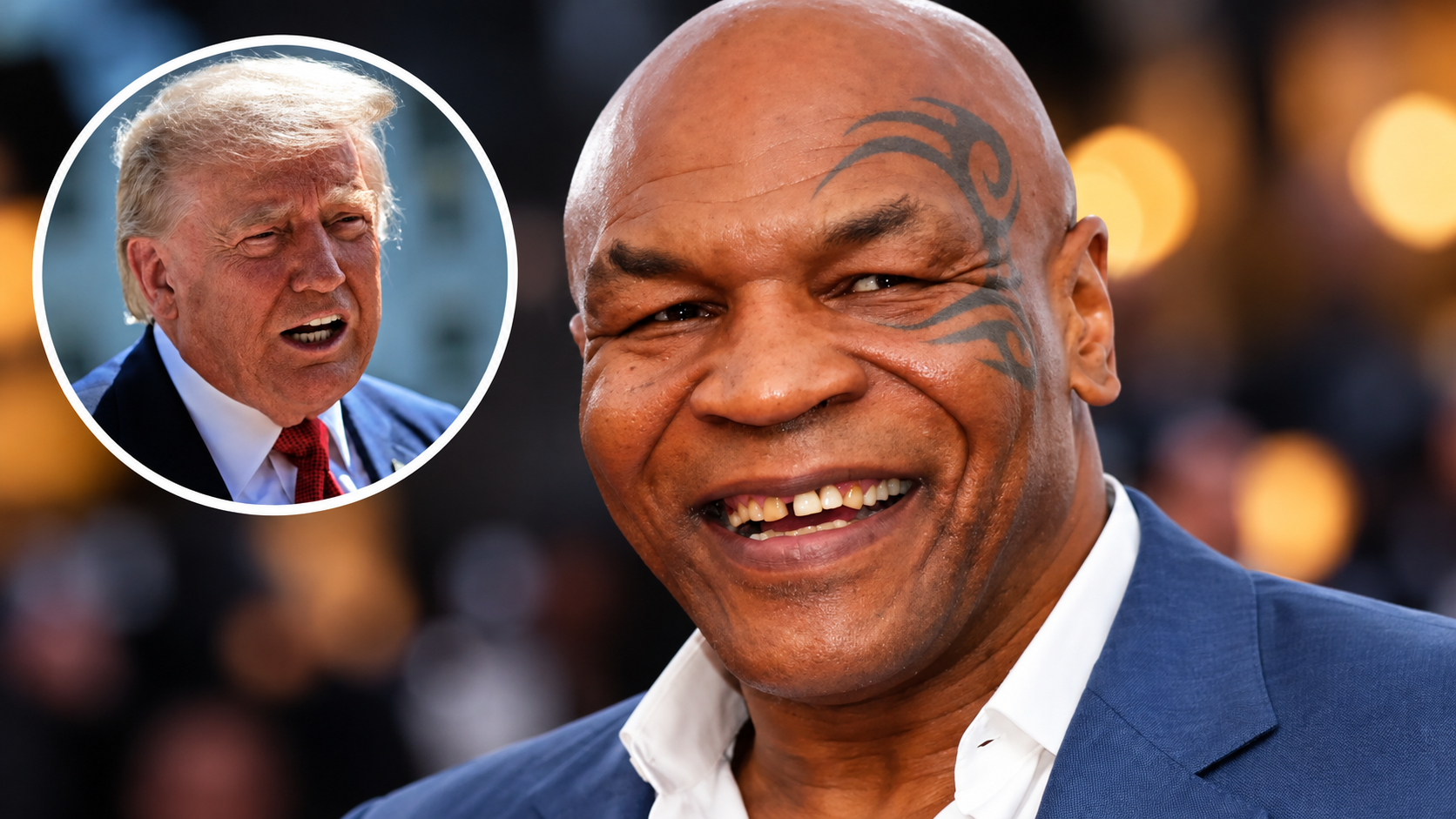
President Donald Trump is facing fresh criticism after making eyebrow-raising comments about Mike Tyson’s sexual assault trial, suggesting the former heavyweight champion may have damaged his own defense by telling the truth.
The 80-year-old president offered his controversial assessment in Netflix’s new four-part documentary TYSON, which premiered October 13 and examines the legendary boxer’s extraordinary career, personal struggles and troubled past.
But Trump’s remarks about Tyson’s 1992 rape conviction have sparked backlash, with critics questioning why the president appears more concerned about the boxer’s courtroom strategy than the woman at the center of the case.
The timing has made the controversy especially uncomfortable for Trump, who is facing renewed scrutiny over his own history of sexual misconduct allegations, including a civil jury verdict finding him liable for sexually abusing writer E. Jean Carroll.
“I think Mike shouldn’t have testified,” Trump declared in the documentary, referring to Tyson’s decision to take the witness stand during his highly publicized criminal trial.
The president then offered an explanation that has raised even more eyebrows.
“One thing with Mike, he’s very truthful. And I think the truth hurt him… in this case,” Trump said.
The comments have prompted criticism over what some view as Trump’s misplaced sympathy for a longtime friend whose criminal conviction remains intact.
Tyson, now 60, was convicted in February 1992 of raping Desiree Washington, an 18-year-old contestant in the Miss Black America pageant, following an encounter at an Indianapolis hotel the previous summer.
The former boxing champion maintained that their encounter was consensual, but a jury rejected his defense. He was sentenced to prison and served approximately three years before his release in March 1995.
More than three decades later, Tyson continues to deny that he sexually assaulted Washington.
In the Netflix documentary, the former champion again challenges the allegations, while several people close to him offer sympathetic interpretations of the events surrounding his conviction.
Trump’s appearance adds another layer to that narrative, particularly because the president has his own complicated legal history involving allegations of misconduct toward women.
According to RadarOnline, political commentators have ridiculed Trump for appearing to offer courtroom advice to a convicted sex offender.
One political strategist described the president’s remarks as extraordinary, arguing that Trump seemed more interested in dissecting Tyson’s defense than acknowledging the seriousness of the jury’s findings.
The strategist also pointed to the uncomfortable irony of a president discussing whether a defendant should have testified when Trump himself has faced accusations of sexual misconduct.
The criticism does not mean Trump actually served as Tyson’s legal adviser. His comments were retrospective observations made for the documentary, not evidence that he participated in the boxer’s legal defense.
Nevertheless, critics argue that his choice of words reflects a troubling tendency to sympathize with powerful men facing serious allegations.
The documentary itself has also attracted criticism for its treatment of Washington’s story.
Reviewers at The Guardian questioned whether the production devoted too much attention to defending Tyson’s reputation while offering insufficient consideration of the woman whose testimony helped secure his conviction.
Washington does not participate in the series, although the documentary includes material from her earlier public statements.
The controversy has also revived attention to Trump’s legal battle with E. Jean Carroll.
In May 2023, a federal civil jury found Trump liable for sexually abusing Carroll in a Manhattan department store during the 1990s and subsequently defaming her.
The jury awarded Carroll $5 million in damages. Although jurors did not find Trump liable for rape under the applicable legal definition, they concluded that he had sexually abused her.
Trump has consistently denied Carroll’s allegations and challenged the verdict, but his efforts to overturn the judgment have been unsuccessful.
Unlike Tyson’s conviction, the Carroll verdict was reached in a civil proceeding rather than a criminal trial, an important legal distinction.
Trump’s remarks have come under additional scrutiny following an October 26 report released by Democrats on the House Judiciary Committee, which detailed allegations involving the president’s past relationship with Jeffrey Epstein.
The report includes an allegation from former Swiss beauty pageant contestant Beatrice Keul, who claims Trump sexually assaulted her at New York City’s Plaza Hotel in 1993.
The White House strongly denies the accusations, describing the report as politically motivated. Trump has not been criminally charged in connection with Keul’s allegation, which has not been established in court.
Against that backdrop, the president’s willingness to publicly defend Tyson has become an especially sensitive subject.
The two men have maintained a friendship stretching back to the late 1980s, when Trump helped promote several of Tyson’s biggest boxing matches at his Atlantic City casino properties.
Their connection has survived decades of controversy, including Tyson’s imprisonment and Trump’s transition from real estate celebrity to president of the United States.
Earlier this month, their friendship returned to the political spotlight when Tyson accompanied Trump to a Republican campaign rally in Syracuse, New York, on October 9.
Standing before supporters, the former heavyweight champion enthusiastically praised the president.
“I’m just happy to be up here with my president, President Trump,” Tyson told the crowd.
He added that he would not have been there without someone like Trump occupying the White House.
Trump returned the praise, joking that he would never want to fight the former champion and complimenting his appearance.
The warm public exchange demonstrated just how closely the two men remain connected, even as Tyson’s criminal history continues to attract attention.
The president also made a revealing comparison between himself and Tyson in the Netflix documentary, suggesting that intense media criticism had strengthened the boxer’s public profile.
Trump then brought the conversation back to his own experiences with the press, arguing that he too had endured relentless criticism.
For some reviewers, the moment underscored a larger concern about the documentary’s approach to accountability, particularly when discussing the experiences of women who accused powerful public figures of abuse.
The controversy comes just days before the November 3 midterm elections, when Trump’s political standing and the direction of his administration will once again face a nationwide test.
While his supporters may see the remarks as another example of the president’s unwavering loyalty to an old friend, critics see something far more troubling: a sitting president publicly questioning how a convicted man should have defended himself rather than focusing on the woman whose case resulted in that conviction.
And for a president whose own legal history continues to generate headlines, the Netflix appearance has created yet another uncomfortable political controversy at a particularly sensitive moment.
Discover more from Next Gen News
Subscribe to get the latest posts sent to your email.
 What's Up Today Editorial Team