

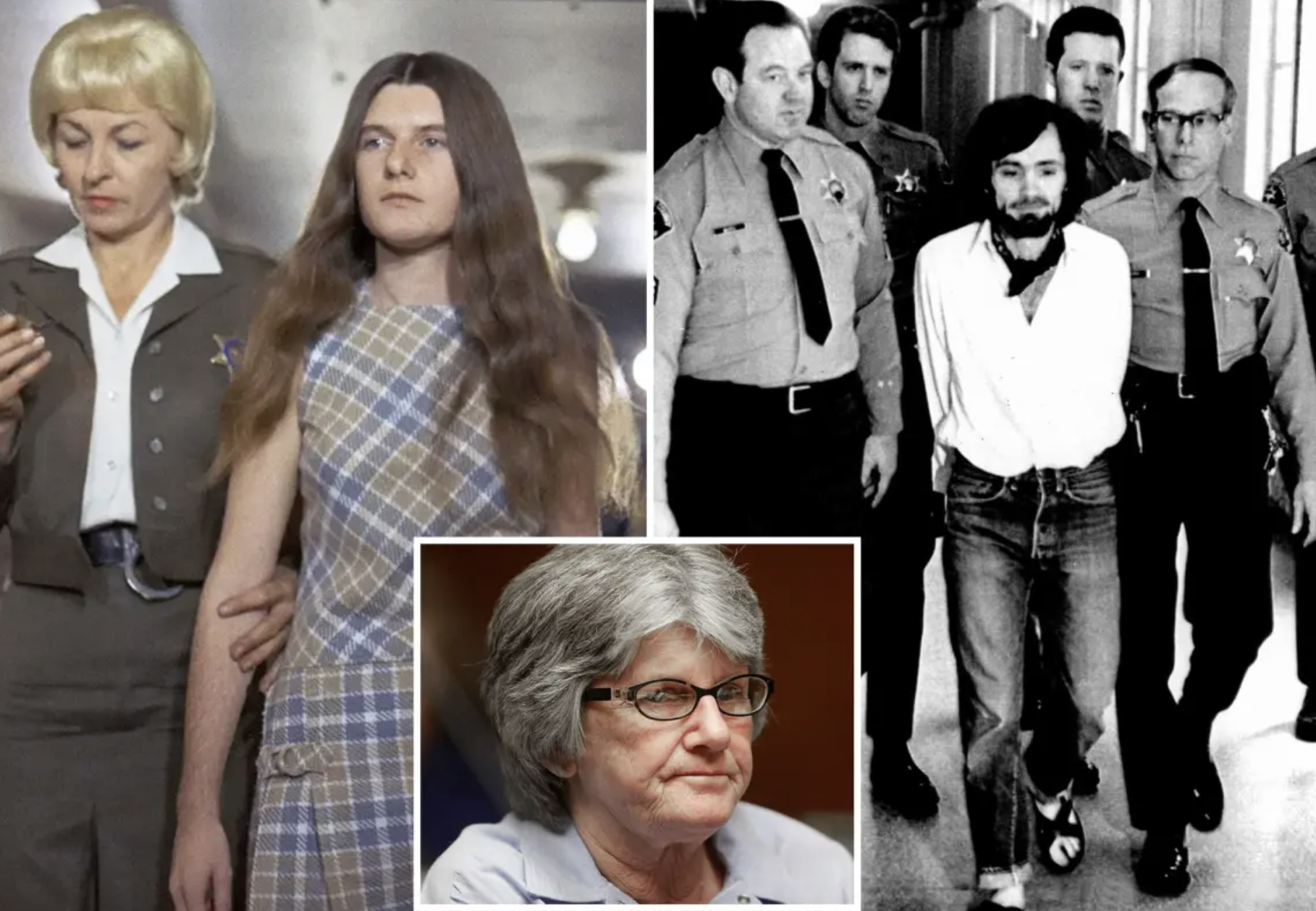
Patricia Krenwinkel, one of the most notorious members of Charles Manson’s murderous cult, has again been recommended for parole after spending more than half a century behind bars for the 1969 Tate-LaBianca killings.
Krenwinkel, 78, received preliminary approval for parole Tuesday, October 6, during her latest hearing before California’s Board of Parole Hearings.
The decision does not mean she will immediately walk out of prison.
Her case must first undergo a 120-day review by the Board of Parole Hearings. If the decision survives that process, California Gov. Gavin Newsom will have up to 30 days to review it and decide whether to let the parole grant stand or reverse it.
That puts Krenwinkel’s fate in familiar territory.
Newsom has already blocked her release twice, reversing parole recommendations in 2022 and again in 2025. In his most recent decision, the governor acknowledged Krenwinkel’s efforts to rehabilitate herself but concluded that her progress did not outweigh concerns about the potential danger she could pose if released.
Krenwinkel is believed to be the longest-serving female inmate in California. She has been incarcerated for roughly 56 years for her role in one of the most infamous killing sprees in American history.
She was 21 when members of Manson’s group carried out two nights of murders across Los Angeles in August 1969.
On the first night, followers entered the Benedict Canyon home of actress Sharon Tate and filmmaker Roman Polanski. Polanski was away, but Tate, who was pregnant, and four other people were killed: celebrity hairstylist Jay Sebring, coffee heiress Abigail Folger, writer Wojciech Frykowski and 18-year-old Steven Parent.
The following night, Manson and several followers targeted grocery executive Leno LaBianca and his wife, Rosemary, at their Los Feliz home.
Krenwinkel participated in both nights of violence.
She later testified that she chased Folger outside the Tate residence and repeatedly stabbed her. During the LaBianca murders, Krenwinkel participated in the attack and helped write messages using the victims’ blood.
Krenwinkel, Manson, Susan Atkins and Leslie Van Houten were convicted in connection with the killings in 1971.
Krenwinkel was originally sentenced to death, but her sentence was changed to life with the possibility of parole after a 1972 California Supreme Court ruling temporarily invalidated the state’s death penalty.
More than five decades later, the question facing state officials is no longer whether Krenwinkel committed the crimes. Her convictions and responsibility for the killings are established.
Instead, California parole law requires officials to consider whether she currently poses an unreasonable risk to public safety.
Krenwinkel’s attorneys argue that the woman now before the parole board is dramatically different from the 21-year-old who followed Manson in 1969.
Her longtime attorney, Keith Wattley, has pointed to decades of therapy, counseling, education and rehabilitation programs. Her legal team has also argued that Krenwinkel was manipulated and abused by Manson after meeting him as a vulnerable 19-year-old searching for acceptance.
They maintain that she has accepted responsibility for her crimes and has repeatedly been assessed as presenting a low risk of future violence.
Victims’ relatives see the case very differently.
Sharon Tate’s sister, Debra Tate, has spent years fighting attempts to release members of the Manson group and has argued that the extraordinary brutality of the crimes should continue to weigh heavily against parole.
A petition she created opposing Krenwinkel’s release has attracted more than 100,000 signatures.
Los Angeles County prosecutors have also opposed her release and are expected to again urge Newsom to keep her incarcerated.
Krenwinkel’s case has become part of a much larger debate over what parole should mean for prisoners who committed horrific crimes when they were young but have spent decades behind bars.
A similar fight played out with former Manson follower Leslie Van Houten. Newsom repeatedly opposed Van Houten’s release, but a California appeals court overturned his decision. Van Houten was released on parole in 2023 after serving more than five decades.
Krenwinkel could now become the next former Manson follower to leave prison.
But freedom is far from guaranteed.
Her latest parole recommendation is only a proposed decision while the state completes its review. If it ultimately reaches Newsom’s desk, the governor will once again have to decide whether Krenwinkel’s decades of rehabilitation are enough to overcome the horrifying crimes that put her behind bars more than 50 years ago.
For now, Krenwinkel remains incarcerated at the California Institution for Women in Corona as one of the most closely watched parole cases in the country moves into its next stage.
Discover more from Next Gen News
Subscribe to get the latest posts sent to your email.