

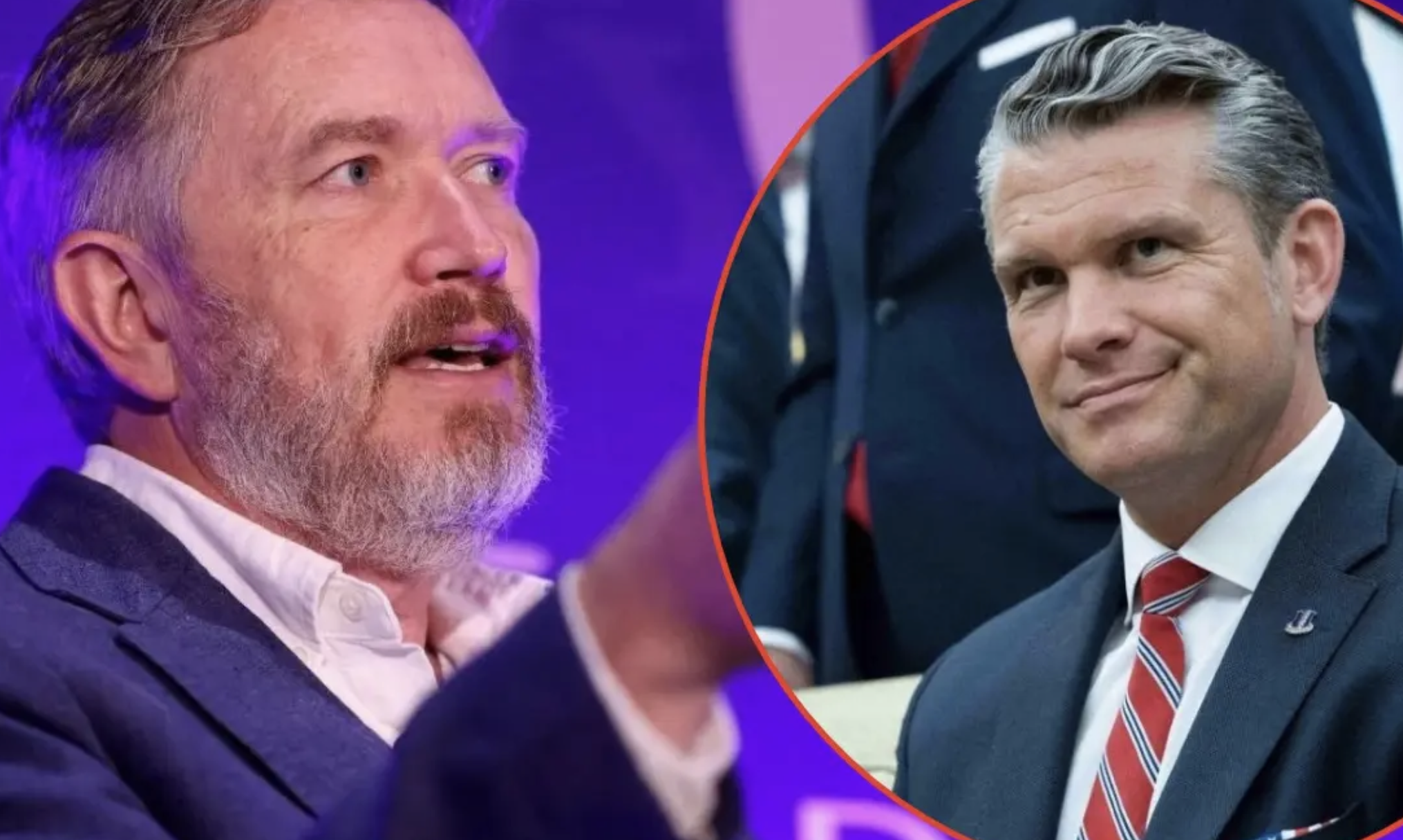
Republican Rep. Thomas Massie says he deliberately kept his explosive plan to impeach Defense Secretary Pete Hegseth secret from his own party’s leaders because he feared they might prevent him from bringing it to the House floor.
The Kentucky Republican stunned Capitol Hill on Tuesday, Sept. 15, when he introduced eight articles of impeachment against Hegseth centered on the ongoing Iran war and several other U.S. military operations.
Massie later revealed that the secrecy was intentional.
“I didn’t want to show my hand. I didn’t show it to anybody,” Massie told CNN’s Kaitlan Collins Tuesday night.
He said he feared Republican leaders might “do something to subvert” his attempt to spend more than an hour on the House floor reading the articles.
The comments came during Massie’s appearance on CNN’s The Source.
Massie said his concern was based partly on previous clashes with House leadership over his efforts to force votes, including legislation seeking additional disclosure of government records connected to Jeffrey Epstein.
According to Massie, leadership has previously shortened or canceled legislative sessions at times when he was trying to collect support for forced votes.
That accusation is Massie’s characterization of those scheduling decisions. House Speaker Mike Johnson has disputed Massie’s broader claims that leadership was improperly manipulating the calendar.
What Massie Is Accusing Hegseth Of
Massie’s impeachment resolution contains eight separate articles accusing Hegseth of “high crimes and misdemeanors.”
The first three center on the War Powers Resolution of 1973 and the U.S. conflict with Iran.
According to the official summary released by Massie’s congressional office, he alleges that Hegseth participated in hostilities without a congressional declaration of war or other statutory authorization, continued those operations after Congress directed the removal of U.S. forces, and allowed hostilities to continue beyond deadlines contained in the War Powers Resolution.
Those are Massie’s legal claims, not court rulings or findings of guilt.
The broader dispute turns on one of Washington’s longest-running constitutional battles: how military authority is divided between the president and Congress.
The War Powers Resolution, enacted in 1973 after the Vietnam War era, was designed to limit prolonged U.S. military involvement without congressional authorization. Presidential administrations of both parties have disputed aspects of how far that law can restrict the commander in chief.
Massie’s fourth article accuses Hegseth of disregarding legal protections intended to reduce civilian casualties.
A fifth accuses him of replacing traditional maritime law enforcement with lethal military operations against suspected drug traffickers. Massie’s resolution says those operations resulted in at least 221 deaths and also raises allegations involving secondary strikes and people who survived attacks at sea.
Another article centers on Democratic Sen. Mark Kelly of Arizona.
Massie accuses Hegseth of using Defense Department authority to retaliate against Kelly after the retired Navy captain participated in a video reminding members of the military that they are required to reject unlawful orders.
The impeachment article characterizes Hegseth’s response as an attempt to suppress constitutionally protected speech. Hegseth and President Donald Trump have sharply criticized Kelly and other lawmakers involved in that video.
The final two articles focus on major U.S. operations abroad.
Massie alleges that Hegseth lacked legal authority for his role in the operation that seized then-Venezuelan President Nicolás Maduro and Cilia Flores.
He also challenges the legality of U.S. military operations in Yemen, accusing Hegseth of beginning those strikes without congressional authorization and failing to comply with war-powers requirements.
Massie’s congressional office published its complete summary of the eight articles here: Read Massie’s official impeachment announcement
Pentagon Pushes Back
Hegseth and the Pentagon have not accepted Massie’s accusations.
Pentagon press secretary Kingsley Wilson responded to the impeachment effort by calling Hegseth a “transformative leader” and saying the department remained united behind his agenda.
The Pentagon’s response did not individually rebut every allegation contained in Massie’s eight articles.
Trump administration officials have also defended Hegseth’s handling of the conflict.
In remarks aired by CNN, Todd Blanche rejected Massie’s argument that Hegseth was operating illegally, saying Congress had considered war-powers questions and disputing Massie’s description of the administration’s actions.
Massie responded by pointing to congressional votes concerning the Iran conflict and arguing that the administration was ignoring Congress’s direction.
Why Massie Could Force the Issue
Massie’s procedural move is important because he introduced the impeachment articles as a privileged resolution.
That status generally requires House leadership to address the measure within two legislative days rather than allowing it to sit indefinitely in committee.
That created the possibility of forcing House members to take a public position on Hegseth only weeks before the November midterm elections.
But the expected vote never happened before lawmakers left Washington.
Johnson canceled the House’s planned Thursday session and began the chamber’s pre-election recess early, postponing consideration of Massie’s impeachment effort until lawmakers return after Election Day.
Massie immediately accused Johnson of cutting the legislative week short to avoid the vote.
“He cut off the day tomorrow to avoid the vote,” Massie told Axios.
Johnson rejected that accusation.
The speaker called Massie’s impeachment push a “publicity stunt” and said he expected the House to table the resolution when lawmakers return. Johnson also defended the decision to send members home and pointed to other work completed by the Republican-controlled House.
The early recess means the impeachment resolution has not disappeared.
Instead, the confrontation has effectively been pushed beyond the Nov. 3 midterm elections.
Massie Is Already on His Way Out of Congress
There is another twist behind Massie’s increasingly public battles with Republican leadership.
The Kentucky congressman lost his Republican primary earlier this year to former Navy SEAL Ed Gallrein, who received Trump’s backing.
Massie therefore remains a sitting member of Congress but is serving the final months of his term.
He has continued using that time to challenge his own party on war powers, government transparency and congressional authority.
His impeachment effort against Hegseth is one of the most dramatic examples yet.
Whether the articles ever receive a substantive House vote remains unresolved.
For now, Johnson says the chamber can deal with the resolution when lawmakers return, while Massie argues that allowing it to remain unresolved through the recess only guarantees that the controversy will still be waiting for Republicans after Election Day.
Discover more from Next Gen News
Subscribe to get the latest posts sent to your email.
Need to impeach Pete Hegseth, Trump and his administration.
Massie Is A Worthless Conservative And Should Never Ever Hold A Public Office Ever Again !!!!!Sent from my iPhoneOn Sep 18, 2026,
You sir are a jerk and a disgrace to our party. Sneaky diety tricks don’t make you a hero they show that your slime. You should be ashamed of yourself because lots of us are ashamed of you.
Hope so