

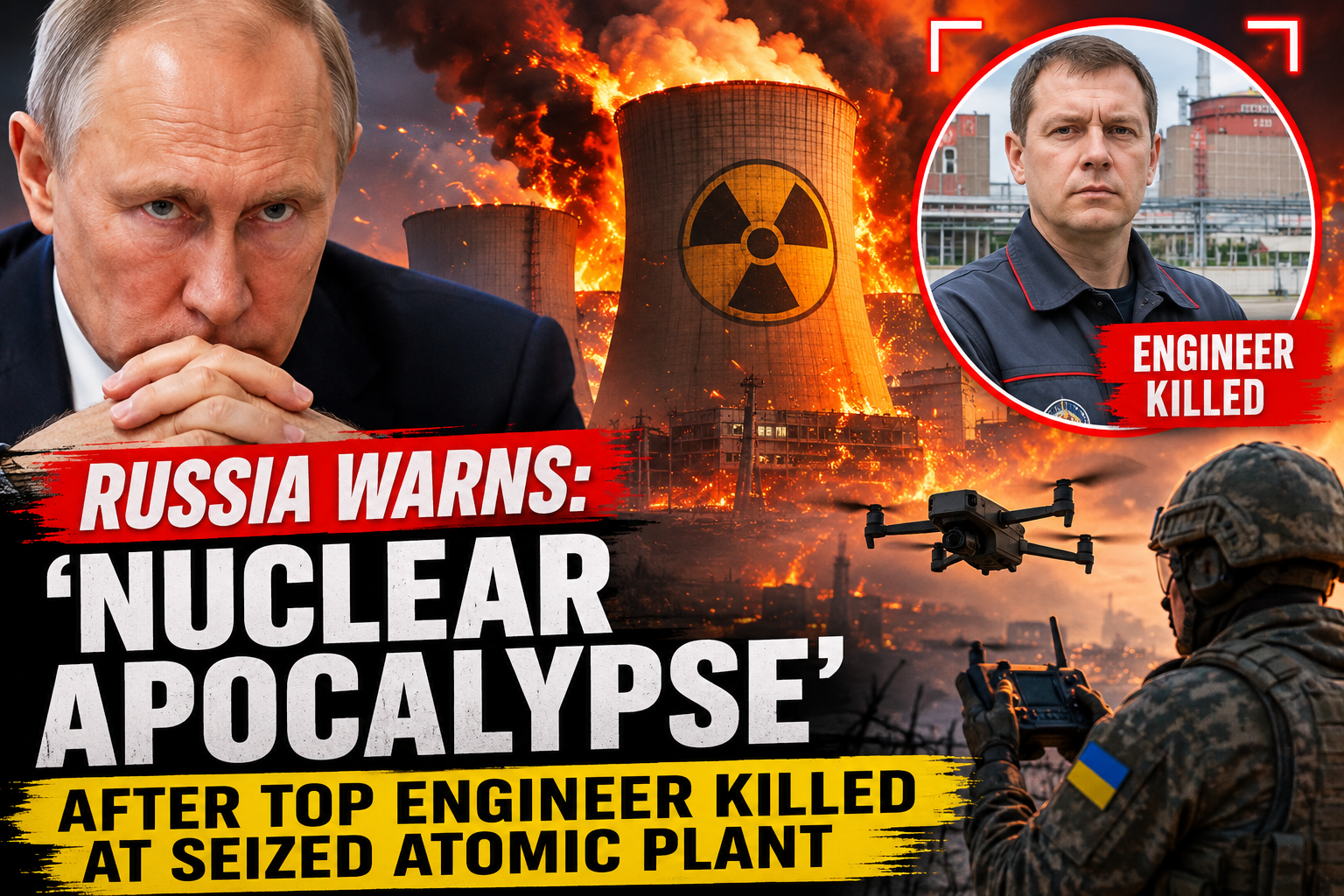
Russia is warning of a “nuclear apocalypse” after a senior engineer at the Russian-occupied Zaporizhzhia Nuclear Power Plant was reportedly killed in a drone strike — a chilling escalation around Europe’s largest nuclear facility.
Alexander Yakovlev, 46, the chief engineer at the plant, was killed while traveling in a service vehicle between the facility and the nearby town of Enerhodar, according to Russian reports. His driver was also killed.
The strike has triggered furious accusations from Moscow, with Russian officials blaming Ukraine and demanding condemnation from international nuclear watchdogs. Ukraine did not immediately respond to the allegations.
Yakovlev worked at the Zaporizhzhia Nuclear Power Plant, a massive facility in southeastern Ukraine that Russian troops seized during the opening weeks of Vladimir Putin’s full-scale invasion in 2022.
The plant has been a terrifying flashpoint throughout the war, with both sides trading blame over attacks and dangerous conditions near the reactors. The latest killing now has Moscow using some of its most alarming language yet.
Mikhail Sheremet, a staunchly pro-Putin lawmaker representing illegally occupied Crimea, accused Ukrainian President Volodymyr Zelensky’s government of “so clearly striving to plunge the world into a nuclear apocalypse.”
He also claimed, without offering public evidence, that the attack had been coordinated with “the leadership of a number of NATO countries,” calling them “direct accomplices in the crime.”
The dramatic warning comes as Russia continues to portray itself as the victim around a nuclear plant it seized by force after invading Ukraine.
Yakovlev had been listed on Ukraine’s Mirotvorets website as a “traitor to the motherland” and an “accomplice to terrorists and Russian occupiers.” The site accused him of collaborating with Russian forces by helping the occupiers commit “acts of nuclear terrorism and blackmail.”
Russian reports said Yakovlev obtained a Russian passport after Moscow occupied that part of the Zaporizhzhia region.
Rafael Grossi, the head of the International Atomic Energy Agency, condemned the killing, though he did not specifically name either Ukraine or Russia.
The attack, Grossi said, “represents an unacceptable attack on the plant and its management, seriously threatening nuclear safety.” He called for an “immediate end” to attacks “on or near nuclear sites.”
Russia quickly seized on the statement.
Maria Zakharova, spokeswoman for the Russian Foreign Ministry, demanded a sharper response from international officials.
“This is a crime of the Kyiv regime that Grossi must finally see,” Zakharova said. “We demand a clear statement condemning this killing from the relevant international bodies, first and foremost the IAEA.”
Rosatom chief Alexei Likhachev also called for action, saying Russia expected the IAEA to respond “promptly, concretely, and clearly to this tragedy.”
Russian authorities have opened a criminal investigation into the deaths.
The strike lands at an especially dangerous moment in the war, as drone attacks, battlefield losses and fears over nuclear safety continue to rattle the region. For Western observers, Moscow’s apocalyptic rhetoric is also familiar: Russia has repeatedly used nuclear threats throughout the war, often as Ukraine pushes back against Putin’s invasion.
But with the Zaporizhzhia plant still under Russian control and sitting in a war zone, the fear is no longer just about battlefield propaganda.
It is about whether one more strike, one more miscalculation or one more political stunt could turn Europe’s largest nuclear power plant into the center of a global disaster.
Discover more from Next Gen News
Subscribe to get the latest posts sent to your email.