

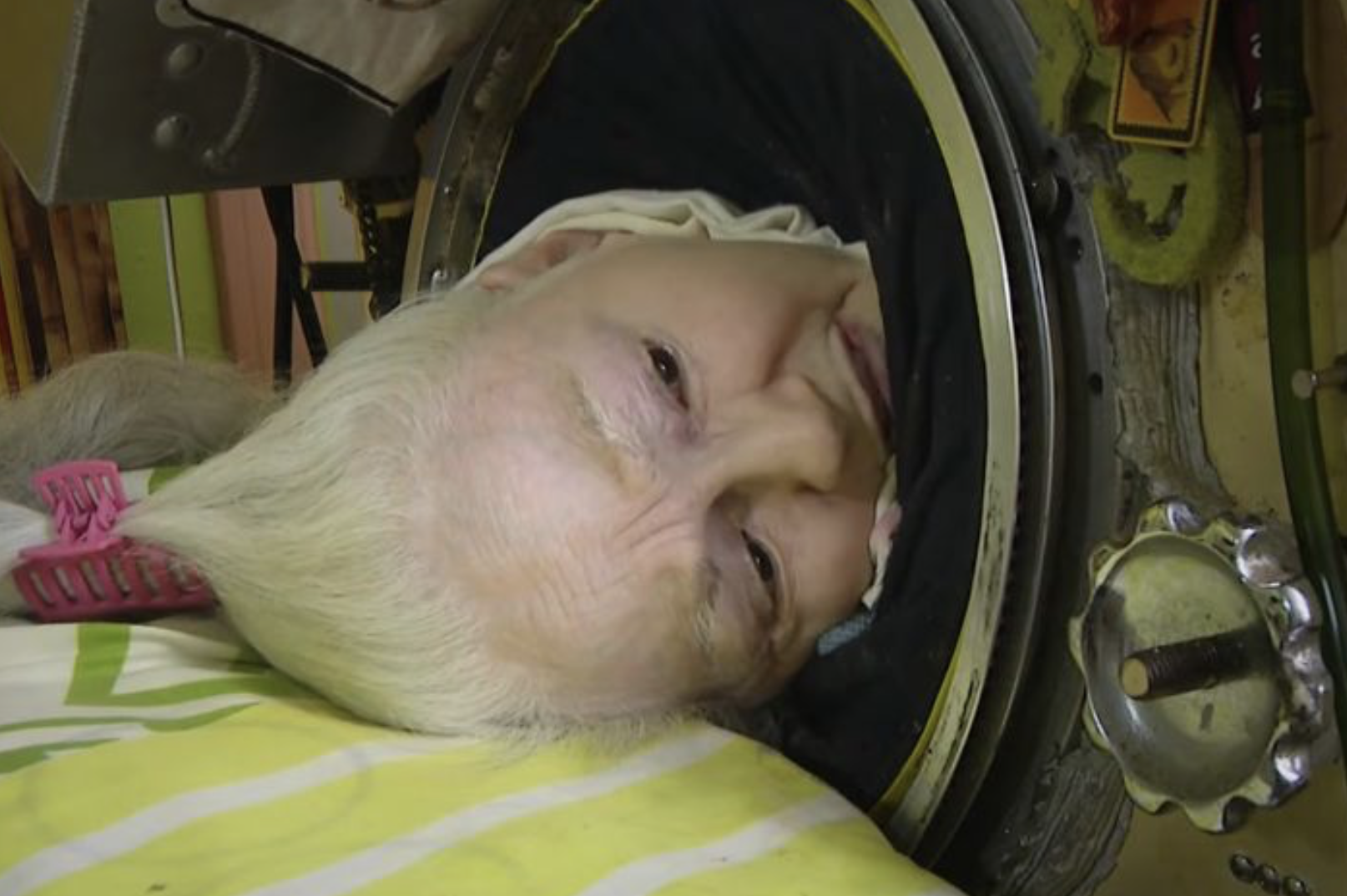
Martha Ann Lillard, believed to be the last polio survivor in the United States still relying on an iron lung to survive, has died at 78 after a long battle with health complications and the terrifying breakdown of the decades-old machine that helped keep her alive.
Lillard, of Shawnee, Oklahoma, died on June 26 following a struggle with long COVID, according to her obituary. In the final stretch of her life, her iron lung — a full-body ventilator with parts dating back to the 1940s — had begun to fail, and her family said finding anyone who could repair it had become nearly impossible.
Her story was both a heartbreaking reminder of America’s polio era and a stunning look at one woman’s determination to keep living, even as the machine she depended on became a relic few people knew how to fix.
Lillard contracted polio in 1953, on her fifth birthday, just two years before the vaccine was introduced and began helping eliminate the devastating disease in the United States.
“I woke up and it was sunny outside, and I started to sit up, and my neck was killing me,” she told KFOR Oklahoma’s News 4 just eight days before her death. “I couldn’t lift my head off the pillow.”
Within days, her condition became catastrophic.
“After four days, I went unconscious. I couldn’t breathe. I couldn’t move my arms or legs,” she recalled.
She had contracted polio, a highly contagious virus that can attack the nervous system and, in severe cases, cause paralysis or death. While many people who get polio have no symptoms or only mild flu-like illness, the Centers for Disease Control and Prevention says a small percentage develop paralysis. One of the most famous American polio survivors was President Franklin D. Roosevelt, who used a wheelchair after contracting the disease.
For Lillard, survival meant being placed inside an iron lung, a large, cylinder-shaped ventilator that helped patients breathe by using pressure changes around the body.
At the time, the machine was a lifesaver for many severely ill polio patients. Lillard said children often resisted being placed inside them, but she remembered feeling relief.
“They usually didn’t like to put children in because they fought it, but I didn’t,” she said. “I liked it. It felt good to breathe.”
She spent six months in the hospital and, at one point, had to remain in the iron lung for 23 hours a day while she slowly tried to train her lungs to work again.
“When I got in it, I was tired,” she told KFOR. “Always getting in there felt wonderful.”
Eventually, Lillard was able to return home. Over time, her use of the iron lung was reduced. Though her right arm remained paralyzed, she regained the ability to walk and built enough lung strength to live with less time inside the machine.
But the effects of polio never fully left her.
According to a GoFundMe created for her memorial, Lillard lived with only 25% lung capacity, scoliosis and a paralyzed right arm. Still, those close to her said she refused to let the disease define her life.
She painted, wrote poetry and composed music for left-hand piano. She also developed a reputation for helping people and rescuing abandoned animals, especially dogs.
“Despite living with only 25% lung capacity, scoliosis, and a paralyzed right arm, Martha Ann spent her life as normally as possible,” the GoFundMe said.
While many polio survivors eventually transitioned to newer breathing devices, Lillard said modern respirators never worked for her.
“I tried all of them,” she said, explaining that none gave her what she needed to breathe.
For years, she used the iron lung mainly while sleeping. But as her health worsened, especially after developing post-polio syndrome, she needed it more and more. Post-polio syndrome can cause severe fatigue, muscle weakness and other disabling symptoms decades after the original infection.
Then came COVID-19.
Lillard contracted the virus twice and later developed long COVID, which drastically increased her dependence on the iron lung. Eventually, she needed the machine around the clock. Her obituary listed long-haul COVID as her cause of death.
As her health declined, the iron lung itself began to deteriorate.
“Some of the parts are from … the 1940s, and they’re hard to locate,” her sister, Cindy McVey, told KFOR. “We have a spare motor, but we don’t have anyone to put it back in if we needed it.”
The situation became even more frightening last year when a tornado knocked out power to the machine. Lillard’s husband, Baha Seleh, had to give her mouth-to-mouth resuscitation until help arrived.
Her death closes a remarkable and painful chapter in American medical history. Lillard lived through the terror of polio, survived for decades with the help of a machine most people now know only from history books, and spent her life creating, helping and fighting to stay present in the world around her.
“Even as post-polio syndrome continued to affect her, she maintained a wonderful fighting attitude, making the most of what she had left and enjoying life as much as she could,” her GoFundMe said. “Martha Ann also saved people and abandoned animals, especially dogs, all over the U.S., showing her compassion and resilience every day.”
Discover more from Next Gen News
Subscribe to get the latest posts sent to your email.