

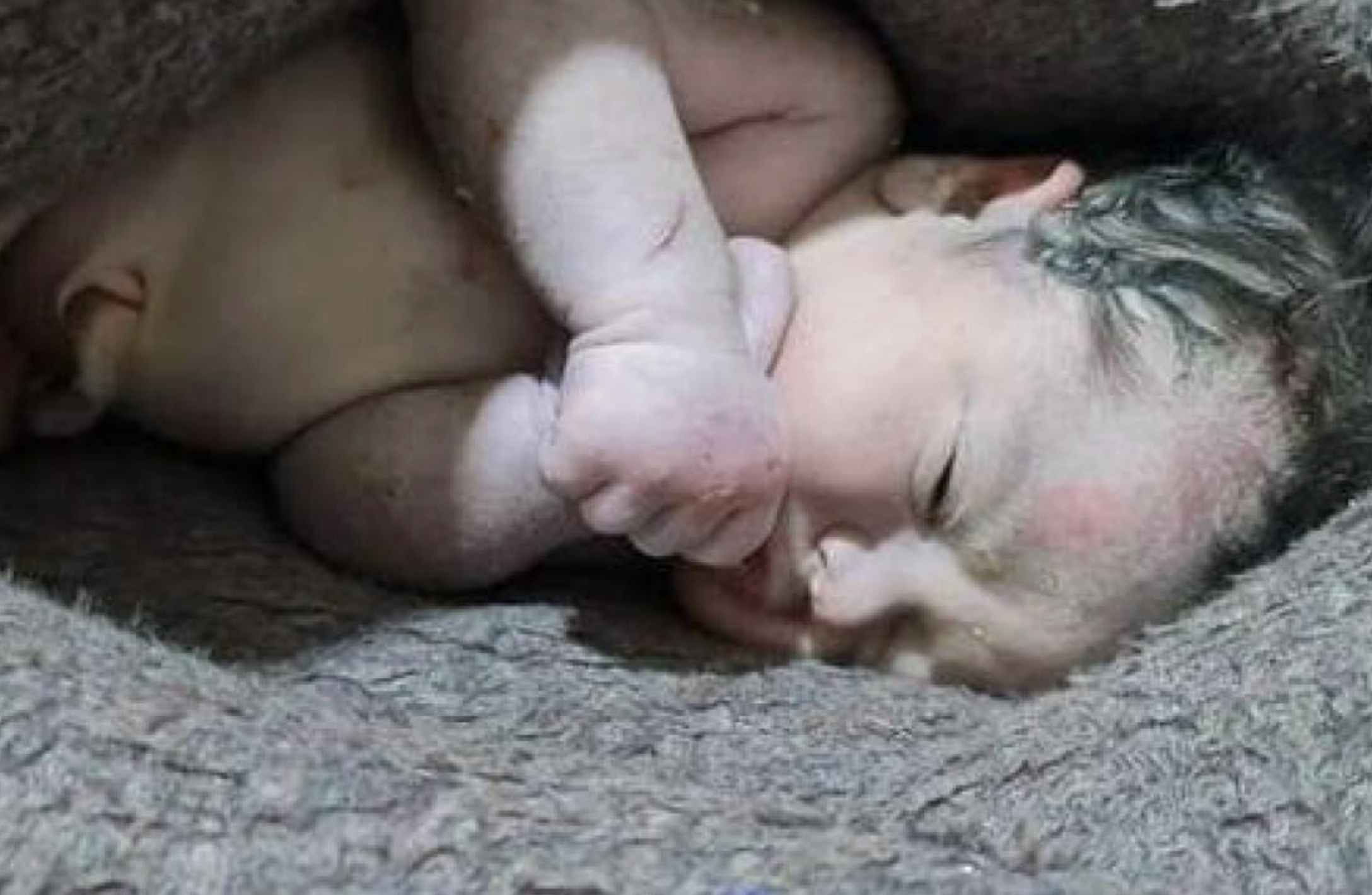
A mother trapped beneath the rubble of a collapsed building gave birth in the darkness after a devastating pair of earthquakes ripped through Venezuela, leaving hundreds dead, thousands injured and entire neighborhoods reduced to dust.
The extraordinary birth came as the country reeled from back-to-back quakes that struck Wednesday evening, collapsing buildings, overwhelming hospitals and sending desperate families into the streets to search for missing loved ones.
At least 589 people have been confirmed dead, nearly 3,000 have been injured and about 57,000 have been declared missing. The U.S. Geological Survey warned the true death toll could be far higher, estimating that as many as 10,000 people may have died in the disaster.
The destruction began when two powerful earthquakes, measuring 7.2 and 7.5 in magnitude, hit within just 39 seconds of each other. The rare “doublet” quake sent shockwaves across the country and caused more than 250 buildings to collapse, trapping families beneath concrete, steel and brick.
In one haunting video, a woman can be seen lying on a wooden plank on the ground while surrounded by a crowd in near darkness. Moments later, another woman kneels beside her and delivers the crying newborn as people rush to cover the mother with blankets.
The baby’s first cries came from the middle of a disaster zone.
With rescue crews stretched thin and hospitals quickly overwhelmed, neighbors and survivors have been forced to become first responders. Videos from the hardest-hit areas show people screaming from beneath the rubble, while adults, children and even dogs are pulled from the debris by hand.
Delcy Rodriguez, Venezuela’s president, declared a state of emergency and mobilized rescue operations as the scale of the catastrophe became clear.
The first quake’s epicenter was in Yaracuy, where rocky terrain helped absorb some of the impact. But seismic waves traveled toward the coastal city of La Guaira, where entire streets were torn apart and apartment buildings crumbled into heaps of dust.
Aerial footage showed scenes that looked more like a war zone than a neighborhood, with traffic backed up around smashed buildings and survivors wandering through streets lined with rubble.
International help has begun pouring in. The United States and Spain sent military support, while the U.S. pledged $150 million in aid and deployed warships, planes and helicopters to help with relief efforts.
The U.S. Treasury Department also temporarily lifted sanctions to allow earthquake-related financial transactions.
“We will be there for our new and great friends,” President Donald Trump said Thursday.
Rescue teams from across Latin America, Asia and Europe have also arrived to help Venezuela’s aging and overwhelmed emergency response system. Mexico brought search dogs to help locate people buried deep beneath concrete and brick.
On Friday, the United Kingdom announced it was sending a 68-member search-and-rescue team, supported by the Royal Air Force and specialist dogs. The U.K. also pledged £2 million in humanitarian aid.
“My thoughts are with the people of Venezuela following this week’s devastating earthquakes,” Prime Minister Keir Starmer said. “The UK stands in solidarity with all those affected, particularly those who have lost loved ones, homes and livelihoods.”
For thousands of families, the search is agonizing. Websites have been launched to help people locate missing loved ones, while others have turned to social media or handed out flyers in the streets. Many are begging for heavy machinery, tools and manpower to dig relatives out of the ruins.
One missing-person website reported that about 8,000 people had been found, while nearly 50,000 were still missing. The crisis has been made even worse by damaged telecommunications and spotty internet access, leaving families unable to reach one another.
Across the hardest-hit areas, children and parents have been photographed sleeping in tents or on blankets in the street after losing their homes.
Experts warn the disaster could push even more Venezuelans to leave the country. With roughly 80 percent of the population already living in poverty, rebuilding may be impossible for many families.
Eloísa Ocando-Thomas, a global historian of Latin America at the University of Warwick whose family lives in Caracas, said many buildings that are still standing may be damaged beyond repair.
“There are lots that haven’t actually fallen down, but they’re damaged beyond repair and insurance can’t cover this and also lots of houses are not insured,” she told The Telegraph.
She added that most people will likely be forced to pay for repairs themselves despite wages that are nowhere near enough to rebuild a home.
“I think possibly more people will emigrate,” she said, “because many people have lost their homes and the cost of repairing is just not something they will be able to afford.”
Medical facilities are also buckling under the pressure. Dr. Franklin Rodriguez, who traveled to La Guaira, told the BBC that the area’s two main hospitals were “completely overwhelmed.”
“There is a critical lack of medicine and medical supplies,” he said. “Medical facilities do not have the capacity to handle the massive volume of people, and many people are still trapped under the rubble.”
The nightmare may not be over. Earthquake experts say dangerous aftershocks could continue for days, weeks or even months.
Ravindra Jayaratne, a coastal engineering expert at the University of East London, warned that while aftershocks are usually smaller than the original quake, they can still be strong enough to bring down buildings already weakened by the disaster.
For now, Venezuela remains in survival mode — digging through rubble, treating the wounded, searching for the missing and clinging to rare moments of hope, including the cry of one newborn baby delivered beneath the wreckage.
Discover more from Next Gen News
Subscribe to get the latest posts sent to your email.