

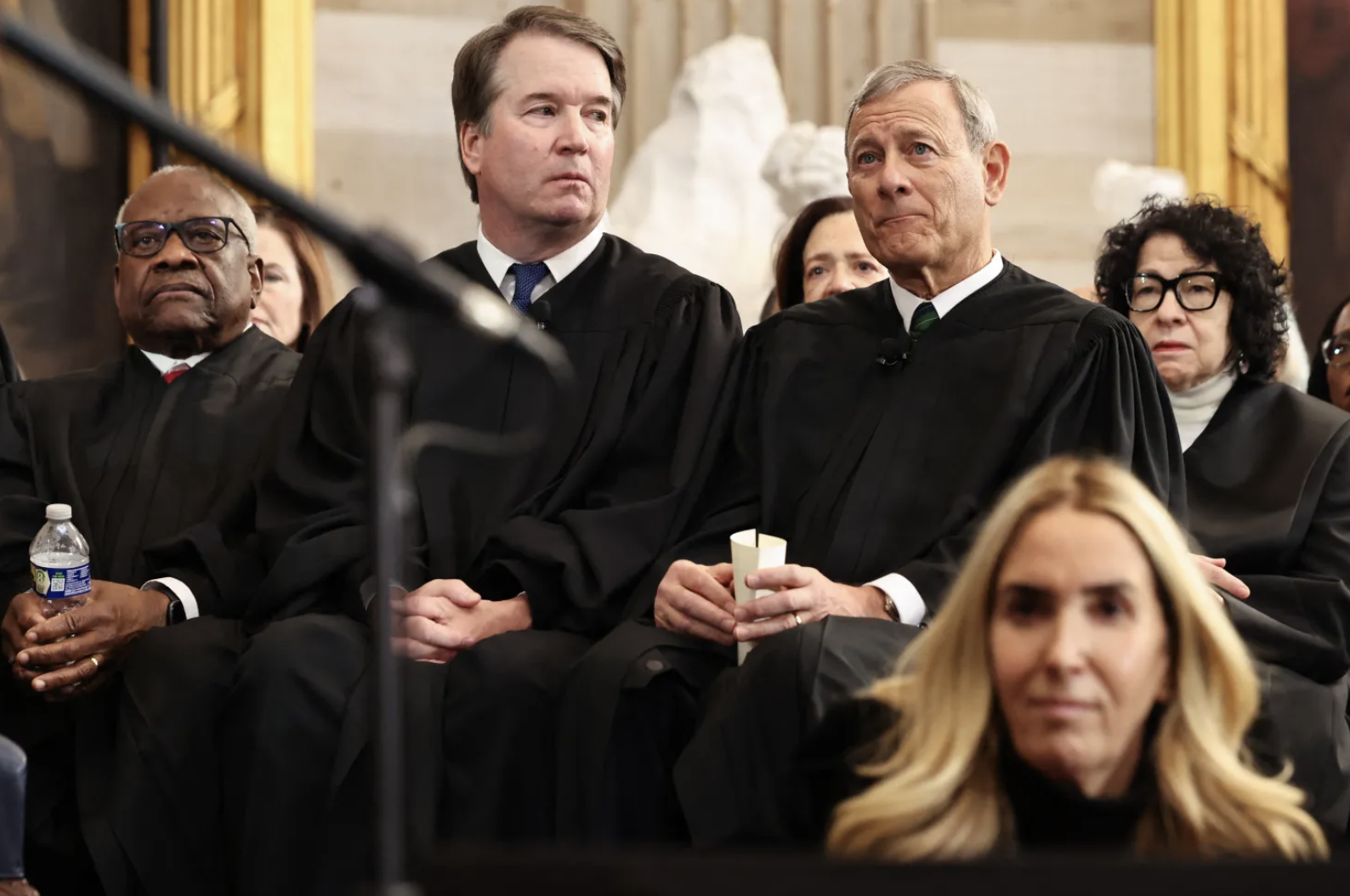
Justice Sonia Sotomayor is walking back comments she made about fellow Supreme Court Justice Brett Kavanaugh after publicly criticizing him over a controversial immigration ruling, in a striking moment that pulled the court’s internal tensions further into the spotlight.
In a statement shared Wednesday, Sotomayor acknowledged that she crossed a line during a recent appearance at the University of Kansas School of Law, where she took aim at a colleague over a prior case involving ICE enforcement. While she did not name Kavanaugh in those remarks, the target was clear. Now, she says she regrets how she handled it.
“At a recent appearance at the University of Kansas School of Law, I referred to a disagreement with one of my colleagues in a prior case, but I made remarks that were inappropriate,” Sotomayor said in the statement, according to CNN. “I regret my hurtful comments. I have apologized to my colleague.”
The apology came after Sotomayor publicly criticized Kavanaugh’s concurring opinion in a case tied to immigration enforcement in Southern California. In that September ruling, Kavanaugh backed President Donald Trump’s effort to restart roving ICE patrols in the region after a lower court found the sweeps likely violated the Fourth Amendment. He argued that agents could rely on a combination of factors that, taken together, may amount to reasonable suspicion that someone is in the country illegally.
Last week, Sotomayor blasted that reasoning during her law school appearance, accusing one colleague of failing to understand the real-world fallout of allowing those immigration sweeps to move forward. Her remarks landed hard because they touched on more than just legal disagreement. They reflected the widening moral and ideological clash now playing out inside the nation’s highest court, especially over immigration and executive power.
That clash is becoming harder to ignore.
Sotomayor’s apology arrives at a moment when the Supreme Court’s liberal justices are sounding louder alarms about the conservative majority’s growing use of emergency orders. Critics say those fast-moving rulings often allow presidents to push forward major policy changes before full legal review is complete, sometimes with little explanation and enormous consequences for the people affected.
Justice Ketanji Brown Jackson added fuel to that debate earlier this week with a sharp public rebuke of the court’s emergency order practice. Speaking at Yale Law School, Jackson argued that these rulings may be labeled temporary, but their impact can be lasting, especially when they greenlight policies that lower courts have already suggested may be unlawful.
She reportedly described some of the court’s emergency decisions as little more than “scratch-paper musings,” warning that lower courts are still expected to treat them as binding. Jackson also pushed back on the idea that delaying a president’s agenda should automatically count as legal harm, especially when the policy itself may not pass legal muster in the first place.
Both Jackson and Sotomayor have repeatedly warned that these rulings can feel detached from the lives they affect. In immigration cases especially, Sotomayor has emphasized the danger such decisions pose to immigrant families, hourly workers, and vulnerable communities already living under intense pressure.
That is what makes this episode so revealing.
Open public criticism between Supreme Court justices is rare, and formal apologies are even rarer. The court has long depended on an image of institutional calm, even when fierce ideological battles rage behind the scenes. Sotomayor’s decision to apologize through official channels suggests just how seriously the justices still take those boundaries, even as they increasingly crack in public.
But the damage may already be done. The moment offered an unusually raw glimpse into a court that is no longer just divided behind closed doors. The ideological war shaping major rulings on immigration, executive authority, and civil rights is now spilling into speeches, statements, and public appearances.
And for many Americans watching a court dominated by a conservative supermajority, that tension is not just courtroom drama. It is a sign of how high the stakes have become.
Discover more from Next Gen News
Subscribe to get the latest posts sent to your email.