

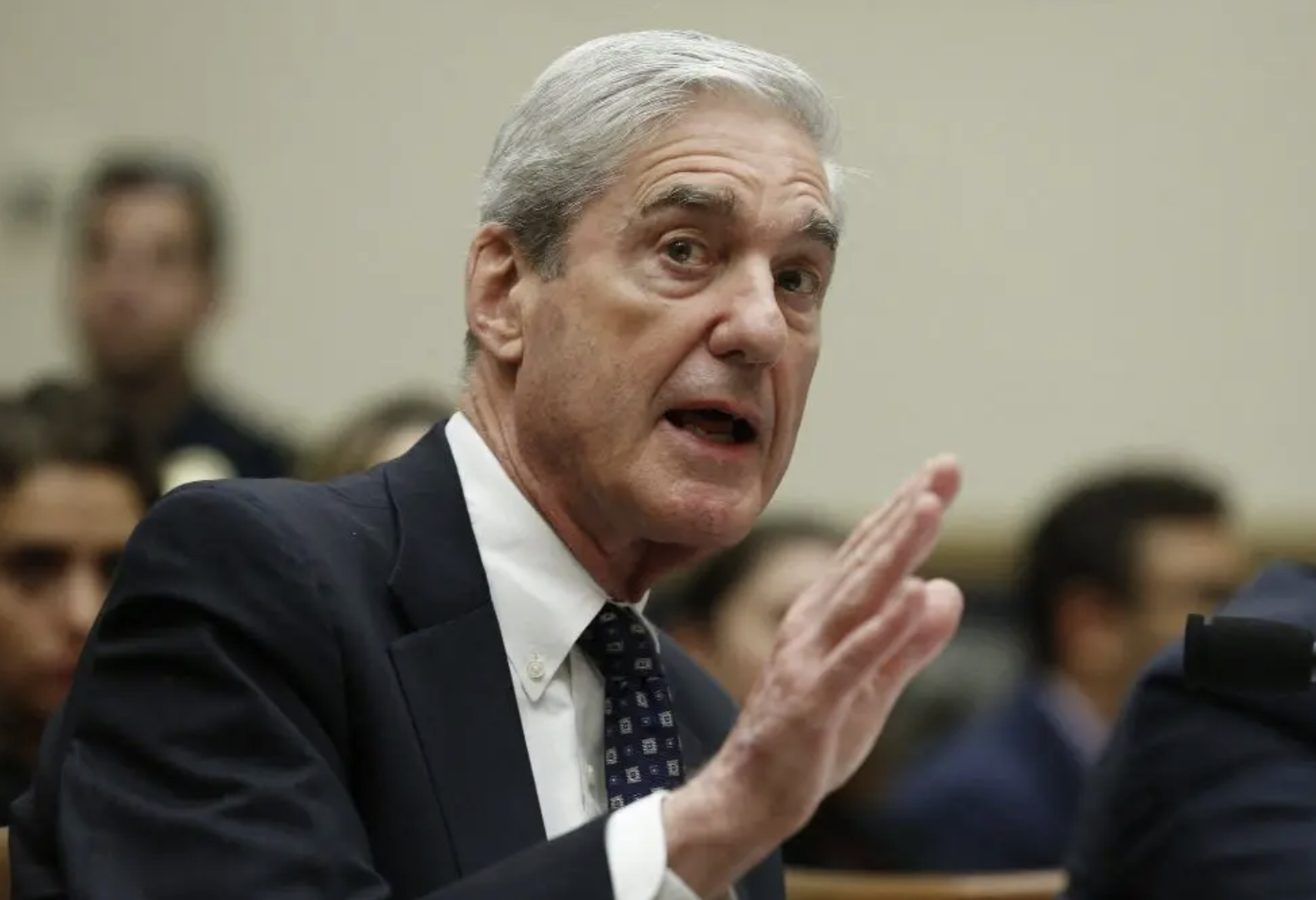
Former FBI Director Robert Mueller is dead at 81, and within hours, President Donald Trump delivered a reaction that is already fueling outrage across the political spectrum.
Mueller’s family confirmed he passed away Friday night, issuing a brief and somber statement.
“With deep sadness, we share that Bob passed away last night,” the family said. “We ask that our privacy be respected during this time.”
No official cause of death has been released.
But the tone of mourning quickly collided with politics.
Trump took to Truth Social shortly after the news broke and posted a blunt message that stunned critics and supporters alike.
“Good, I’m glad he’s dead. He can no longer hurt innocent people!” the president wrote.
The remark instantly reignited long-standing tensions tied to one of the most polarizing investigations in modern American history.
Mueller spent decades building a reputation as a disciplined, by-the-book lawman. He served as FBI director from 2001 to 2013, guiding the bureau through the aftermath of 9/11 and major national security threats.
But his legacy became deeply entangled with politics when he was appointed special counsel in 2017.
His mission: investigate Russian interference in the 2016 election and any possible ties to Trump’s campaign.
The probe lasted nearly two years. It dominated headlines. It divided the country.
Mueller ultimately confirmed that Russia interfered in the election. But his report did not establish that Trump’s campaign criminally coordinated with Moscow.
At the same time, the report stopped short of fully clearing the president, stating it could not “exonerate” him.
Trump never accepted the findings.
“This was a witch hunt,” he said repeatedly during and after the investigation. At one point, he blasted the probe as “total nonsense” and accused Mueller’s team of political bias.
Behind the scenes, Mueller had been battling serious health issues.
His family revealed in 2021 that he had been diagnosed with Parkinson’s disease. The condition forced him to step away from public life and ultimately retire from legal work.
“Bob was diagnosed with Parkinson’s disease in the summer of 2021,” a family statement said at the time. “He retired from the practice of law at the end of that year.”
In his final years, Mueller lived in a memory care facility as his condition worsened.
He was also reportedly unable to testify in later congressional matters, including inquiries tied to Jeffrey Epstein, due to his declining health.
Long before Washington politics consumed his legacy, Mueller built a life rooted in service.
He was born in New York City and raised outside Philadelphia. He graduated from Princeton University and later earned advanced degrees in international relations and law.
He then joined the U.S. Marine Corps and served in Vietnam.
Mueller led a rifle platoon in combat and was awarded the Bronze Star, Purple Heart, and multiple commendations for his service.
After the war, he entered the legal world, rising through the ranks as a federal prosecutor in cities like San Francisco and Boston. His reputation for discipline and integrity eventually carried him to the top of the FBI.
Mueller’s death closes the chapter on a figure seen by some as a defender of the rule of law—and by others as the face of a politically charged investigation.
Trump’s reaction ensures that division will not fade quietly.
For critics, the president’s words crossed a line.
For supporters, they reflect years of anger over an investigation they believe should never have happened.
Now, even in death, Robert Mueller remains at the center of America’s political fault lines.
The question is whether the country will remember the man—or the controversy he leaves behind.
Discover more from Next Gen News
Subscribe to get the latest posts sent to your email.
Good riddance. He was a traitor.
Trump should remember Mueller decided nothing to prosecute him for…