

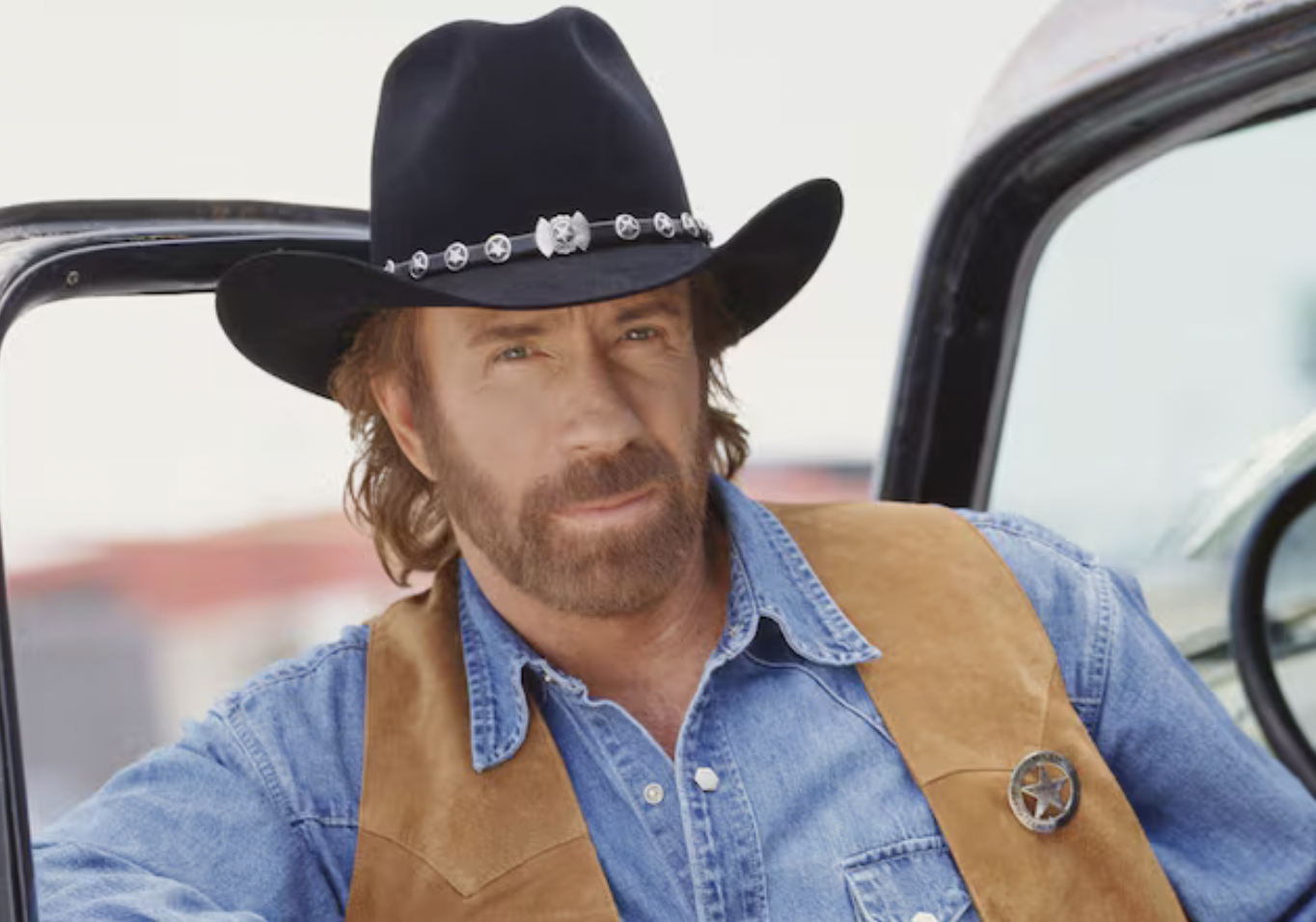
Chuck Norris built a career playing the guy who shows up, lays down the law, and walks away without a scratch. But on January 6, 2021, a blurry, too-perfect-to-be-true photo dropped into a panicked timeline — and suddenly the “Walker, Texas Ranger” legend was being accused of something he didn’t do.
And honestly? The speed at which people bought it said everything about the moment we were living in.
Right after the Capitol attack, an image started circulating online showing a man who looked a lot like Norris posing near a protester in Trump gear. Within minutes, social media did what it does best: declared it real, made it a punchline, and turned it into a “can you believe this?” headline.
One viral post basically summed up the mood: wait… are we seriously not going to talk about Chuck Norris being there?
But the plot twist was boring.
Norris’ team shut the rumor down quickly, saying it wasn’t him — just a lookalike. His rep even tossed in a little jab, joking that Chuck is “much more handsome.” Norris followed up himself, posting that he wasn’t there and was in Texas with his family.
So why did it blow up anyway?
Because by 2021, Norris wasn’t just a nostalgia action star. He’d become a political symbol — and for a lot of Americans, that made the rumor feel disturbingly plausible.
The shift had been years in the making.
Norris’ early fame was straightforward: real martial arts credentials, action movies like Delta Force, and a long run on Walker, Texas Ranger that packaged him as a walking monument to “law and order” hero fantasy. Then the early internet turned him into a meme icon with “Chuck Norris facts,” and he leaned into the attention rather than dodging it.
But as politics became more tribal, Norris’ public voice followed the curve.
He campaigned for Mike Huckabee in 2008. During the Obama era, he shared harsh warnings about where the country was headed under Democrats — the kind of rhetoric that played perfectly inside conservative media ecosystems. And when Donald Trump entered the scene, Norris endorsed him in 2016 and spent the years after defending Trump-era politics while framing modern liberalism as a cultural threat.
That’s the key detail for a liberal audience: Norris wasn’t just “a conservative.” He became part of the celebrity megaphone that helped normalize the Trump-era brand — the one that blurred reality, treated outrage as content, and rewarded whoever could go the loudest.
So when a Capitol lookalike photo surfaced, people didn’t ask “is this real?” They asked “how is this surprising?”
Still, Norris didn’t celebrate January 6.
He publicly condemned the violence and expressed sympathy for the people who died, calling it “profoundly heart-wrenching.” He also used the moment to argue about free speech and political correctness — but he drew a clear line: violence and destruction, he said, can’t be justified as patriotism.
And yet the viral rumor stuck in the culture anyway, because it captured something true even if the details were false.
A country split into rival realities.
A celebrity turned into a political brand.
A social media machine that rewards the fastest narrative, not the accurate one.
Chuck Norris wasn’t at the Capitol.
But the fact that millions thought he could be — and didn’t even hesitate — is a pretty sharp snapshot of what the Trump era did to our collective sense of reality.
Discover more from Next Gen News
Subscribe to get the latest posts sent to your email.
Sent from my iPad
So what if he was at the Jan. 6th Peaceful Protest! No fires, no bombs, no takeovers of police stations… only truths and police misconduct/shootings/beatings/murderings…
Fake news as usualSent from my iPhone
Chuck Norris, a wonderful man, rest in peace.