

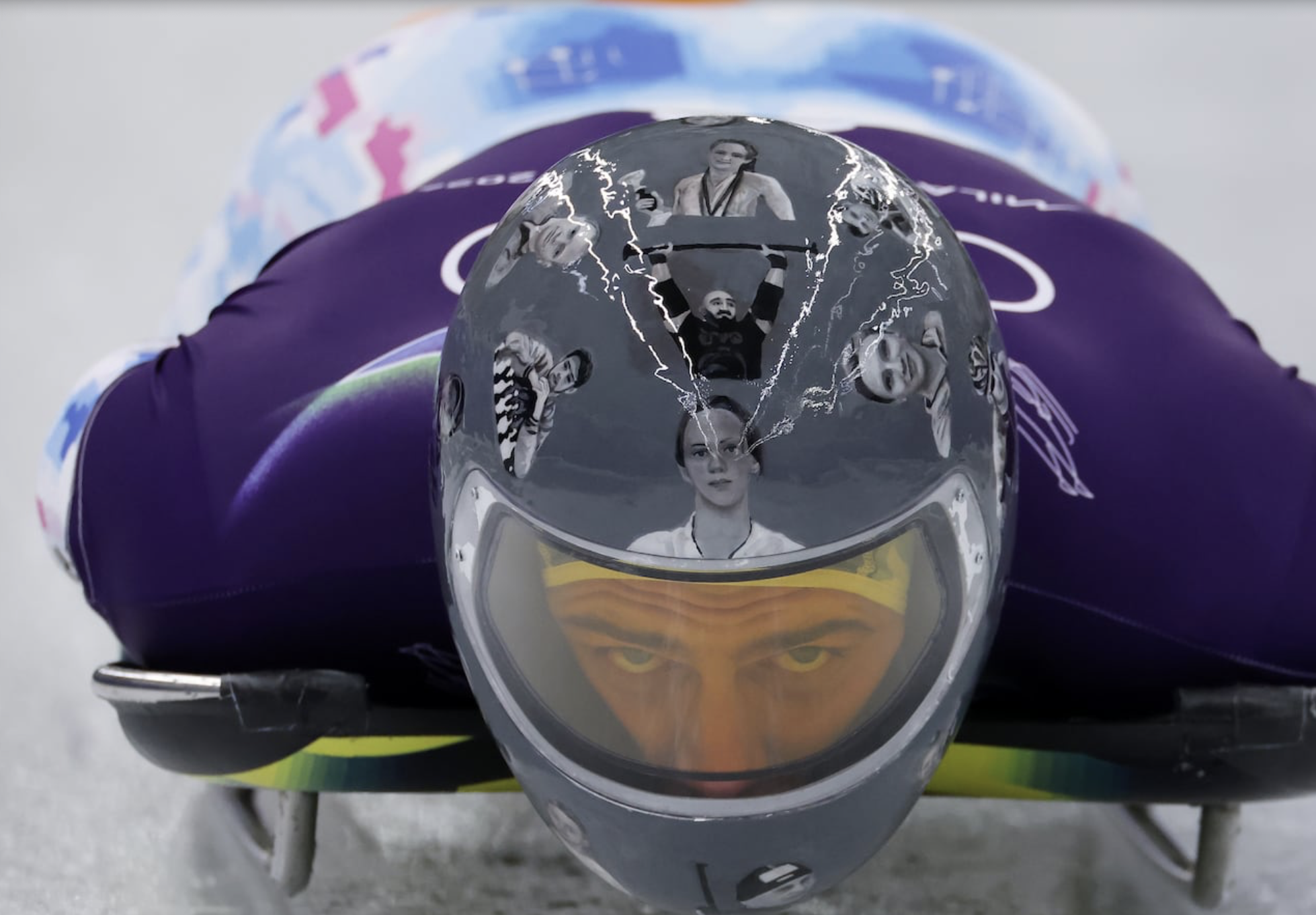
The Olympics were over for Ukraine’s top skeleton racer before he ever took his first official run.
Ukrainian slider Vladyslav Heraskevych lost his final legal challenge Friday after the Court of Arbitration for Sport dismissed his emergency appeal. The ruling means he will not be reinstated at the Milan-Cortina Winter Games.
At the center of the controversy: a helmet.
Heraskevych wanted to compete wearing what he called his “memory helmet,” featuring images of seven Ukrainian athletes killed since Russia’s invasion of Ukraine. Olympic officials said that crossed the line.
The International Olympic Committee disqualified Heraskevych just one hour before competition began Thursday at the Cortina Sliding Centre.
Officials said his helmet violated Rule 50 — the long-standing Olympic regulation that bans political demonstrations or personal protests “on the field of play.”
The decision came despite multiple meetings between Heraskevych and IOC leadership, including a face-to-face conversation with IOC President Kirsty Coventry, who traveled from Milan to Cortina in an attempt to resolve the dispute.
It didn’t work.
The sole arbitrator at CAS acknowledged the emotional weight behind Heraskevych’s tribute.
“I am fully sympathetic to Mr. Heraskevych’s commemoration and his attempt to raise awareness for the grief and devastation suffered by the Ukrainian people,” the arbitrator wrote.
But sympathy wasn’t enough.
The ruling sided with the IOC, reaffirming that athletes cannot express personal or political messages during official Olympic competition.
Heraskevych had already worn the helmet during a training run earlier in the week. He made clear he planned to wear it in competition.
After being disqualified, he posted a photo of himself in the helmet on X with a blunt message: “This is price of our dignity.”
Speaking to reporters, he made it clear he had no regrets.
“The first and biggest win is the memory of the athletes,” he said. “People are now super united about this story. I’m really grateful for that.”
Even before the CAS decision was announced, he sounded resigned.
“Looks like this train has left,” he told the Associated Press.
The fallout rippled across Cortina d’Ampezzo.
Fans draped in Ukrainian flags voiced frustration but stood firmly behind him.
“This is even bigger than a medal,” fan Nathalia Khaichyk said. “He’s won the medal of our hearts.”
In a powerful show of solidarity, Ukrainian lugers knelt and raised their helmets in support of Heraskevych.
Ukrainian President Volodymyr Zelenskyy awarded him the Order of Liberty, praising his “civic courage and patriotism in upholding the ideals of freedom and democratic values.”
For American audiences, the case highlights a recurring Olympic debate: Should athletes be allowed to use the Games as a platform for personal or political expression?
The IOC has consistently argued that the Olympics must remain neutral. Rule 50 has been enforced in past controversies, from raised fists to armbands and slogan-bearing apparel.
But critics say total neutrality is impossible — especially when athletes come from nations at war.
Heraskevych, 27, has been one of Ukraine’s most visible winter sports figures. He previously carried Ukraine’s flag at the Beijing Games and has used his platform to speak about the war’s toll on athletes back home.
This time, that stance cost him his Olympic shot.
The CAS ruling closes the legal chapter.
But for many Ukrainians — and many watching in the United States — the story may feel bigger than sport.
The race went on.
Heraskevych did not.
Discover more from Next Gen News
Subscribe to get the latest posts sent to your email.
Total bullshit.. who is in control Russia!
Sent from Yahoo Mail for iPhone
The trichotomy: Some people in a warring country playing games… others dieing in war… elites living a happy life…