

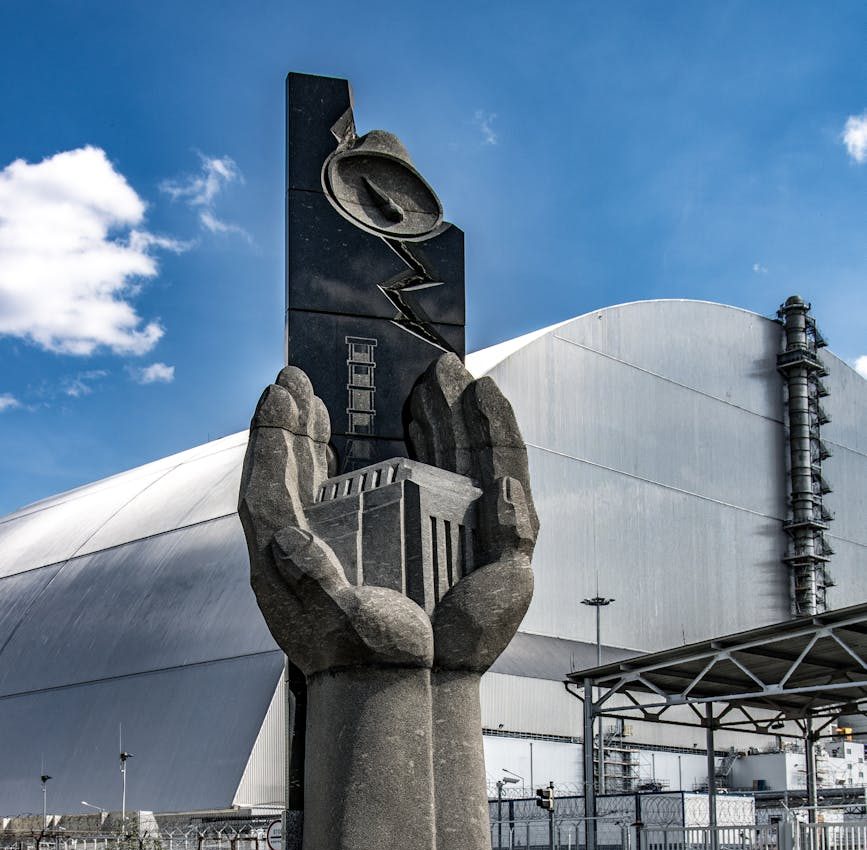
The director of the Chernobyl nuclear power plant has issued a terrifying warning: one well-placed Russian strike could cause the site’s internal radiation shelter to collapse, potentially unleashing radioactive chaos not seen since 1986.
“If a missile or drone hits it directly — or even nearby — God forbid, it will cause a mini-earthquake,” director Sergiy Tarakanov told AFP. “No one can guarantee that the shelter will remain standing after that. That’s the main threat.”
His statement comes just days after a Russian strike punctured a hole in the plant’s protective shell — the same structure built to contain the fallout from the original Chernobyl explosion nearly 40 years ago. The International Atomic Energy Agency (IAEA) confirmed that the structure has “lost its primary safety functions.”
For now, radiation levels remain stable. But experts warn that another strike could blow radioactive dust into the air, carried by winter winds across Europe — a chilling echo of the disaster that poisoned skies from Ukraine to Sweden in 1986.
“Chernobyl was never truly over,” said Ukrainian energy analyst Oksana Kovalenko. “The world moved on, but the danger never disappeared. It’s sitting there — one missile away from disaster.”
Chernobyl, about 65 miles north of Kyiv, was seized by Russian troops during the first days of Moscow’s 2022 invasion. Ukrainian workers were held hostage for weeks as soldiers dug trenches in the radioactive “Red Forest,” one of the most contaminated places on Earth.
After Russian troops withdrew, scientists found signs that heavy military vehicles had disturbed radioactive soil — proof, they said, of how close the world had come to another nuclear emergency.
The latest warnings arrive as Russia ramps up attacks on Ukraine’s power grid, striking energy facilities and civilian targets alike. In Zhytomyr, west of Kyiv, missiles killed at least three people Tuesday morning — including a 4-year-old child.
For survivors of the original disaster, the new threat feels like a nightmare coming back to life.
“It’s like history repeating itself — only this time, the world might not get lucky,” said Anatoly Dyachenko, who helped evacuate families from the Chernobyl exclusion zone in 1986.
With war closing in again and the world’s most dangerous structure under threat, one question hangs heavy in the radioactive air:
How many warnings will it take before Chernobyl explodes back into the headlines — and into history — once more?
Sources: AFP, IAEA, Reuters, Ukrainska Pravda, The Guardian.
Discover more from Next Gen News
Subscribe to get the latest posts sent to your email.
This is why we need to pray and fast. ! It Works !
>