

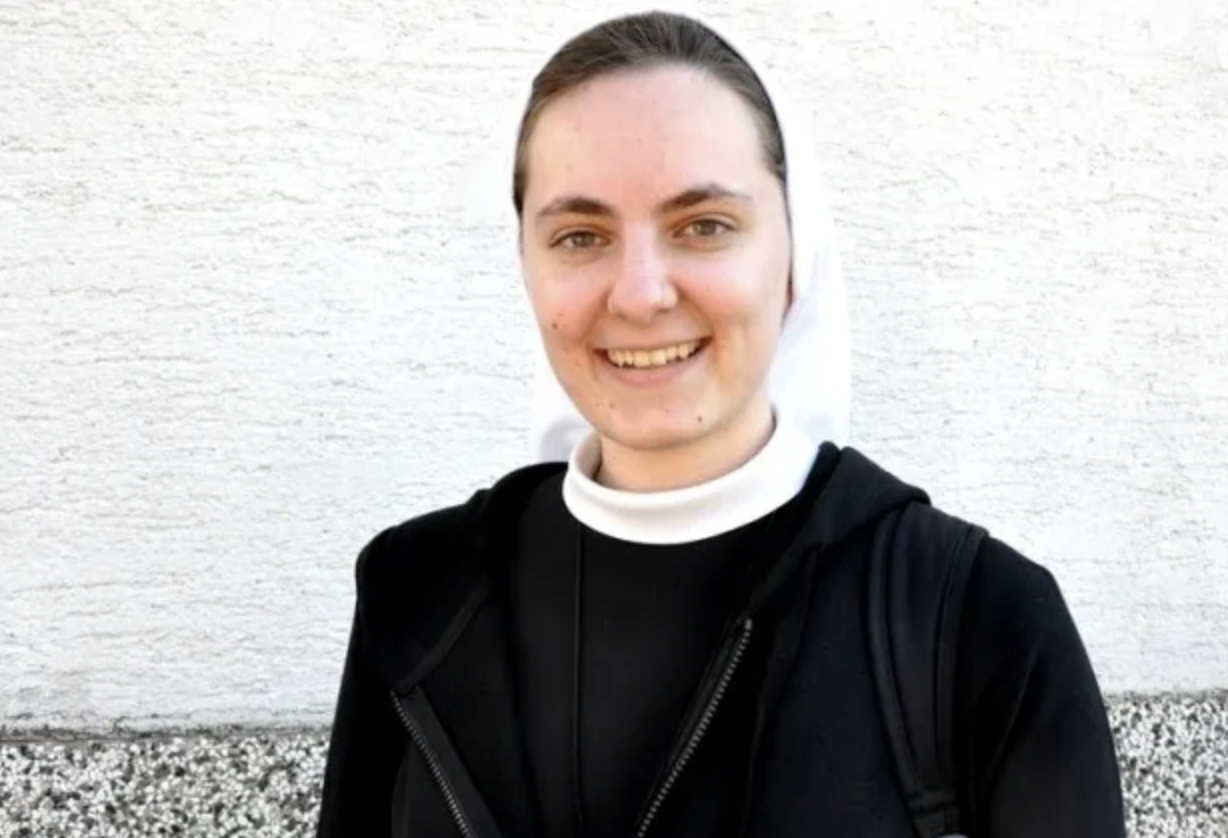
A shocking story that gripped social media across Europe — and quickly spread to far-right corners of the internet in the United States — has unraveled into something far more tragic.
Police in Croatia now say that Sister Marija Tatjana Zrno, a 35-year-old Catholic nun from Bosnia and Herzegovina, stabbed herself and fabricated claims that a “migrant shouting religious slogans” had attacked her on the streets of Zagreb.
The case, which triggered a four-day investigation and a flurry of xenophobic posts online, is being treated as a false police report. Sister Marija, who remains hospitalized, is now facing criminal charges.
According to the Zagreb Police Department, the nun’s initial story collapsed after investigators discovered that she had purchased the knife herself from a local shop hours before the alleged assault.
“Through detailed checks, it was determined that the woman had invented the incident,” police confirmed in a statement released Monday.
Authorities also confirmed that Sister Marija’s injuries were not life-threatening, though she required medical treatment. Early reports suggest she may have been suffering a mental health crisis, though this has not yet been officially confirmed.
Under Croatian law, filing a false police report can carry a prison sentence of up to three years, though the punishment may be reduced if mental illness is proven to have played a role.
The fabricated story quickly spiraled out of control online — fueled by anti-immigrant voices who seized on the claim to promote their agendas.
Within hours, social media accounts across Europe and the U.S. began sharing posts blaming migrants for what they described as a “brutal religious attack.”
One widely shared post from far-right British agitator Tommy Robinson claimed the media was “burying” the story “for the sake of diversity.” Another account falsely stated that Sister Marija had been “stabbed to death” and accused the press of ignoring Christian victims.
“This is exactly how misinformation metastasizes online,” said Dr. Lena Havel, a political analyst in Prague who studies digital extremism. “A single unverified claim becomes weaponized within minutes. It’s not about truth — it’s about outrage.”
Even after police debunked the claims, many of the original xenophobic posts remained live — gathering hundreds of thousands of views.
The hoax comes at a volatile time in Europe, as far-right parties continue to exploit migration fears ahead of next year’s EU elections.
Experts warn that these viral falsehoods often find a receptive audience in American right-wing spaces, where stories about migrants in Europe are frequently used to stir anger over U.S. immigration policy.
“It’s part of a coordinated transnational ecosystem,” said David Morales, a senior researcher at the Brookings Institution. “These false stories travel from Croatia to London to Texas in hours — amplified by influencers who know outrage drives clicks.”
The scandal also lands awkwardly amid renewed tensions between the U.S. and EU over President Trump’s 2025 immigration policies, which have drawn criticism from human rights groups for detaining record numbers of asylum seekers.
For many Croatians, the story of Sister Marija is being reframed not as a political issue but as a human one — about mental health, misinformation, and the dangers of online hysteria.
“Instead of compassion, she became a headline,” said Father Stjepan Ivan Horvat, who once served with the nun. “Now we must pray not only for her recovery, but for the society that judged her before the truth came out.”
As investigators prepare to file formal charges, Croatian officials have urged citizens to verify information before sharing it online, reminding the public that lies can have real-world consequences.
Source: Metro UK; additional reporting from Croatian Police, Brookings Institution, and local media.
Discover more from Next Gen News
Subscribe to get the latest posts sent to your email.