

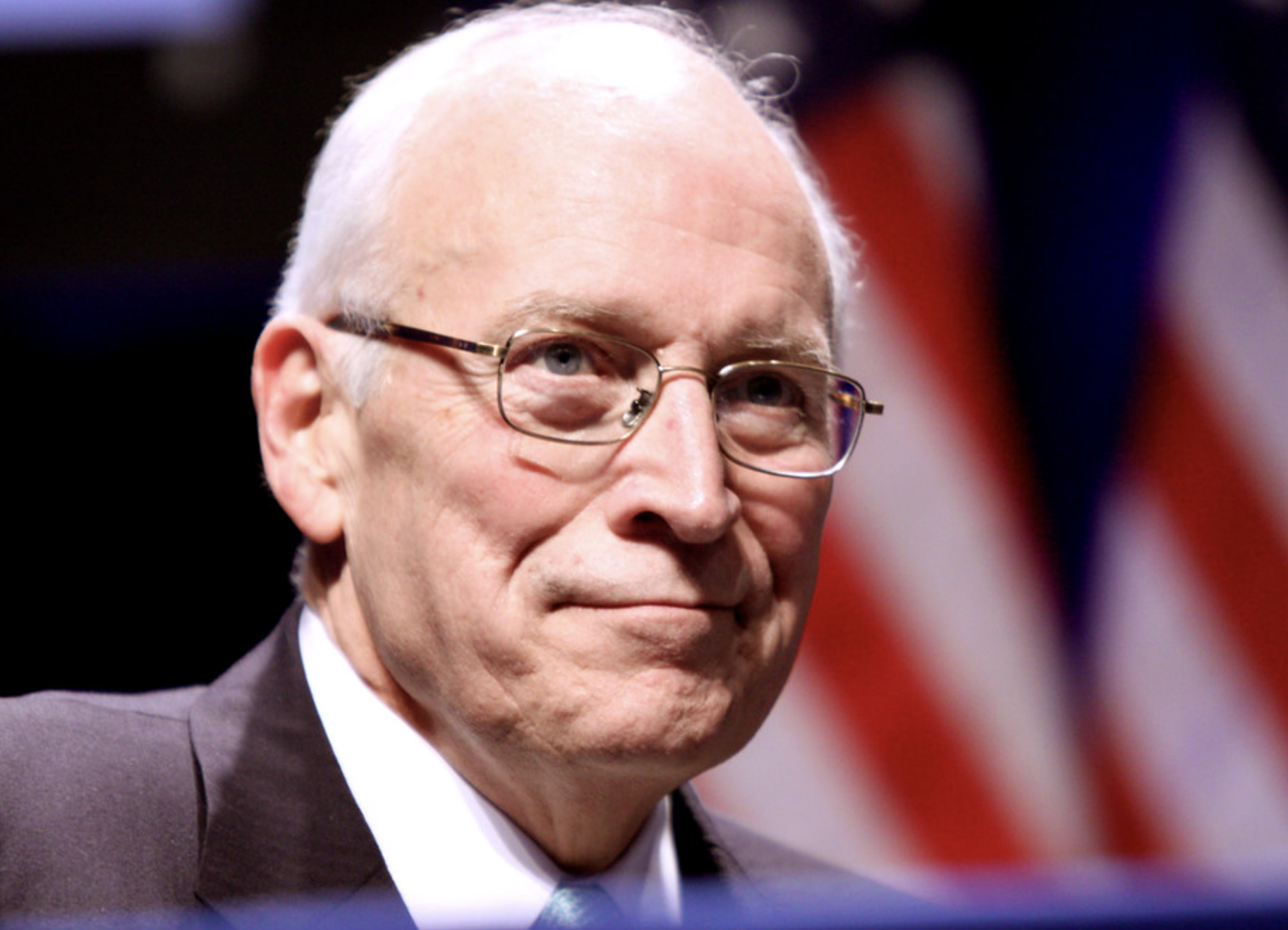
From Wyoming lineman to shadow president, Cheney’s death in 2025 reignites debate over torture, war, and unchecked executive power in the Trump II era
Former Vice President Dick Cheney, the iron-fisted architect of America’s post-9/11 foreign policy and one of the most controversial figures in modern U.S. politics, has died at the age of 84. His family confirmed his death Monday, citing complications from pneumonia and longstanding cardiovascular disease.
Known as the most powerful vice president in U.S. history, Cheney’s decades-long career in Washington was marked by secrecy, war, and an unshakable belief in executive supremacy — a legacy that continues to shape the nation’s political and military landscape, especially under the second Trump administration.
“We are grateful beyond measure for all Dick Cheney did for our country,” the family said in a statement. “We are blessed beyond measure to have loved and been loved by this noble giant of a man.”
But for many Americans, particularly those on the left, Cheney’s legacy is anything but noble.
Born in 1941 in Lincoln, Nebraska, Richard Bruce Cheney’s early years offered few hints of the titan he would become. After flunking out of Yale and racking up two DUI arrests, Cheney eventually found his footing in Wyoming, earning a degree at the University of Wyoming and marrying his high school sweetheart, Lynne.
He sidestepped the Vietnam War with five deferments — a fact his critics never forgot.
“He was always more comfortable sending others to war than fighting one himself,” said Rep. Ilhan Omar (D-MN) in a statement following his death.
Cheney’s political career took off in 1969 as a congressional intern and aide to Donald Rumsfeld during the Nixon administration. By 1975, he had become President Gerald Ford’s chief of staff — at just 34.
Cheney’s obsession with strengthening the presidency began in the aftermath of Watergate. He railed against Congressional checks and balances and saw post-Vietnam reforms as a weakening of national authority.
By the time George W. Bush tapped him as running mate in 2000 — a choice engineered by Cheney himself after leading the VP search — the once-quiet bureaucrat was primed to reshape the role.
And he did.
Following the 9/11 attacks, Cheney essentially ran the country from a bunker beneath the White House as Bush flew across the country on Air Force One.
“I told him not to come back to D.C. until we knew what was going on,” Cheney later said in a chilling 2003 interview.
From that moment on, Cheney pushed for a foreign policy rooted in preemptive war, indefinite detention, and the normalization of what the Bush administration called “enhanced interrogation techniques” — which international watchdogs defined as torture.
Despite once warning that invading Baghdad would be a “quagmire,” Cheney helped orchestrate the 2003 Iraq War under false pretenses of weapons of mass destruction.
He famously told Meet the Press that American troops would be “greeted as liberators.”
They weren’t.
The war would claim over 4,000 American lives and hundreds of thousands of Iraqi civilians, destabilize an entire region, and spark the rise of ISIS. Cheney never apologized.
“To this day, we’ve seen no accountability,” said Sen. Elizabeth Warren (D-MA). “Dick Cheney’s lies dragged this nation into a disastrous war, and millions paid the price.”
Cheney’s tenure was also marked by domestic scandal.
In 2006, he shot Texas lawyer Harry Whittington in a bizarre quail-hunting accident — and didn’t publicly acknowledge it for days. A year later, his chief of staff, Scooter Libby, was convicted for obstructing justice in the outing of CIA agent Valerie Plame — a scandal Cheney was widely believed to be behind, though never charged.
Even in retirement, Cheney remained a fixture in conservative circles, defending the CIA torture program and deriding Obama-era diplomacy.
Ironically, in 2022, Cheney’s daughter, Rep. Liz Cheney (R-WY), became one of Donald Trump’s fiercest GOP critics, leading efforts to hold him accountable for January 6 — a move that many saw as an echo of her father’s cold-eyed determination, but in service of a different cause.
Cheney died under vastly different political conditions than those he helped shape. With Donald Trump now serving a second term and overseeing new military escalations in the Middle East, Cheney’s blueprint for American power — unilateral action, intelligence secrecy, executive dominance — has found new life.
“Cheney made this America possible,” said political historian Dr. Rachel Dawes. “And whether you admire him or fear him, you cannot deny that his fingerprints are on every drone strike, every surveillance program, every brushfire war.”
On his final day in office in 2009, Cheney — wrapped in a parka and hunched in a wheelchair — watched Barack Obama take the oath of office. It was a symbolic moment: the end of an era of neoconservatism, many thought.
But in 2025, with preemptive strikes once again dominating headlines and civil liberties under renewed scrutiny, it’s clear Dick Cheney never really left.
He just passed the torch.
Discover more from Next Gen News
Subscribe to get the latest posts sent to your email.