

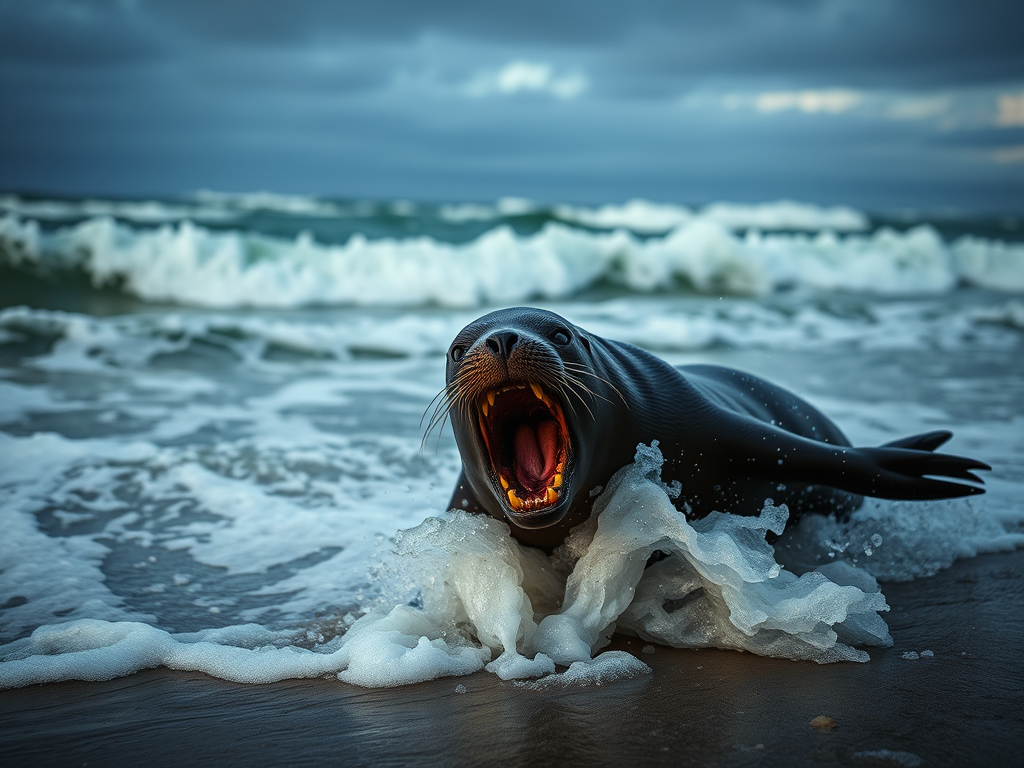
California residents and environmentalists alike are sounding the alarm over a shocking surge of aggressive sea lion encounters along the coast, with victims describing the marine mammals as “possessed” or even “demonic.”
Scientists attribute the sea lions’ bizarre and dangerous behavior to poisoning from domoic acid, a potent neurotoxin found in harmful algae blooms flourishing off California’s shores. These blooms have become increasingly frequent and severe, fueled by climate change and coastal pollution.
“We’ve never seen behavior this erratic or dangerous,” said Jeni Smith, a rescue supervisor at SeaWorld San Diego. She described one affected sea lion as exhibiting “star-gazing,” a disturbing symptom indicating neurological distress. “Some animals appear extremely lethargic after seizures. Others become dangerously aggressive. It’s unprecedented.”
Surfer RJ LaMendola experienced this terrifying aggression firsthand at Oxnard State Beach. He described his harrowing encounter on social media, recounting how a sea lion violently attacked him, biting him and pulling him underwater.
“It was devoid of the curiosity or playfulness we normally associate with sea lions,” LaMendola wrote. “This wasn’t normal—this was something darker, something truly dangerous.”
Marine researchers have recorded alarming numbers of sea lion poisonings along Southern California’s coast this year. The Marine Mammal Care Center in San Pedro reports nearly 150 sea lions brought in since February alone, highlighting a crisis that could surpass the deadly 2023 bloom, which claimed the lives of more than 1,000 marine mammals.
Dave Bader, Chief Operations Officer at the Marine Mammal Care Center, expressed deep concern: “These algae blooms used to be rare events. Now we’re seeing them almost annually, and each one seems to get worse, fueled by climate disruption and pollution. We must act immediately.”
The Centers for Disease Control and Prevention (CDC) warns these toxic blooms, typically cyclical every four to seven years, are becoming more frequent due to warmer ocean temperatures and increased pollution runoff. Harmful algal blooms not only endanger marine wildlife but also pose severe risks to human health, potentially causing serious neurological issues and even death.
Smith urges Californians to actively combat the growing environmental threat. “Each of us has a role to play. Dispose of trash responsibly, prevent toxic chemicals from entering storm drains—everything we do affects ocean health,” she emphasized.
Local environmental activists are now pressing state officials to implement stronger protections and fund research to combat these harmful algae outbreaks. The crisis underscores the urgency of environmental reforms as California grapples with the immediate and frightening impacts of climate change.
Discover more from Next Gen News
Subscribe to get the latest posts sent to your email.
Algael blooms in the lake our city tap water comes from poison us at times… July through November… nearly murdered me before I discovered that was what was killing me…