

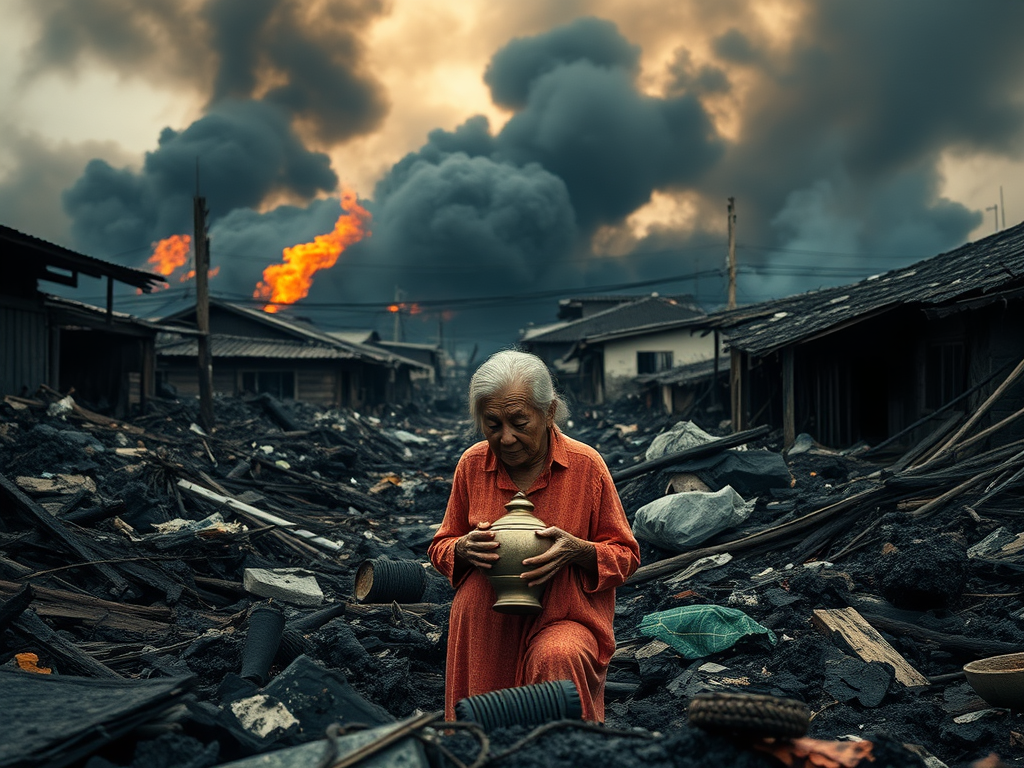
A massive fire ripped through Isla Puting Bato, a densely packed slum in the Philippine capital of Manila, leaving thousands homeless in its wake. Flames consumed nearly 1,000 homes, displacing over 2,000 families and reducing much of the area to ash.
Drone footage captured the harrowing scene as fiery orange blazes tore through fragile structures made of wood and corrugated iron. Thick black smoke billowed into the sky as residents frantically evacuated, clutching what few belongings they could salvage.
Leonila Abiertas, 65, broke down as she recounted her escape. “I only got the urn with the ashes of my husband,” she told reporters. “I really don’t know how I can start my life again after this fire.” Like many others, she lost nearly everything she owned.
Senior Inspector Alejandro Ramos of the Manila Fire Department confirmed the fire likely began on the second floor of a home but spread rapidly due to the flammable materials common in the area.
The fire burned for nearly eight hours before being extinguished, thanks in part to the efforts of the Philippine Air Force, which deployed two aircraft to assist local firefighters.
Manila Mayor Honey Lacuna pledged swift action to aid those affected. “We will ensure that the evacuees receive cash aid, food, and materials for rebuilding their homes through our local government,” she said in a statement.
The mayor also called on private organizations to contribute to the relief effort, urging unity in the face of the tragedy. “We must come together to support the fire victims in this time of great need,” she added.
Isla Puting Bato, situated near the Manila North Harbor, has long been home to one of the city’s most vulnerable communities. Thousands of families live in precarious conditions, with makeshift homes built tightly together. Fires are a frequent hazard due to poor infrastructure and the use of open flames for cooking and lighting.
While no casualties have been reported, authorities emphasized the urgent need for better urban planning and stricter fire safety regulations in such high-risk areas.
City officials are exploring options to relocate affected residents temporarily while rehabilitation efforts begin. The long-term future of the community, however, remains uncertain.
This latest disaster highlights the broader challenges faced by millions living in informal settlements across the Philippines, where poverty, overcrowding, and natural disasters frequently collide.
As families pick through the charred remains of their lives, the community’s resilience will be tested once again. The call for solidarity has been loud and clear—but for those left homeless, the road to recovery will be long.
Discover more from Next Gen News
Subscribe to get the latest posts sent to your email.
Take my name off of your emailSent from my iPhone
Please sendme The Marshall Report Thanks