

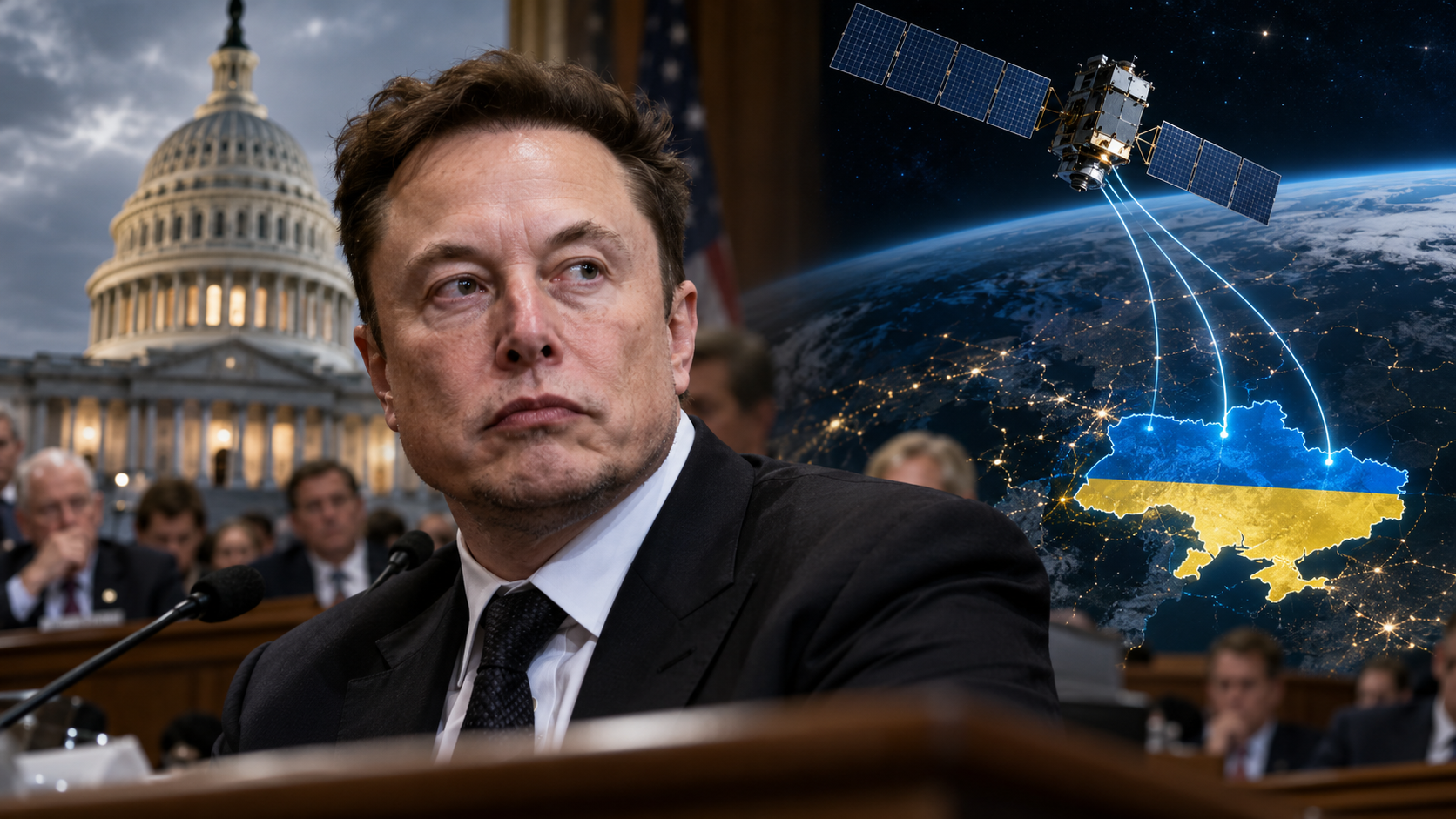
Elon Musk is facing growing scrutiny in Washington after a Republican congressman called for a congressional investigation into allegations that the billionaire personally ordered restrictions on critical military satellite technology used by Ukraine, potentially undermining the country’s defenses against Russian attacks.
The controversy has raised serious questions about Musk’s influence over American national security, his relationship with President Donald Trump, and whether a private businessman was allowed to interfere with military operations during an ongoing war.
Rep. Brian Fitzpatrick, a Pennsylvania Republican who serves on the House Intelligence Committee, demanded answers Tuesday, October 20, after The Wall Street Journal reported that Musk directed SpaceX to slow a military-grade satellite communications service known as Starshield.
The reported restrictions disrupted Ukrainian drone operations and reportedly caught officials in Kyiv and parts of the Trump administration by surprise.
Speaking with CNN’s Kaitlan Collins, Fitzpatrick, a former FBI agent, said the allegations warranted a congressional investigation, including testimony under oath from those involved.
The congressman warned that if Musk personally authorized restrictions on Starshield, his actions could potentially violate federal law. Fitzpatrick argued that although Musk controls the commercial Starlink business, decisions involving military communications systems used for national security cannot simply be left to a private individual.
He also expressed concern about the potential human cost, warning that restrictions on Ukraine’s defensive capabilities could have deadly consequences.
The technology at the center of the controversy is particularly important to Ukraine’s ability to defend its cities against Russian aerial attacks.
Starshield, developed by Musk’s SpaceX, provides specialized satellite communications for military and government operations. Ukrainian forces use the technology to maintain contact with drones, coordinate missions, and intercept incoming threats.
According to Ukrainian officials, unexpected restrictions introduced in mid-October caused satellite connections to deteriorate when equipment traveled faster than approximately 100 mph. That limitation interfered with drones designed to intercept faster-moving Russian weapons, potentially leaving Ukrainian cities more vulnerable.
The Associated Press previously reported that Ukrainian officials were negotiating with SpaceX and the Pentagon to restore full capabilities.
Meanwhile, questions about who authorized the restrictions have produced conflicting explanations from Musk and senior Trump administration officials.
Musk has publicly maintained that Starshield is controlled by the U.S. government and that decisions about its military use ultimately rest with American authorities and the president.
However, CBS News and The Wall Street Journal reported that Musk was responsible for ordering the slowdown, citing people familiar with the decision.
Defense Secretary Pete Hegseth insisted Tuesday that the Pentagon had not ordered any reduction in service. He suggested that SpaceX could make decisions involving its technology under applicable service agreements.
Secretary of State Marco Rubio added another complication Wednesday, saying that decisions about Ukraine’s access to Starlink were governed by SpaceX rather than the White House.
Trump also denied personal involvement, telling reporters he did not know who ordered the slowdown.
Those conflicting accounts have only intensified demands for transparency.
Fitzpatrick criticized the administration’s explanations as inadequate and questioned how a military communications system could be restricted without a clear understanding of who authorized the decision.
He called the answers from administration officials wildly insufficient and said Congress had a responsibility to determine whether the disruption resulted from a deliberate decision, negligence, or a breakdown in government oversight.
The growing controversy has also attracted attention from Democratic lawmakers.
On October 19, Democratic Sens. Jeanne Shaheen, Richard Blumenthal, Sheldon Whitehouse, and Chris Coons demanded detailed information from SpaceX about its involvement in restricting Ukraine’s access to Starlink and Starshield.
Their letter requested records identifying who authorized the changes, which officials were notified, and what authority SpaceX retains over systems used in military operations. The senators gave the company until November 2 to respond.
A separate bipartisan group of senators, including Republicans Susan Collins and Thom Tillis, had already requested an investigation by the Pentagon’s inspector general.
The controversy comes amid growing tensions between Washington and Kyiv over Trump’s handling of the war.
Earlier in October, Trump announced an agreement involving Russian diesel exports to the United States. On October 16, he also signed an executive order waiving major provisions of a sanctions law targeting Russia and Iran, arguing the waivers served American national interests.
The administration has promoted its energy decisions as efforts to reduce prices and advance negotiations. However, Ukraine has viewed the administration’s renewed engagement with Moscow with considerable concern.
There is no established evidence that the diesel agreement or sanctions waivers directly caused the satellite restrictions. Nevertheless, the developments have intensified questions about Washington’s commitment to supporting Ukraine against Russia’s invasion.
Fitzpatrick, who previously served as an FBI agent in Ukraine, made clear that he considers the country’s defense a matter of both American national security and moral responsibility.
“Ukraine is the victim here. Russia is the aggressor,” he told CNN.
He also indicated that lawmakers from both parties were prepared to pursue additional oversight once Congress returns.
For Musk, the investigation demands could create significant political and legal scrutiny. But whether any laws were broken remains undetermined, and no finding of wrongdoing has been announced.
The central question now confronting Congress is who had the authority to restrict Ukraine’s military communications, who made the decision, and whether the Trump administration knew about it before the restrictions took effect.
Discover more from Next Gen News
Subscribe to get the latest posts sent to your email.
Fitzpatrick isn’t a real “Republican”… just ignore his evil…
Ooooo the light came on!!!!! The prick was likely the reason The election was rigged too!!!!!