

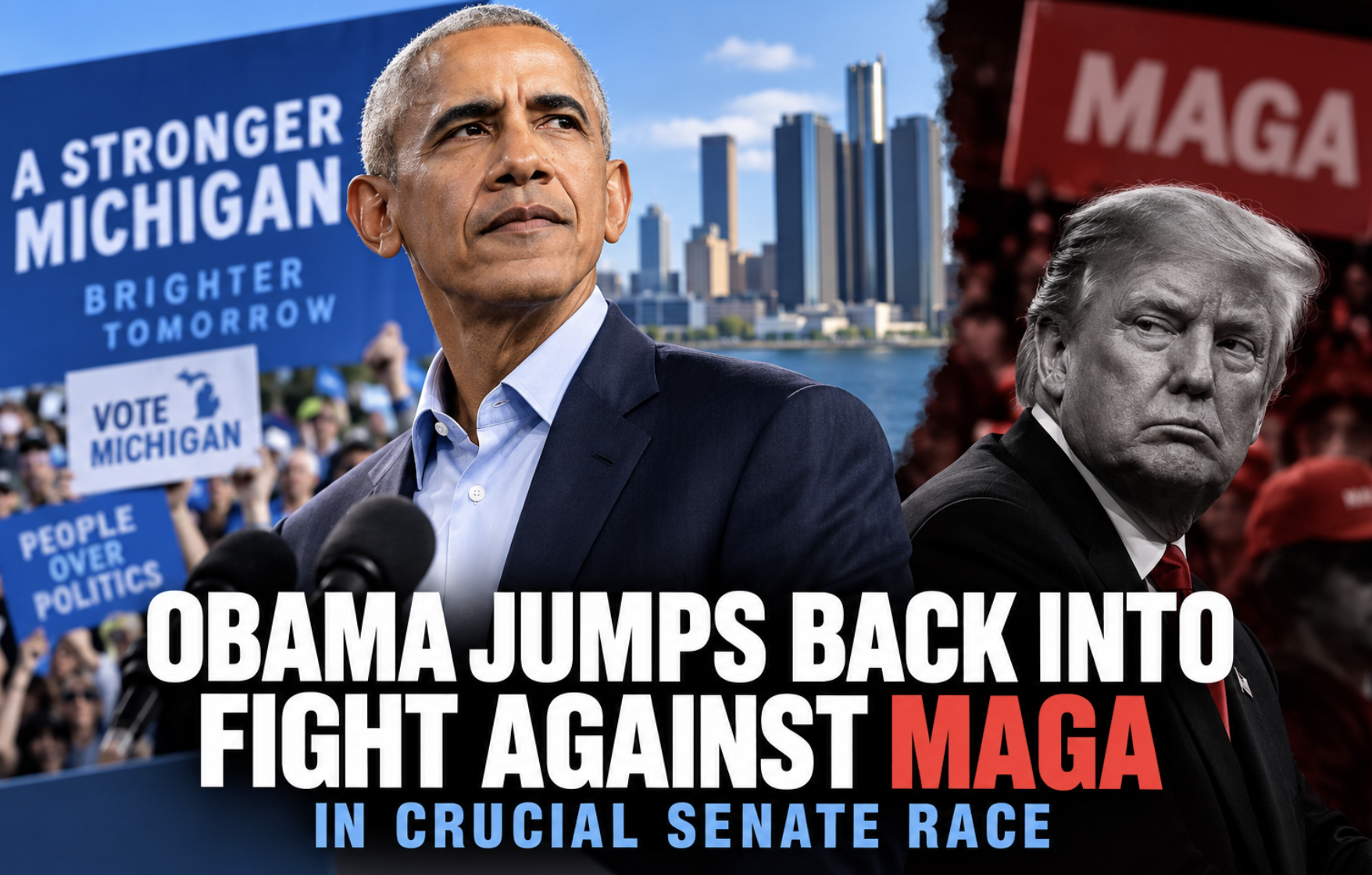
Barack Obama is heading back onto the campaign trail, and Democrats are sending the former president into one of the most consequential Senate battles of the 2026 midterms.
Obama is scheduled to appear in Detroit on Saturday, Oct. 24, alongside Democratic Senate nominee Abdul El-Sayed and Michigan gubernatorial nominee Jocelyn Benson, giving two of the party’s highest-profile candidates a major boost just 10 days before Election Day.
The timing is no accident.
Oct. 24 marks the beginning of Michigan’s constitutionally required nine-day early in-person voting period, giving Democrats an opportunity to use Obama’s appearance not simply as a rally, but as a turnout push in a state that could play a major role in deciding control of Washington.
Michigan voters will elect a successor to retiring Democratic Sen. Gary Peters, making the open seat one Republicans have been aggressively targeting.
El-Sayed is facing former Republican Rep. Mike Rogers, who has the backing of President Donald Trump. Recent polling has generally shown a close contest, with some surveys giving El-Sayed a small advantage and others suggesting the race remains well within striking distance for Republicans.
That uncertainty makes Obama’s decision to personally travel to Detroit especially significant.
The former president has spent much of the post-White House era choosing his campaign appearances carefully. But as the midterms approach, Obama has become increasingly involved in helping Democrats, recording advertisements, supporting candidates and preparing for additional campaign stops.
His Michigan appearance could also help El-Sayed with one of the Democratic Party’s most important challenges: bringing together voters after a bruising primary.
El-Sayed, a physician and former Detroit health director, narrowly emerged from a competitive Democratic contest and has built his political identity around an unapologetically progressive agenda.
He has supported Medicare for All, higher taxes on wealthy Americans and major changes to immigration enforcement. He has also sharply criticized U.S. policy toward Israel, positions that have made him popular with the Democratic Party’s progressive wing while generating opposition from Republicans and some more moderate Democrats.
Sens. Bernie Sanders and Rep. Alexandria Ocasio-Cortez have been among his most prominent supporters.
Republicans have tried to make those progressive positions central to the general-election campaign, portraying El-Sayed as far outside Michigan’s political mainstream. Trump and his allies have also sought to tie him to controversial figures on the online left.
Democrats, meanwhile, are attempting to make the election a referendum on Republican control of Washington and concerns over health care, abortion rights, affordability and Trump’s economic record.
Former Vice President Kamala Harris traveled to Michigan in September to campaign alongside El-Sayed, appearing at a discussion focused on Black maternal health and reproductive care.
Now Obama is adding his political weight.
“It is my honor and privilege to announce that President Barack Obama is joining us on the trail in Detroit on Saturday, October 24,” El-Sayed announced Monday. “Get. Ready.”
Obama will also campaign alongside Benson, Michigan’s secretary of state and the Democratic nominee for governor, allowing the party to turn the Detroit event into a broader push for its entire statewide ticket.
The former president’s increased visibility comes as Trump launches his own intensive final-month campaign schedule.
Trump began a 32-day midterm push in heavily Republican territory before traveling to additional states where GOP candidates are facing unexpectedly difficult contests. He has urged supporters to treat the midterms almost as though his own name were on the ballot.
The stakes are significant for the president.
A Democratic takeover of either chamber of Congress would make it considerably more difficult for Trump to advance major parts of his domestic agenda during the final two years of his term. Democratic control could also lead to new congressional investigations and substantially increase oversight of the administration.
Trump has also generated controversy with some of his recent campaign-season moves.
At campaign appearances, he has promoted a proposal to provide $5,000 payments to American adults if Republicans maintain control of Congress. The enormous potential cost of such a plan has raised questions about how it would be financed and whether Congress would ever approve it.
The administration separately faced criticism over nationally broadcast government-funded advertisements featuring Trump and promoting what the spots described as a new American “golden age.”
After lawmakers and ethics experts questioned whether taxpayer money should be used for advertisements so closely resembling political messaging weeks before an election, Trump said Monday that he would personally pay for the ads or have them funded through a political committee rather than taxpayers.
Those controversies are unfolding against an increasingly difficult political backdrop for Republicans.
Several recent polls have offered encouraging signs for Democrats in battleground races that once appeared considerably safer for the GOP. Michigan is among them.
One recent Fox News poll showed El-Sayed holding only a one-point advantage over Rogers, while a Marist survey gave the Democrat a larger lead among registered voters. The differences between the polls are a reminder that Michigan remains highly competitive and that neither party can afford to take the state for granted.
Republicans also have reason to remember that polls have underestimated GOP strength in Michigan in previous election cycles.
That is one reason Obama’s Detroit stop could matter.
Rather than relying solely on television advertisements and endorsements, Democrats are deploying one of the party’s most recognizable figures at precisely the moment Michigan voters begin casting ballots.
For El-Sayed, the assignment is straightforward but difficult: energize progressives, win back skeptical moderates and produce strong turnout in Democratic strongholds such as Detroit while remaining competitive throughout the rest of the state.
For Obama, the appearance marks another step back into the political arena as Democrats attempt to transform dissatisfaction with Trump and the Republican-controlled government into victories at the ballot box.
And with control of the Senate potentially hanging on only a handful of closely divided states, Michigan may prove to be one of the places where that fight is ultimately decided.
Discover more from Next Gen News
Subscribe to get the latest posts sent to your email.
Please Vote Republican in this midterm election! David.
>