

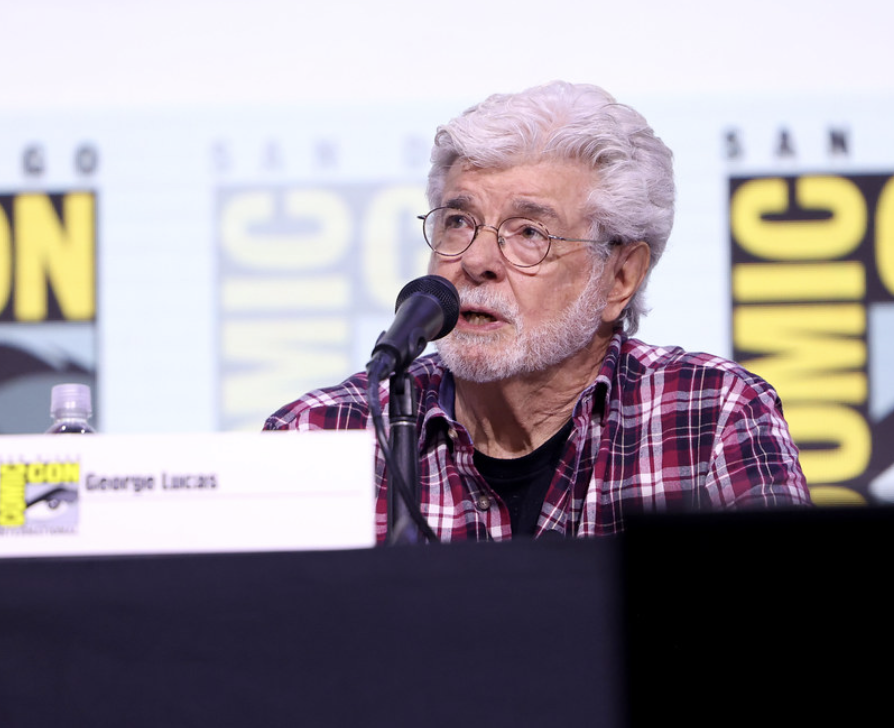
George Lucas is no stranger to changing Hollywood forever. But this time, the Star Wars mastermind has set off a firestorm for backing one of the most controversial forces sweeping through the entertainment industry: artificial intelligence.
The legendary filmmaker, 82, has sparked fierce debate after declaring that AI is the future of filmmaking, a remark that has rattled critics who fear the technology could chip away at the human creativity that built the movie business in the first place.
Lucas made the comments during an interview with A Rabbit’s Foot, where he reflected on the rise of AI and suggested that technological change is not only coming, but impossible to stop.
For Lucas, the idea is simple. Artificial intelligence, he argued, will make it easier for filmmakers to create movies. But for many artists, writers, actors and crew members across Hollywood, that same promise sounds like a warning siren.
“Artificial intelligence means it’s much easier for us to make movies,” Lucas said.
He then compared the resistance to AI to people clinging to horses and buggies after the arrival of automobiles.
“It’s very much like sitting here saying, ‘Well, I believe the horse and the buggy is really where it’s at. These cars, they break down, they need gas, there’s all kinds of problems with them, and pretty soon they’ll be making them into tanks, and then they’ll be killing people. It’s terrible,’” Lucas said.
Then came the line that sent shockwaves through Hollywood.
“There’s nothing you can do about it,” he added. “That’s progress, it’s the future.”
The comments landed at a tense moment for the entertainment industry, where AI has become one of the most divisive issues in years. Studios, filmmakers and unions have been wrestling with how the technology could affect scriptwriting, visual effects, editing, production and even performances.
Lucas, who sold Lucasfilm to Disney in 2012 and stepped away from day-to-day filmmaking, has long been considered one of the industry’s great technical pioneers. Through Industrial Light & Magic, he helped revolutionize visual effects and pushed digital filmmaking years before it became the norm.
But even for a man who built much of his career on technological innovation, his full-throated embrace of AI has left some in the industry uneasy.
One veteran Hollywood source said Lucas’ comments stunned many filmmakers who believe AI should remain a tool, not the driving force behind storytelling.
Another industry insider said there is still enormous respect for Lucas’ legacy, but added that his remarks have upset artists who worry studios will treat AI as permission to replace human creativity with cheaper automation.
The controversy did not stop there. Lucas also took aim at another modern Hollywood habit: letting audiences and fan reactions steer creative decisions.
The Star Wars creator said he has never liked focus groups and argued that viewers often do not know what they want until a filmmaker shows it to them.
“The audience doesn’t know what they want to see,” Lucas said. “If they don’t like a character, that’s interesting, and as a filmmaker, I want to find out why. But when the studios hear that, they take the wrong message.”
According to Lucas, the problem is that Hollywood has become too eager to let viewers shape the final product.
“They let the audience actually make the movie,” he said. “Of course, now they go crazy with that. Now, it’s all about what the fans think. That isn’t how you make the movie.”
Lucas argued that strong films come from storytellers with vision, not committees trying to satisfy every complaint.
“You make a movie by finding someone that knows how to make movies, that has a story to tell, and is passionate about it,” he said.
His comments place him in the middle of a much larger Hollywood battle. Supporters say Lucas is simply recognizing what he has always understood: technology changes the business, and filmmakers either adapt or get left behind.
But critics say AI is not just another camera, editing system or visual effects tool. To them, it raises far bigger questions about authorship, labor, originality and whether audiences will eventually be fed stories created less by artists and more by algorithms.
The debate has also drawn a sharp contrast with filmmaker Christopher Nolan, 55, who recently suggested that younger audiences are already rejecting AI-generated creative work.
Nolan said he has watched younger viewers dismiss what he called “AI slop” quickly and harshly, arguing that they can spot it easily because it comes from the same online world they grew up in.
“I’ve never seen a more rapid wholesale dismissal of a supposedly foundational jump in technology in my lifetime,” Nolan said.
He added that while not every part of the technology is useless, AI may be arriving in filmmaking at exactly the wrong moment.
“After years of driving towards heavily virtual environments, we’re seeing a renewed interest in more tactile, more real forms of storytelling,” Nolan said.
That divide now leaves Hollywood facing a major question: Is AI simply the next tool in the filmmaker’s toolbox, or is it a threat to the soul of the movie business?
Lucas appears to believe the answer is already settled. But across Hollywood, plenty of artists are still bracing for the fight.
Discover more from Next Gen News
Subscribe to get the latest posts sent to your email.